
UCI Communications Director Karl Vilacoba provided an introductory tutorial on the Mid-Atlantic Ocean Data Portal’s interactive maps and tools on June 29. To learn more about the Portal, visit portal.midatlanticocean.org or email kvilacob@monmouth.edu.
-
Watch: ‘How Tuesday’ Intro to the Mid-Atlantic Ocean Data Portal
-
UCI Launches Faculty Advisory Council
 The Urban Coast Institute (UCI) has formed a Faculty Advisory Council to provide it with guidance and new perspectives for enhancing academic and student engagement at Monmouth University. The inaugural council includes 13 members representing a broad spectrum of academic disciplines and departments across campus.
Among its roles and responsibilities, the council will assist in integrating the UCI more fully into Monmouth’s academic programs to initiate high-impact opportunities for teaching, scholarship, research and service, and to aid in student recruitment. The council will also serve as a liaison with Monmouth schools, departments, faculty and programs to increase understanding and support of the UCI mission.
It is anticipated that council members will help the UCI identify opportunities to contribute to program and course development, support in the delivery of academic programming and assist in identifying support for student research, internship/externships, service learning, community service and employment opportunities. The council will work with UCI to create, host and promote symposia and events on campus.
The faculty members below will join the council along with the UCI’s three current affiliated faculty members: Randall Abate, Rechnitz Family/UCI endowed chair in marine and environmental law and policy, Department of Political Science and Sociology; Jason Adolf, endowed associate professor of marine science, Department of Biology; and Eric Fesselmeyer, associate professor of economics, Department of Economics, Finance, and Real Estate.
- Kimberly Callas, assistant professor, Department of Art and Design
- John Comiskey, assistant professor, Department of Criminal Justice
- Michael Cronin, associate professor, School of Social Work
- Geoffrey Fouad, assistant professor, Department of History and Anthropology
- Jeanne Koller, assistant professor, School of Social Work
- Golam Mathbor, professor, School of Social Work
- Tiffany Medley, lecturer, Department of Biology
- Lindsay Mehrkam, assistant professor, Department of Psychology
- Claude Taylor, director for academic transition and inclusion, Center for Student Success
- Laura Turner, assistant professor, Department of Mathematics
The council was formed through an open process that encouraged all interested faculty to submit letters of interest in the spring of 2021. For more information about the Faculty Advisory Council, contact UCI Associate Director Thomas Herrington at therring@monmouth.edu.
-
Adolf Pens Primer on Harmful Algal Blooms in Summer Issue of ANJEC Report
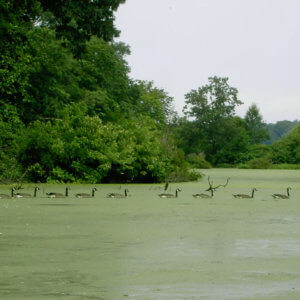 Monmouth University Endowed Associate Professor of Marine Science Jason Adolf contributed the article “What is a harmful algal bloom (HAB) and why do they form?” to the summer issue of ANJEC Report, published by the Association of New Jersey Environmental Commissions. The piece offers a scientific explanation of the types of phytoplankton that cause HABs and how these organisms can harm wildlife and humans who come in contact with them. Read the article or view the full issue.
Adolf’s piece leads off a series of articles exploring the growing problem of HABs in New Jersey’s freshwater lakes, which has received increased attention statewide in recent years. The section includes a spread of photos provided by the New Jersey Department of Environmental Protection that shows what HABs look like.
-
Analysis of Pitch Data Shows Climate Change May Strike Baseball Umpiring
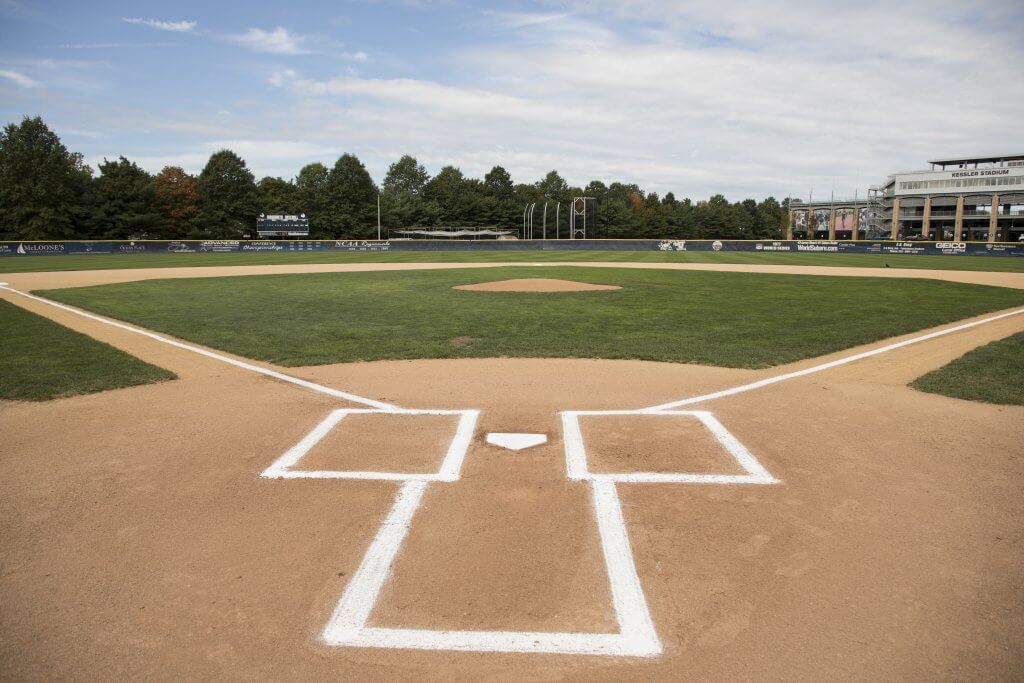
It’s hard enough to reach base when pitchers like Aroldis Chapman and Jacob deGrom throw the high heat. But what about when Mother Nature does?
A study by Monmouth University Associate Professor of Economics Eric Fesselmeyer finds that Major League Baseball (MLB) umpires call pitches less accurately in uncomfortable temperatures, with performance at its worst in extreme heat conditions. The analysis shows that the pitch-calling error rate is about 1 percentage point worse when temperatures are above 95 degrees, while accuracy is highest in games played in 80 to 90 degree weather. The results raise the prospect that America’s pastime could be impacted by climate change, as warming temperatures and more frequent heat waves threaten to cause a further decline in officiating.
“The drop in accuracy may seem small, but it is nontrivial for this high-revenue, high-stakes industry,” said Fesselmeyer, an affiliated faculty member of Monmouth’s Urban Coast Institute. “Moreover, high temperatures cause an even greater decrease in accuracy on close call pitches along the edges of the strike zone.”
The research was possible because MLB uses pitch-tracking technology that measures whether non-batted pitches are strikes or balls as they cross home plate.
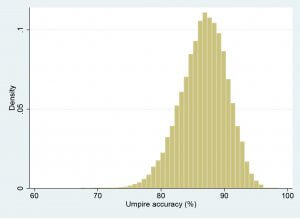 When Fesselmeyer examined the accuracy of calls for 18,907 MLB games played between 2007 and 2017, he discovered a clear inverted U-pattern. Umpire accuracy was 86.3% when the temperature was below 50 degrees; 86.4% for temperatures between 50 and 60 degrees; 86.6% for temperatures between 70 and 80 degrees; peaked at 86.9% accuracy for temperatures between 80 and 90 degrees; and fell to 86.5% for temperatures between 90 and 95 degrees. Accuracy was lowest, 85.9%, when the temperature was higher than 95 degrees.
Could umpires have an unconscious bias toward calling strikes when it could end the game faster in uncomfortable weather? Fesselmeyer studied critical late inning situations when incorrect calls could shorten the duration of the game but found no significant difference. He also analyzed the data to see whether factors such the experience level, workloads and age of umpires, game attendance and duration, and other meteorological conditions could have been responsible, but found that they did not affect how umpires respond to heat.
Give that umpires err on over 15% of non-batted pitches, some might wonder why baseball hasn’t automated its pitch calling. According to Fesselmeyer, “MLB is indeed considering robo-umps, which would have the added benefit of eliminating the effect of high temperatures on pitch calling. But it is not clear whether the technology will be adopted because baseball purists prefer to preserve the human element in the game.”
Fesselmeyer’s research has implications beyond baseball. If workers as experienced and well-versed in their craft as MLB umpires are susceptible to the heat’s influence, the results are especially worrisome for industries that rely on less-experienced and lower-skilled workers such as agriculture, construction and manufacturing, which are likely less capable of mitigating the impact of rising temperatures.
A paper summarizing Fesselmeyer’s work will be published in a forthcoming edition of the Southern Economic Journal.
-
WATCH: June 11 Talk on Legal, Policy Responses to Climate Change and Harmful Algal Blooms
The Urban Coast Institute (UCI) hosted the virtual lecture “Climate Change and Harmful Algal Blooms: Legal and Policy Responses to Protect Human Health, Marine Environments, and Coastal Economies” with Professor Eric V. Hull of the Nova Southeastern University Shepard Broad College of Law on June 11.
The discussion was moderated by Rechnitz Family/UCI Endowed Chair in Marine Environmental Law and Policy Randall Abate. An audience Q&A session followed Hull’s presentation. Scroll below for a presentation abstract and biography of the speaker.
Abstract
Harmful Algal Blooms (HABs) pose an increasing threat to human health, marine environments, and coastal economies. Warming, acidification, nutrification, and other human-mediated changes to marine systems work synergistically with naturally occurring environmental factors to increase the incidence, severity, and geographic range of HABs. This talk will address ways to mitigate the anthropogenic drivers of HABs using practical solutions and statutory tools available under the Clean Water Act and the Clean Air Act.
About the Speaker
 Eric V. Hull currently serves as a visiting professor of law at Nova Southeastern University Shepard Broad College of Law. Professor Hull has published widely on animal law, environmental law, ocean and coastal law, and maritime law topics, with an emphasis on climate change and the impacts of pollution on ocean and coastal systems, human health, and the environment. His scholarship has been published in many of the leading environmental law journals and his work on the management of marine resources in U.S. waters is included in an international text on ocean and coastal governance. His article on ocean acidification was peer-nominated as one of a top environmental and land use law articles and was included in the seminal text on ocean acidification. Professor Hull teaches courses in administrative law, animal law, civil procedure, climate change law and policy, environmental law, environmental and toxic torts, environmental justice, ocean and coastal law, property law, and zoning. He has taught internationally in Costa Rica, France, and Korea. In addition to holding a juris doctor degree, he holds an undergraduate degree in biology, and graduate degrees in marine biology and coastal zone management. He also holds an LL.M. degree in environmental and land use law.
 -
Transcript of Monmouth IGU Climate and Energy Roundtable Published in Environmental Law Reporter
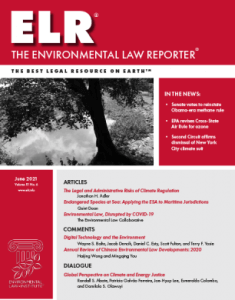 An edited transcript of the Climate and Energy Justice Roundtable from the Monmouth University Institute for Global Understanding’s (IGU) spring symposium has been published in the June edition of the Environmental Law Institute’s Environmental Law Reporter. The discussion was moderated by Rechnitz Family/UCI Endowed Chair in Marine and Environmental Law and Policy Randall Abate, who also serves as director of the IGU. Panelists included University of Windsor (Canada) Faculty of Law Assistant Professor Patrícia Galvão Ferreira; Seoul National University (South Korea) School of Law Professor Jae-Hyup Lee; University of Bergen (Norway) Center for Climate and Energy Transformation Visiting Professor Esmeralda Colombo; and Hamad Bin Khalifa College of Law (Qatar) Associate Professor of Energy and Environmental Law Damilola S. Olawuyi.
Watch videos of this and other sessions from the three-day symposium.
-
With Pandemic Waning, Herrington Previews Updates to #BEachSAFEly Campaign
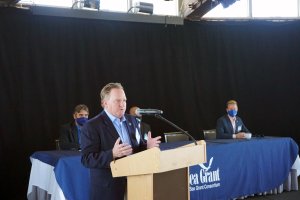
What it means to #BEachSAFEly is changing rapidly, and that’s good news. Urban Coast Institute (UCI) Associate Director Thomas Herrington, who serves as the New Jersey Sea Grant Consortium’s (NJSGC) resilient communities and economies specialist, announced updates to the award-winning social media campaign at the State of the Shore media event, held May 27 at McLoone’s Supper Club in Asbury Park.
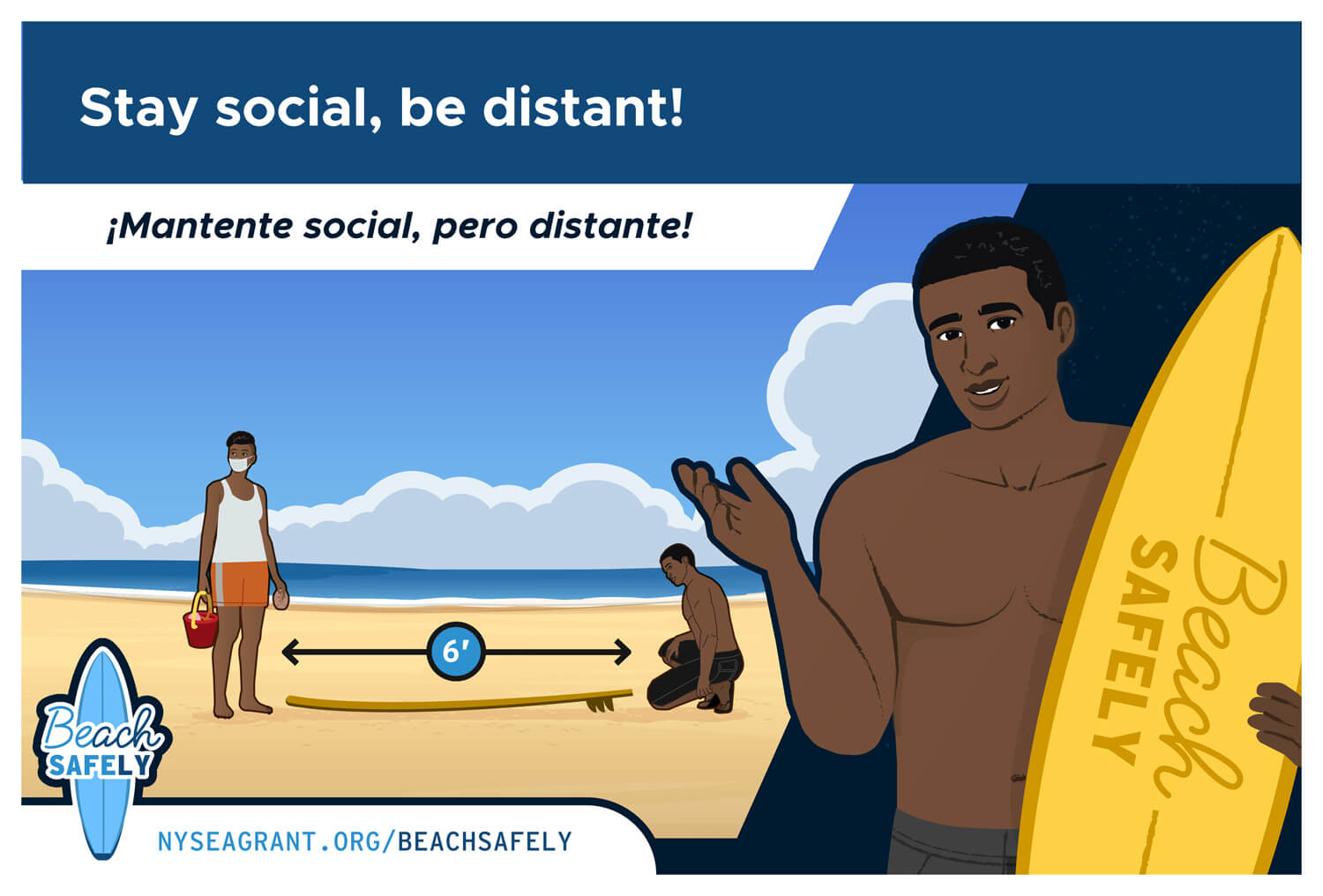
 Now in its second year, #BEachSAFEly was developed by the New Jersey and New York Sea Grant programs at the height of the pandemic to build awareness of precautions that visitors should take while at the beach. The 2020 campaign featured nine bilingual (available in English and Spanish) illustrated messages, which stressed standard ocean hazard tips such as “Break the Grip of the Rip” as well as messages related to the pandemic such as, “Stay social, be distant”; “Don’t let your mask become marine debris!”; “Stay dry when waves are high”; and “Grab your sunscreen and sanitizer.”
The 16-week-long second season will include many of those scenes, though with adjustments to account for revised federal and state COVID-19 guidance. Look for new messages every Wednesday this summer on Facebook and Twitter, with a special campaign on Instagram in August.
“This year, you’ll notice that our illustrations won’t have masks on every person,” Herrington said. “Maybe one or two will have masks to remind people that until you are fully vaccinated, you should continue to abide by mask wearing and social distancing when you can’t be safe.”
This summer, NJSGC will build on the success of the virtual campaign by printing postcards and posters with the images and distributing them to beach communities. The UCI, the Jersey Shore Partnership and the Northeast Shore & Beach Preservation Association are providing support for the creation of the materials.
“I’m sure everyone is looking forward to a much more normal and enjoyable summer, with just some little reminder that we really haven’t beat this pandemic fully yet, but if we continue to do what we have been doing, we hope to have no masks on our characters by the end of the summer,” Herrington said.
Additional speakers at the event included New Jersey Department of Environmental Protection Acting Commissioner Shawn LaTourette, NJSGC Acting Director Peter Rowe and NJSGC Coastal Processes Specialist Jon Miller.
For more on the campaign, search the hashtag #BEachSAFEly on social media or check the New Jersey Sea Grant Consortium website throughout the summer. The 2021 State of the Shore report can be viewed here.
-
Monmouth Alumni Weekend Beach Cleanup June 13

Help keep our shore clean by registering for a Monmouth University Alumni Beach Cleanup on Sunday, June 13, in Long Branch. The event is being hosted by the UCI in celebration of World Ocean Month and Monmouth Alumni Weekend. Show your Hawk pride and wear your Monmouth gear!
The cleanup will take place from 9-10 a.m. at the beaches near the University Bluffs student apartments. Volunteers can sign in at our table in front of University Bluffs, located at Brighton/Ocean Avenue near the boardwalk, beginning at 8:30 a.m.
Cleanup Details
- Garbage bags will be available. Volunteers may also choose to bring their own reusable buckets/receptacles.
- Disposable gloves will not be supplied. To eliminate single-use plastics, we encourage volunteers to bring their own gardening gloves or other reusable gloves.
- Participants should take appropriate social distancing measures and not attend if feeling ill.
-
NJCRC Comments on State’s Draft Climate Change Resilience Strategy
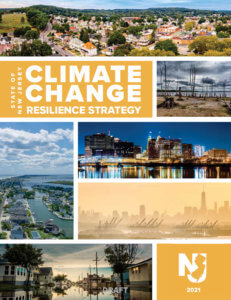
New Jersey Gov. Phil Murphy on Earth Day released a draft of the state’s first Climate Change Resilience Strategy outlining recommendations to guide state and local government efforts to protect vulnerable communities, infrastructure, businesses, and the environment from the devastating effects of climate change. The New Jersey Coastal Resilience Collaborative (NJCRC), a partnership of stakeholders and interested parties from all sectors that is co-chaired by UCI Director Tony MacDonald, submitted a document with its comments on the strategy to the New Jersey Department of Environmental Protection (NJDEP) on May 21.
In the document’s introductory message, UCI Associate Director Thomas Herrington noted, “We applaud the thoughtfulness that has gone into the Climate Change Resilience Strategy and imbedded Coastal Resilience Plan and appreciate the [NJDEP Climate and Flood Resilience] Program’s consideration and integration of many of the comments the NJCRC provided in response to the original vision of the Strategy and Plan.” Work on the Coastal Resilience Plan element of the strategy was first launched in the October 2018 New Jersey Coastal Resilience Summit held at Monmouth University.
-
Eight Students Receive UCI Summer Research Support
What will the Biden administration’s “30 by 30” conservation initiative mean for ocean areas in the Mid-Atlantic? What can trace genetic materials floating in the water teach us about turtle populations in New Jersey’s coastal lakes? These are among the many questions that eight Monmouth University student researchers will explore this summer with the support of UCI Heidi Lynn Sculthorpe Scholars grants and research assistantships.
The Heidi Lynn Sculthorpe Scholars Program offers competitive grant funding for students and faculty mentors of all disciplines whose work furthers the goals and mission of the UCI. The program supports hands-on research projects that provide real world experience to students while helping make a positive impact in coastal communities. For the first time this year, a grant will support one participant in the Monmouth University Provost’s Summer Scholars Living and Learning Community, which enables students to live on campus while conducting their research. The Summer Scholars faculty coordinator is Endowed Associate Professor of Marine Science Jason Adolf of the Department of Biology and the UCI.
The research efforts listed below will kick off in June.
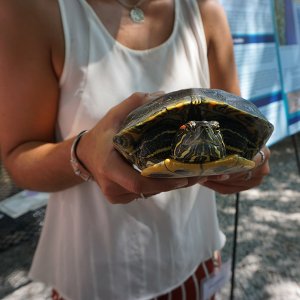
eDNA as a Tool for Surveying Turtles in New Jersey’s Coastal Lakes
 Student: Delaney Mestey-Jones
Faculty Mentor: Megan Phifer-Rixey, UCI Marine Genetics Faculty Fellow
The student will test the use of environmental DNA (eDNA) as a tool for detecting the presence of turtles in coastal lakes. In addition, the student will help develop the approach for use in teaching labs for undergraduate and high school students.
The Effect Hurricanes Have on Sustainable Tourism in the Bahamas and New Jersey
 Students: Catherine Melman-Kenny and Sabria Smith
Faculty Mentor: Ken Mitchell, Chair, Department of Political Science & Sociology
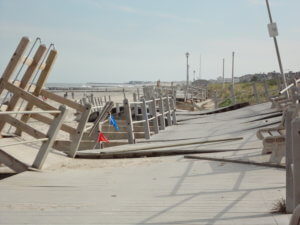
The researchers will analyze the experiences of New Jersey after Hurricane Sandy and the Bahamas after Hurricane Dorian to determine how differences in policy, sustainable infrastructure, planning and protocols influenced the recoveries of their tourism industries.
Exploring Salt Tolerances of Lichens in Coastal Ecosystems
Student: Emily Vasquez (UCI/Provost Summer Scholar)
Faculty Mentor: Associate Professor Pedram Daneshgar, Department of Biology
This study will test the salt tolerance of lichens growing in areas by the ocean in order to make predictions of how climate change and coastal flooding may alter lichen abundance and ecosystems in the future. Lichens in the field will be studied and digitally mapped, and different types of lichens will be grown in a greenhouse and subjected to saltwater exposure tests.
Female Labor Force Participation and Care of Children in Coastal New Jersey
Student: James T. Allan
Faculty Mentors: Assistant Professor Katerine Ramirez, Department of Economics, Finance, and Real Estate; Assistant Professor Geoffrey Fouad, Department of History & Anthropology
Drawing on federal and state data, the project will probe whether commute times from daycare facilities affect the labor force participation and job choices of women in Jersey Shore communities, and whether those figures differ from their partners’ by marital status or number and age of children.
New Jersey Coastal Resilience Collaborative Policy Analyst
Student: Samantha Pawlik (Research Assistant)
Faculty Mentor: UCI Associate Director Thomas Herrington and Director Tony MacDonald
The New Jersey Coastal Resilience Collaborative (NJCRC) is a partnership of stakeholders and interested parties from all sectors, including universities, nonprofit and for-profit groups, national estuary programs and reserves, advocacy organizations, state agencies and regional planning groups, established to foster sustainable and resilient coastal communities and ecosystems by generating informed action. The student will review present and proposed changes to the New Jersey coastal zone land use management rules, prepare a brief on the impact of the proposed rules, and aid the NJCRC in preparing recommended changes to the proposed rules for consideration by the state.
The “30 by 30” Initiative: Confronting the Threats of Biodiversity Loss and Climate Change
Student: Kyra Velock (Research Assistant)
Faculty Mentor: Randall S. Abate, Rechnitz Family/UCI Endowed Chair in Marine and Environmental Law and Policy
The “30 by 30” initiative (also called the America the Beautiful initiative) seeks to conserve and protect 30% of U.S. land and ocean areas by the year 2030. The student will focus primarily on ocean protection, presenting information on the political and economic challenges, and environmental benefits, associated with reaching this goal, and legal tools that will be essential for achieving it such as marine spatial planning and marine protected areas.
A Win-Win for Offshore Wind Energy in the Mid-Atlantic: Science and Policy Options to Mitigate Harm and Maximize Benefits to Marine Species and Biodiversity
Student: Riya Ajmera
Faculty Mentor: Randall S. Abate, Rechnitz Family/UCI Endowed Chair in Marine and Environmental Law and Policy
The student will conduct research and interview experts involved in the Mid-Atlantic offshore wind regulatory landscape, including representatives from state and regional regulatory bodies, the offshore wind industry, environmental groups, marine scientists, the commercial fishing industry, and Native American leaders. The student will prepare a white paper examining science-based policy options that advance a “win-win” goal of promoting offshore wind development in a way that enhances protection of the marine environment through improved data and management, including marine protected areas and other area-based management tools. The paper will address the nature and scope of risks to the Mid-Atlantic marine environment and propose possible solutions to mitigate harm to marine species and promote marine biodiversity.
Fall Funding Opportunities
Monmouth University students and faculty are invited to apply now for fall Heidi Lynn Sculthorpe Scholars funding opportunities. Fall grants available include:
- Faculty Enrichment Grants for the enhancement of existing curriculum, new curriculum development, research and scholarship, and team-teaching opportunities. Proposals will be accepted through Aug. 13, 2021.
- Mini-Grants are also available to faculty and students for conference fees, symposia, guest speaker honoraria, equipment and supplies, and other needs to be determined on a case-by-case-basis. Applications can be submitted at any time and are reviewed on a rolling basis.
Those interested may apply via the UCI Funding Opportunities page on the MyMU Portal (Monmouth University sign-in credentials required). For more information, contact UCI Associate Director Thomas Herrington at therring@monmouth.edu.
These opportunities have been made possible through the generous support of many corporate and private donors. If you would like to make a tax-deductible gift to the UCI, please use our Give a Gift Now form.