
 What began as a Twitter thread has grown into an influential nonprofit dedicated to making the marine science field more diverse. Click here to read UCI Communication Director Karl Vilacoba’s latest MARCO Ocean Data Portal “Ocean Stories” feature profiling three Mid-Atlantic women at the core of Black in Marine Science’s success – Symone Barkley of the National Aquarium, Dr. Jeanette Davis of NOAA, and Dr. Camille Gaynus of UPenn. (Non-mobile device recommended for best view of scrolling data maps.)
-
Meet the Mid-Atlantic’s Organizers of Black in Marine Science
-
Register for June 29 Tutorial on Mid-Atlantic Ocean Data Portal
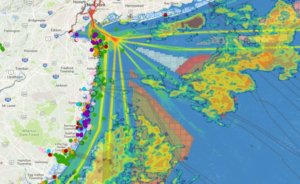 Are you a newcomer to the Mid-Atlantic Ocean Data Portal interested in a 101 session or a returning user who could use a refresher course? Then this webinar is for you!
Join UCI Communications Director and Portal Project Manager Karl Vilacoba on Tuesday, June 29, from 11 a.m. to noon for a guided tour of the Portal’s data, tools and features. Come with your list of questions and learn how to map the Mid-Atlantic in this interactive session.
This webinar is free, open to the public and will be provided via Zoom.
-
Watch: Mid-Atlantic Ocean Forum Poster Session
UCI Communications Director Karl Vilacoba moderated a virtual poster session at the Mid-Atlantic Ocean Forum on May 5 featuring student research on topics relevant to ocean science, policy and socioeconomics in the region. Visit the poster session page containing poster files, abstracts and author information. You can also visit the Forum home page to view videos of other sessions from the four-day event.
-
Jones, McClary and Ohleth Join UCI Advisory Committee
 The Urban Coast Institute (UCI) Advisory Committee recently welcomed three new members who collectively hold over 50 years of experience in science and ocean policy fields: Kanesha Jones, director of global quality management for Amneal Pharmaceuticals; Dr. Marion McClary, professor of biology and chair of the Department of Biological Sciences at Fairleigh Dickinson University (FDU); and Kris Ohleth, director of the Special Initiative on Offshore Wind, housed at the University of Delaware’s College of Earth, Ocean and Environment. Scroll below to read biographies for each member.
Kanesha Jones
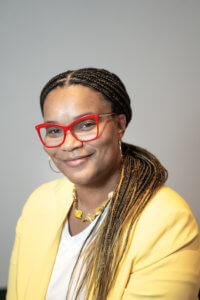 Kanesha Jones has over 17 years of experience driving quality improvement, continuous improvement, and operational excellence in the pharmaceutical industry. She is a graduate of the Marine Academy of Science and Technology (MAST) and received her bachelor of science degree in biology with a concentration in molecular cell physiology from Monmouth University.
Jones currently serves as the first vice president of the Central Jersey Club of The National Association of Negro Business and Professional Women’s Clubs, Inc. (NANBPWC) and serves as the director of the club’s community programming. Additionally, she serves as the club’s Science, Technology, Engineering, Arts and Mathematics (STEAM) Committee chairperson. The overall goal of the club’s focus on STEAM initiatives is to expose minority and underrepresented students to educational and mentoring opportunities, in hopes of increasing diversity and inclusion in STEAM-related professions. She also serves on the Board of Trustees for Hope Academy Charter School, which is a K-8 charter school located in Asbury Park, New Jersey; and is a member of the Board of Trustees for the New Jersey Sea Grant Consortium.
Dr. Marion McClary
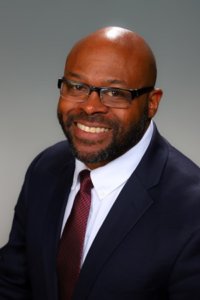 Dr. Marion McClary received his B.S. in marine science from Richard Stockton State College of New Jersey, now Stockton University, in 1990 and received his Ph.D. in zoology from Duke University in 1997. Dr. McClary serves on the Northern New Jersey Community Foundation Environmental Advisory Board, the Association of New Jersey Environmental Commissions Board of Trustees, and the Hackensack River Greenway Advisory Board. He is also chair of the Faculty Athletics Representatives (FARs) of the North East Conference (NEC) and is a member of the NCAA Division I Committee on Academics.
At FDU, Dr. McClary is the NCAA Division I Faculty Athletics Representative and is the coordinator of the Louis Stokes Alliances for Minority Participation (LSAMP) in STEM (Science, Technology, Engineering and Mathematics), which is a grant that is sponsored by the National Science Foundation (NSF) with the purpose of doubling the number of minorities who earn B.S. degrees in STEM. Dr. McClary is a behavioral/physiological ecologist. He is interested in how behavior and physiology influence ecology and how the environment influences behavior, physiology, and ecology.
Kris Ohleth
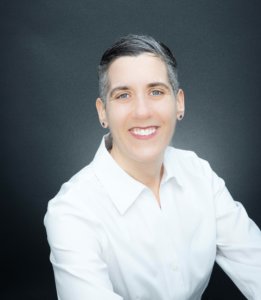 Kris Ohleth has worked in the offshore wind industry for over 15 years, since the days of the industry’s inception in the U.S. Holding senior positions with offshore wind developers, NGOs, and state agencies, she has gained critical insights into the policy and regulations that shape offshore wind activities at the state, regional, and federal levels. She has extensive experience working with offshore wind stakeholders and has expert knowledge of such engagements, having worked on offshore wind and ocean policy issues at all levels.
In her current role as the director of the Special Initiative on Offshore Wind, she leads the organization on to develop strategies to support the responsible and sustainable development of the offshore wind industry. Originally from New Jersey, she is a Rutgers graduate, has a master’s degree from the University of Rhode Island, and currently lives in Morris County, New Jersey, with her husband and retired-racing greyhounds.
-
Read the 2020 UCI Annual Report
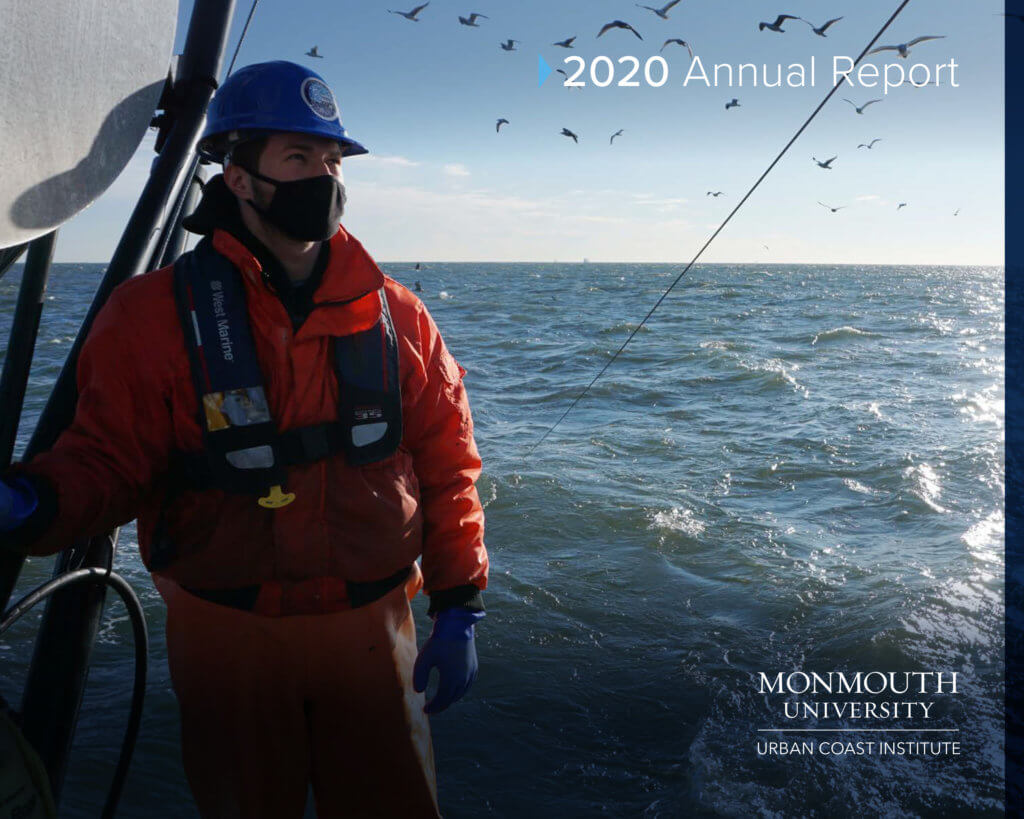
At a time when so many aspects of the traditional campus experience and daily life were upended by the pandemic, the Urban Coast Institute (UCI) continued to provide students access to invaluable opportunities for research, collaboration and engagement, while making important impacts in coastal communities. We’re pleased to present our 2020 Annual Report, which offers a snapshot of the UCI’s accomplishments throughout the unique and challenging year.
Use the links below to view or download a PDF version of the publication or view it in a digital flipbook format. Printed copies of the report are available upon request by emailing uci@monmouth.edu.
Read the Report
-
Monmouth University Giving Days: UCI Earth Day Challenge
 In celebration of the UCI’s 15th anniversary, we’re counting down the 15 days until Earth Day, April 22 – the kickoff of Monmouth University’s Giving Days 2021. Gifts to the UCI support student research and projects that explore and protect our coastal environments.
If 15 donors visit the Giving Days website and make a gift of any amount to a UCI fund on April 22 and 23, the UCI Advisory Committee has agreed to unlock an additional $2,725! Can you help us? The first 15 donors on those days will receive a magnet with the UCI logo.
Share Your UCI Memories on Social
Follow the UCI’s Twitter, Facebook and Instagram pages over the next 15 days as we look back at some of our favorite milestones of the first 15 years. We’d love to hear from our students and partners, too! Join in and share your memories using the hashtag #UCIat15
-
Watch: ‘Global Fisheries Governance and Social Justice’ Online Panel
The Monmouth University Institute for Global Understanding (IGU) and Urban Coast Institute (UCI) hosted “Global Fisheries Governance and Social Justice” on April 8, 2021. The panel addressed the intersection of fisheries governance and social justice in different contexts around the world.
Panelists discussed the use of area-based management tools to support sustainable small-scale fisheries in Latin America, the response to illegal fishing in regional Indian Ocean governance, and how to promote social equity in ocean governance to help coastal indigenous communities adapt to environmental impacts to the oceans. The event was the latest edition of the IGU-UCI Global Ocean Governance Lecture Series, which assembles international experts to discuss scientific and policy issues that hold important implications for coastal and marine ecosystems.
The webinar featured presentations from University of Washington School of Marine & Environmental Affairs Research Assistant Professor Yoshitaka Ota, Environmental Law Institute Ocean Program Director Xiao Recio-Blanco, and University of Western Australia Professor of Environmental Law Erika Techera. The discussion was moderated by Rechnitz Family/UCI Endowed Chair in Marine Environmental Law and Policy Randall Abate, who also serves as director of the IGU. Scroll below for presentation abstracts and biographies for each speaker.
Abstracts & Bios
Fishspiracy: Is it Enough to Promote Conservation and Sustainability?
Dr. Yoshitaka Ota, Research Assistant Professor, School of Marine & Environmental Affairs, University of Washington
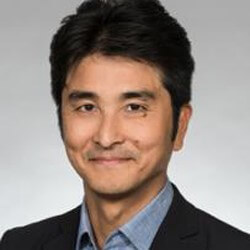 ABSTRACT: The divided views on fisheries management have greater implications than simply a difference in science or opinion. In the face of global environmental changes, such as climate change and a decrease of biodiversity, the failure of fisheries management causes catastrophic consequences on human well-being, including impacts on food security, ocean health, and economic opportunities among coastal communities. The urgent call for new approaches, such as the Blue Economy and Sustainable Development, inspires hope, but there are concerns about those platforms: Do those in power intend to change the way fisheries management is structured now? Is it enough to promote conservation and sustainability? If oceans are truly the ‘common heritage of humanity’ and belong to everyone, how do we ensure our policies reflect the diverse relationships with oceans, so that everyone has access to and benefits from the oceans equitably?
BIO: Dr. Yoshitaka Ota is a research assistant professor at the School of Marine & Environmental Affairs at the University of Washington. He has a background in social anthropology at the University College London. He has conducted ethnographic research on various coastal communities, including Palau, the U.K., Indonesia and Japan, studying the socialization and cultural meanings associated with fishing practices. For the last 10 years, he has been engaged in policy research involving coastal indigenous communities, marine spatial planning, and human security. Dr. Ota is also the director of the Nippon Foundation Ocean Nexus Center, an international initiative comprising an interdisciplinary team of 20+ institutes. As an anthropologist conducting social and cultural research on various coastal communities, he was struck more by our similarities than our differences. One recurring theme he has witnessed across the world is the inequity between who has access to and benefits from oceans and who relies on oceans to live. We know that the human relationship with oceans under modern market systems is unsustainable, unstable and inequitable. We hear that in stories about overfishing and plastic straws and coral reef. What we do not often see are the human stories about the ocean communities that are already facing urgent ecological, social and political problems, even before complex environmental challenges are layered on. We are not in the rooms where scientists and leaders make political and societal decisions to the best of their ability, but without the capacity to not further disadvantage the marginalized and the disempowered. We need to create a new platform for ocean governance to identify the inequities that exist, develop knowledge-based solutions, and actually enact these changes to make oceans equitable for everyone. Thus, his core research interest is to understand how to strengthen social equity in ocean governance while we face global environmental changes. His unit consists of a team of cross-disciplinary scholars.
Galvanizing Community Participation in Small-Scale Fisheries Governance through Targeted Regulatory Reform
Dr. Xiao Recio-Blanco, Director, Ocean Program, Environmental Law Institute
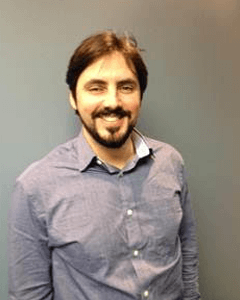 ABSTRACT: About 90% of the world’s 120 million capture fishers are involved in small-scale fishing (SSF), making SSF the largest creator of marine jobs. Seeking to provide guidance on how to promote a more sustainable SSF sector, the Food and Agriculture Organization of the United Nations published the Voluntary Guidelines for Sustainable Small-Scale Fisheries. Building on the connection between environmental sustainability and human rights in the small-scale fisheries context, ELI developed the Small Scale-Fisheries Law and Governance Toolkit. The Toolkit identifies useful regulatory approaches for SSF governance, and model legal language. Many fisheries laws have inserted the concept of “sustainability” without elaborating on how to translate that concept into governance institutions and regulatory procedures. The Toolkit focuses on creating and implementing fisheries co-management systems, along with two basic governance elements that strengthen co-management: (1) exclusive fishing rights for SSF communities, and (2) the creation of exclusive zones for SSF. Developing model legal language, however, is only one small step. For any policy to be successfully translated into regulatory action, lawmakers need to be knowledgeable about the challenges and opportunities of SSF governance, which is often not the case.
BIO: Dr. Xiao Recio-Blanco is the director of the Ocean Program at the Environmental Law Institute (ELI). He is a researcher specialized on the use of area-based regulatory tools in support of ocean governance, with a focus on small-scale fisheries governance and Latin America. His work has highlighted legal hurdles and enablers to the adequate organization of fishing-dependent communities. His research in Mexico also helped compile customary, area-based fisheries management rules and practices. At the ELI, he has authored research and guidance reports on marine spatial planning, marine protected areas enforcement, and small-scale fisheries governance, among other issues. He has been a lecturer on fisheries and ocean management at universities in Europe, Mexico, and the U.S. Before joining ELI, Dr. Recio-Blanco was a private equity attorney at Banco Santander in Madrid (Spain), an associate professor of international law at CIDE (Mexico), and a visiting attorney at Earthjustice in the District of Columbia. Between 2017 and 2020, he was the managing director of the International Network for Environmental Compliance and Enforcement (INECE). He holds a J.D. from the Complutense University of Madrid, and a scientia juris doctor (S.J.D.) from Duke University.
Illegal Fishing and Regional Indian Ocean Governance
Dr. Erika Techera, Professor of Environmental Law, University of Western Australia
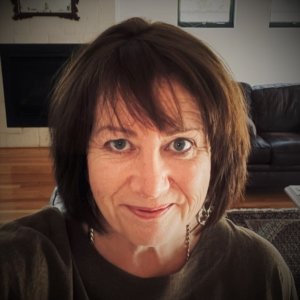 ABSTRACT: The Indian Ocean region is rich in marine biodiversity including significant fish stocks. The region has one of the fastest growing economies in the world, led in part by a focus on blue economy goals. Yet as Indian Ocean nations seek to expand their fisheries sectors, they face several challenges including illegal fishing. Confronting this problem is critical if blue growth is to be achieved in sustainable ways, and if food security and livelihoods are to be secured. Despite the common focus on the blue economy, there are no pan-regional legal agreements and few whole-of-region initiatives. This provides an opportunity for the Indian Ocean Rim Association to play a leading role, but the way forward is not clear. This presentation explains the regional governance landscape in the Indian Ocean, explores the role that the Indian Ocean Rim Association can play in harmonizing fisheries regulation, and identifies ways in which the pressing problem of illegal fishing can be addressed.
BIO: Dr. Erika Techera is a professor of environmental law at The University of Western Australia (UWA). She is the former director of the UWA Oceans Institute. Erika specializes in international and comparative environmental law with a focus on ocean-issues: marine environmental pollution law, fisheries regulation, marine protected area law and policy, maritime legal history and cultural heritage protection. She has a particular interest in small island developing states across the Indo-Pacific region. Erika is a fellow and director of the Australian Academy of Law, and Australia’s National Focal Point for the Indian Ocean Rim Association (IORA) Academic Group. Prior to becoming an academic, Erika practiced as a barrister and worked as a company director. She holds an LL.B. (Hons), LL.M. and Master of Environmental Law, as well as a PG Certificate in Higher Education. Her Ph.D. explored the hybridization of customary law and domestic legislation in relation to marine conservation in the South Pacific.
-
Watch: Fletcher Lake Water Quality Sampling Instruction
Urban Coast Institute Citizen Science Coordinator Erin Conlon and Endowed Associate Professor in Marine Science Jason Adolf recently trained local high school students to conduct water quality sampling at Fletcher Lake in Bradley Beach. The effort was part of the Coastal Lakes Observing Network (CLONet) project, which is focused on monitoring the health of seaside lakes in Monmouth County. For more information, including how to volunteer to monitor your community lake, visit the CLONet website or email Conlon at econlon@monmouth.edu.
-
Knowing the Flow: Testing Current Meter Technology
Watch UCI Associate Director Tom Herrington and Monmouth University student Breana DiRenzi test new Nortek wireless current meter technology in the waters off Sandy Hook, New Jersey.
-
Herrington to Guide Journal of Marine Environmental Engineering
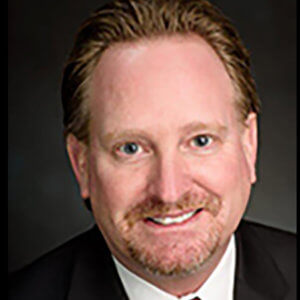 Urban Coast Institute (UCI) Associate Director Thomas Herrington has been named the editor-in-chief of the Journal of Marine Environmental Engineering.
Herrington has served for four years as a member of the publication’s editorial board, which currently includes representatives of American universities and military agencies as well as research institutions in Canada, China, Denmark, Greece, India and the Netherlands. His term as editor will extend through 2024.
The journal’s scope includes scientific and engineering disciplines addressing complex environmental problems in ocean and estuary waters and inland seas. Topics covered in past issues have included coastal and ocean processes, marine waste disposal, habitat enhancement and creation, fisheries management, dredging, beach erosion and management, and computer modeling, among many others. Herrington said he looks forward to expanding the publication’s range in upcoming issues.
“The journal is unique in both its interdisciplinary nature and its focus on applied science and engineering,” he said. “It will continue to publish articles that articulate practical solutions to real-world environmental problems, but broaden the content to include emerging areas of marine environmental engineering required for future sustainability and resilience to climate change impacts, including natural carbon sequestration and the use of natural and nature-based features, living shorelines, and ecosystem adaptations for coastal restorations, adaption, and resilience.”
The journal was launched in 1993 and is published by the Old City Publishing, based in Philadelphia.