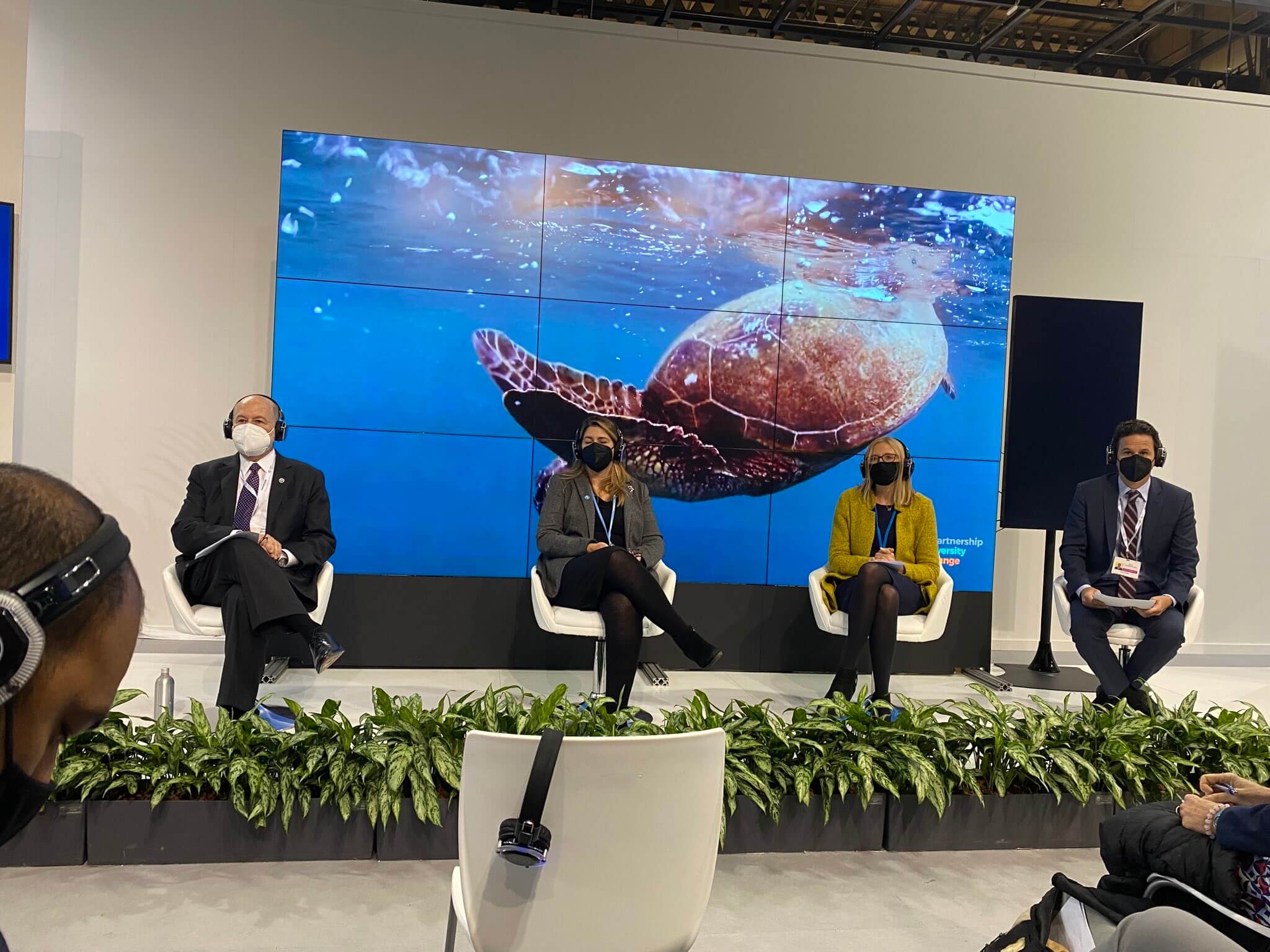
Monmouth University Urban Coast Institute (UCI) Director Tony MacDonald and Professor Randall Abate, Rechnitz Family/UCI endowed chair in marine and environmental law and policy and director of the Institute for Global Understanding (IGU), participated in the 26th UN Climate Change Conference of the Parties (COP26), held Oct 31-Nov. 12 in Glasgow, Scotland. Over 20,0000 representatives of world governments, industries, advocacy organizations, scientific and policy bodies, and other interests gathered to accelerate action towards the goals of the Paris Agreement and the UN Framework Convention on Climate Change.
MacDonald and Abate shared their impressions of COP26 and its outcomes in this session moderated by Monmouth University School of Science Dean Steven Bachrach on Dec. 2, 2021. Topics included:
Whether the conference lived up to its promise as the “last, best hope” for meaningful progress on climate
The U.S.’s renewed climate leadership, participation in the summit and commitments
The important role of oceans and the ocean-climate nexus
The threats of climate on displacement and migration
The role of youth activism and civil society, and other impressions from COP26
MacDonald and Abate chronicled the conference throughout the week in a COP26 Trip Journal published on the UCI website. Visit the page to view their blogs and photos from the event.
Speaker Bios
Randall S. Abate, J.D.
Randall Abate is the inaugural Rechnitz Family/Urban Coast Institute endowed chair in marine and environmental law and policy and a tenured full professor in the Department of Political Science and Sociology. He teaches courses in domestic and international environmental law, constitutional law, and animal law. Professor Abate joined Monmouth in 2018 with 24 years of full-time teaching experience at six U.S. law schools, most recently from Florida A&M University College of Law in Orlando, where he also served as associate dean for academic affairs. Professor Abate has published five books and more than 30 law journal articles and book chapters on environmental and animal law topics, with a recent emphasis on climate change law and justice. Early in his career, Professor Abate handled environmental law matters at two law firms in Manhattan.
Steven M. Bachrach, Ph.D.
Steven Bachrach became the dean of the School of Science at Monmouth University in 2016. Previously, he was the Dr. D. R. Semmes distinguished professor of chemistry at Trinity University in San Antonio, Texas. He also served terms as the assistant vice president for special projects, and Department of Chemistry chair. He began his academic career at Northern Illinois University where he earned the rank of full professor. Bachrach was an American Council on Education (ACE) fellow at the University of Redlands during the 2014-15 academic year. He maintains an active research program in computational organic chemistry, having published with dozens of undergraduate students. Dr. Bachrach has authored more than 150 publications, including his book Computational Organic Chemistry, and served as editor-in-chief of the Internet Journal of Chemistry. His latest book, Thinking Like a Physical Organic Chemist, is scheduled to be published next year with Oxford University Press. Bachrach is the recipient of more than $2 million in grant funding, most notably from the National Science Foundation, American Chemical Society, and the Welch Foundation.
Tony MacDonald, Esq.
Tony MacDonald is director of the Monmouth University Urban Coast Institute (UCI). He was previously the executive director of the Coastal States Organization (CSO) from 1998-2005. CSO, based in Washington, D.C., represents the interests of the governors of the nation’s 35 coastal states and territories on coastal and ocean policy matters. Prior to joining CSO, Tony was the special counsel and director of environmental affairs at the American Association of Port Authorities, where he represented the International Association of Ports and Harbors (IAPH) at the International Maritime Organization on negotiations on the London Convention. Tony has also practiced law with a private firm in Washington, DC, working on environmental and legislative issues, and served as the Washington, DC, environmental legislative representative for the mayor of the City of New York.
Residents of Monmouth County coastal communities can now view data on the health and characteristics of their lakes and compare them to others with a new web app created by the Coastal Lakes Observing Network (CLONet). The launch of the CLONet Data Explorer was one of a number of new initiatives and changes to citizen science activities announced for the year ahead at the CLONet Fall Meeting, held Nov. 16 at Monmouth University.
Through CLONet, university scientists and students train and equip community members to sample Monmouth County’s beach-adjacent lakes for properties such as temperature, salinity, clarity and dissolved oxygen levels, then file their readings into an online database. Since the summer of 2019, the citizen scientists and university researchers have been sampling Deal Lake, Fletcher Lake, Lake Como, Lake Takanassee, Silver Lake, Spring Lake, Sunset Lake, Sylvan Lake, Wesley Lake and Wreck Pond. A team was also recently formed to sample Shadow Lake in Middletown.
The web app allows users to view readings for all of the sampled lakes together on one graph; data for any single lake of interest vs. the average of all of the lakes; and averages for each lake by category. Users can toggle through date ranges to study data from specific windows of time, with new data from the sampling teams added to the system every two weeks.
UCI Community Science Coordinator Erin Conlon shares results from 2021 lake sampling.
As of the meeting, the citizen scientists had filed 897 sampling reports since the summer of 2019, with the data augmented by hundreds of additional samples taken regularly by Monmouth faculty and students. The Urban Coast Institute (UCI) received a $150,000 grant from the Jules L. Plangere, Jr. Family Foundation in July that will allow sampling to continue through at least the summer of 2023.
The funding also covered the purchase of 11 phycocyanin meters, which will be provided to each of the lake teams to enable them to measure harmful algal blooms (HAB) with greater accuracy. The handheld meters shine fluorescent light in the water to gauge the concentrations of “blue-green algae” – actually a potentially toxic bacteria called cyanobacteria — most commonly associated with HABs. Although the New Jersey Department of Environmental Protection (NJDEP) measures cell counts and toxin levels in the waters as its main indicators of HABs, the data from the two methods tend to tell very similar stories, according to Monmouth University Endowed Associate Professor of Marine Science and CLONet Coordinator Jason Adolf.
“An army of citizen scientists with phycocyanin probes can make a real contribution to the state’s efforts to manage and monitor harmful algal blooms, not just in coastal lakes but statewide,” Adolf said. “I’m excited to get our group started on it.”
Findings from 2021
Adolf and UCI Community Science Coordinator Erin Conlon provided a snapshot of the findings from this year’s data to attendees.
Particularly compared to 2019, 2021 was a “good year” for the lakes in terms of the low number of HAB events.
There was a high correspondence between the readings taken by the community volunteers and university, demonstrating the high quality of data being gathered by citizen scientists. The Monmouth staff members and students regularly sample each CLONet lake as a quality control measure and to bolster the volume of data project-wide.
Surges in salt levels were recorded in February and March, as snows melted and carried road salts into the drains.
Adolf and Conlon said the data gathered for pH testing was so varied from lake to lake that it didn’t seem to reveal any discernable patterns. Citizen teams will no longer record pH levels in 2022.
The data continued to show that the combination of high temperatures and nutrients made conditions ripe for spikes in HABs. While rainfall is suspected to be an important source of nutrients to these lakes, citizen data shows that not all of the lakes reacted the same after storm events. Citizen conductivity data suggested some lakes respond very quickly (within days) and other more slowly (1-2 weeks) to rainfall.
“This is a great illustration of how citizen data can be used to reveal important differences among coastal lakes, and how we need to think about individual lakes when we think about solutions,” Adolf said.
If you’re interested in volunteering to sample your community lake or would like more information about CLONet, email econlon@monmouth.edu.
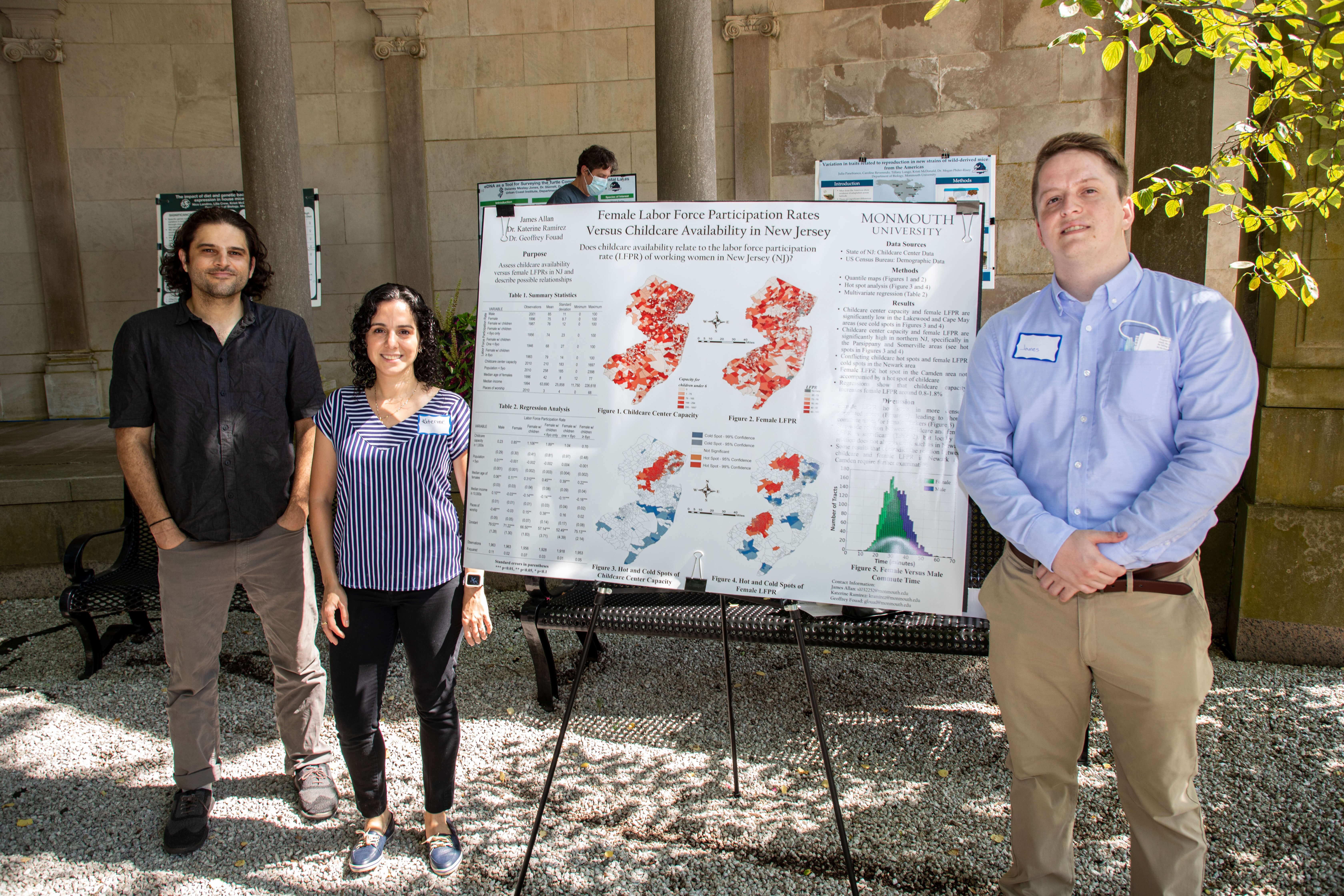
From l-r: Monmouth University professors Geoffrey Fouad, Katerine Ramírez and student James Allan.
Monmouth University Assistant Professor of Economics Katerine Ramírez and student James Allan will share their research paper, “Female Labor Force Participation and Care of Children in Coastal New Jersey,” which was co-authored with Assistant Professor of Geography Geoffrey G. Fouad, at the 2021 International Population Conference on Dec. 10. Organized by the International Union for the Scientific Study of Population (IUSSP) and the host country of India, the event is billed as the world’s largest international scientific conference on population and demography.
The conference brings together researchers, policymakers and practitioners from diverse disciplines and from across the globe, to present and discuss the latest research on a broad range of contemporary population issues. Ramírez will present the paper virtually on a 9 a.m. (ET) Spatial Networks, Clusters and Accessibility panel, with Allan participating in the Q&A session.
Ramírez, Allan and Assistant Professor of GIS Geoffrey Fouad conducted research for the paper over the summer with support from the Urban Coast Institute’s Heidi Lynn Sculthorpe Scholars Program. Drawing on federal and state data, the project explored the relationship between childcare availability, measured by the number of daycare facilities and their capacity, and the labor force participation of women in Jersey Shore communities. They further considered variables such as partners’ marital status, and number and age of children.
Scroll below to watch Allan present a poster on the subject from the School of Science Summer Research Symposium in August.
UCI Director Tony MacDonald and Rechnitz Family/UCI Endowed Chair in Marine and Environmental Law and Policy Randall Abate arrived in Glasgow, Scotland, on Nov. 2 to participate as official observers at the UN’s COP26 climate change summit. Below we share some of their dispatches from the proceedings. Check back for updates.
In addition, view these media interviews with MacDonald and Abate:
ABATE: COP26: The Heat Is on to Secure Meaningful Climate Action
Nov. 3, 2021
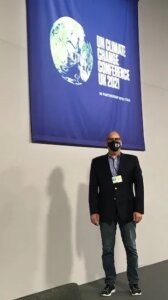
Abate at COP26
Approximately 40,000 diplomats, heads of state, observers, and activists descended on the welcoming city of Glasgow, Scotland (population 635,000), to participate in the much-anticipated 26th Conference of the Parties to the United Nations Framework Convention on Climate Change (COP26) on Nov. 1-12, 2021. This number of visitors alone would strain Glasgow’s ability to host this major global event, yet approximately 100,000 protesters are expected to arrive on Saturday, Nov. 6, for the “Global Day for Climate Justice,” which should stir things up a bit.
I am happy and proud to represent Monmouth University’s Urban Coast Institute (UCI) at this year’s event as an officially recognized observer organization in the “Blue Zone,” where the diplomats and heads of state negotiate the terms of the agreements that the event yields. My colleague, Tony MacDonald, director of the UCI, joins me in participating in COP26. It is his second COP (he attended COP21 in Paris in the “Green Zone” for civil society participants in 2015), whereas this is my first COP in any capacity.
Like many of its predecessors, COP26 embodies a clash of hope and despair in confronting the global climate crisis. Developed nations boldly convey slogans of hope such as “What Paris promised, Glasgow will deliver,” and “The U.S. is back” (in President Biden’s speech). This optimism is tempered by the realities that marginalized populations face in bearing the disproportionate burdens of the global climate crisis. A leader of a developed country aptly noted at the start of COP26, “The time to act was yesterday.” A chorus of impatient youth climate activists demanding an end to the developed world’s “empty promises” and “blah blah blah” on climate action underscored this sentiment.
COP26 has already delivered at least two reasons for hope in the first few days of the event: (1) the return of U.S. participation and leadership in these negotiations and (2) more active and engaged participation from the private sector in achieving “net zero” carbon goals. President Biden is sending the right messages regarding the return of U.S. leadership. Even if the U.S. doesn’t live up to those bold ambitions, the desire and intention to return to that leadership role is a tremendous boost to global climate governance efforts. Russia and China remain on the sidelines for now, but political pressure will mount for them to participate with the U.S. back in the game. Although it’s a low standard, the U.S. is poised to play a more significant role in climate change diplomacy than it did under the Obama administration, while it seeks to undo the shameful legacy of climate inaction during the Trump and George W. Bush administrations. President Biden has pledged $3.5 billion per year to finance climate mitigation and adaptation efforts in developing countries. This is a step in the right direction, but the U.S. can be much more ambitious than this first step. The response to Hurricane Katrina alone exceeded $9 billion.
The private sector also has been more visible than ever in these climate change deliberations. The responses to the climate change challenges that the world faces will not be attainable without full engagement and buy-in from the private sector. Green hydrogen, offshore wind, methane mitigation, and nuclear power exhibits were prominently featured in the Blue Zone. While there are dangers in the use of science and technology to achieve “quick fix” responses to climate change challenges through the use of certain geoengineering strategies, these clean energy technologies to promote a clean energy transition are essential to ensure that global warming remains below the critical 1.5 Celsius mark.
Stay tuned for the next entry, which will focus on some critical obstacles that threaten to undermine the ambition and inclusiveness of the COP26 deliberations.
On the Scene: Nov. 3-4
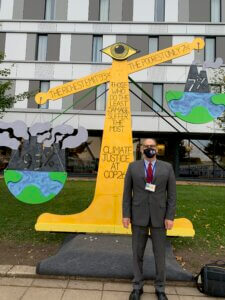
MacDonald shared these images from around COP26 on Nov. 3 and 4. Visit his Twitter account (@tmacdUCI) for more inside looks from the summit.
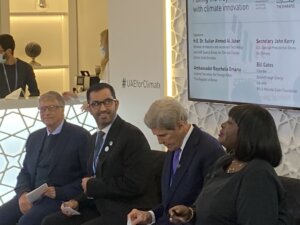
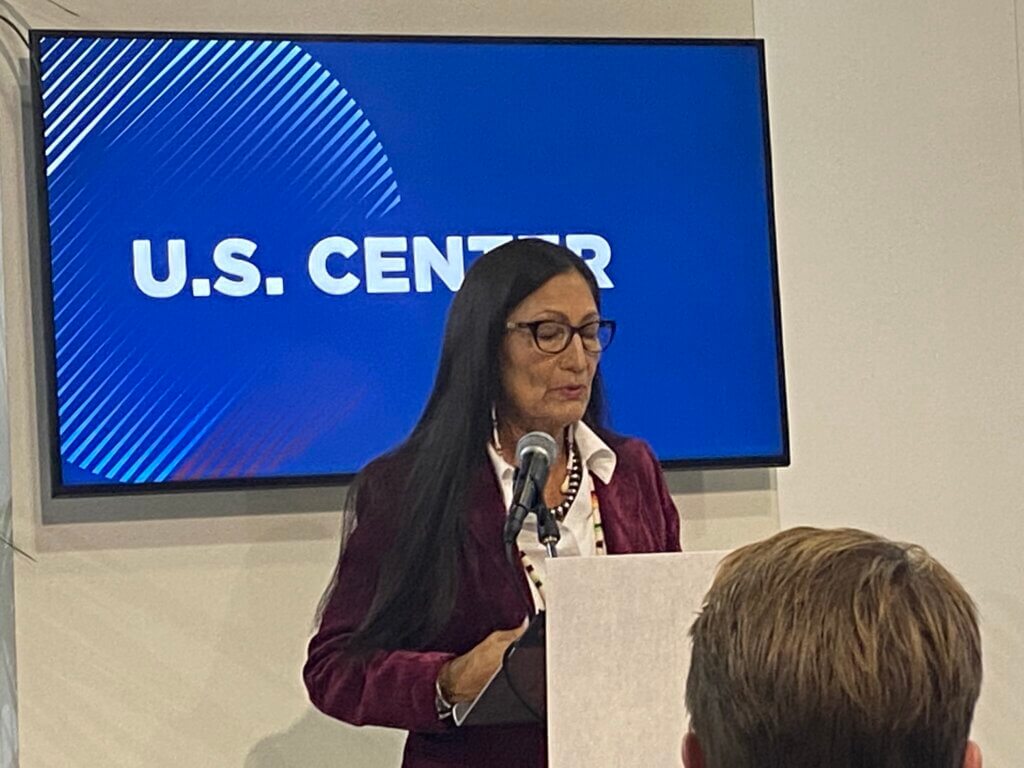
Bill Gates and Secretary of State John Kerry prepare for a panel discussion.
Secretary of the Interior Deb Haaland challenges the U.S. and world to increase their commitments to offshore wind development.
When Tony saw this sign, it reminded him of a Robert Burns quote: “I’m truly sorry that man’s dominion has broken Nature”s social union.”
ABATE: COP26: Key Obstacles and Challenges
Nov. 4, 2021
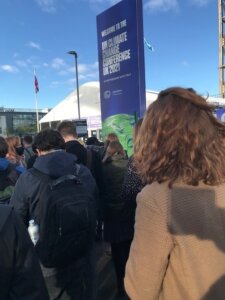
The line to enter the COP26 proceedings
Despite the optimism and hope that COP26 has ushered in, there are many reasons for despair. First, there have been critical logistical shortfalls in COP26 that have hampered global South participation in at least three ways. First, COVID-19 burdens have hit the global South harder than in the global North. As such, the financial and logistical challenges associated with travel to the U.K. during a global pandemic have limited participation from the global South. Worse still, strict COVID-19 protocols have limited room capacity for those able to attend in person in Glasgow. Finally, the COP26 virtual platform has been plagued by technological glitches, further diluting participation from the global South. All of these challenges compound the “climate apartheid” reality of the past three decades (i.e., the global North is primarily responsible for the global climate crisis and the global South bears disproportionate burdens from these impacts).
Second, the goal of climate finance at $100 billion per year also is a hot topic at this year’s negotiations and is essential to the success of COP26. This pledge of support from developed countries to developing countries for climate mitigation and adaptation that was made in 2009 in Copenhagen has not yet been fulfilled. There will be no guarantee that this goal will be fulfilled at COP26. Even if those pledges are made at COP26, pledges are only words until the funds are delivered, which has been problem with some past pledges from developed nations.
Third, although President Biden’s good intentions matter a great deal, they will matter much more when they are backed by concrete actions. A cruel irony surfaced in the U.S. in the week leading up to COP26. The U.S. Supreme Court granted a petition to review the legality of the Clean Power Plan, which is an essential mechanism through which to secure America’s compliance with its emission reduction commitments. Many environmental law scholars see the Supreme Court’s decision to review this challenge as a harbinger of bad news for the Clean Power Plan and the nation’s climate regulation ambitions. Worse still, gridlock in Congress has persisted throughout 2021 on proposed new climate regulation initiatives. With midterm elections looming in 2022, the U.S. may be on very shaky ground to deliver on the commitments it makes in Glasgow.
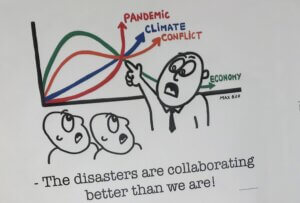
Finally, in addition to the challenge of mobilizing political will in developed nations on climate regulation ambitions, those laudable intentions often fall short in reality. Many countries have not fulfilled the emission reduction commitments they made at Paris in 2015. Therefore, COP26 is a day of reckoning to get on track toward even more ambitious goals. Based on the current state of compliance with Paris Agreement targets, a UNFCCC Secretariat report from July 2021 found that global greenhouse gas emissions are on track to increase by 16% by 2030, instead of the 45% decrease needed. This dark cloud will hover over the deliberations in Glasgow and propel an unforgiving “no margin of error” mandate to the projected outcomes.
In all other areas of domestic and global environmental governance, humans respond most effectively when there is a palpable emergency. The house has been on fire on our planet for several years now from climate change, yet we still are not embracing the emergency. Although climate change denial has eroded somewhat in recent years because of the palpable climate change-induced disasters around the world, the sense of urgency is still missing. We seem to expect our scientific and technological ingenuity to save us from this crisis as we have overcome other challenges throughout human history. Humanity’s ability to adapt to crises is our greatest strength, yet it is also perhaps our greatest flaw because it prevents us from addressing the root causes of the crises we face.
Stay tuned for the next entry, which will focus on the role of youth climate activism in seeking to raise the ambition of climate action at COP 26.
On the Scene: Nov. 5
Abate attended a plenary session with former U.S. Vice President Al Gore, who said, “Even if the pledges from COP 26 are fulfilled, it will only get us to 1.8 Celsius of warming. We need to do better … and we can do better.”
On the Scene: Nov. 6
MacDonald attended a panel on international partnerships for biodiversity, marine protected areas and climate that included National Oceanic and Atmospheric Administration (NOAA) Administrator Rick Spinrad.
Photos: Global Day of Action for Climate Justice
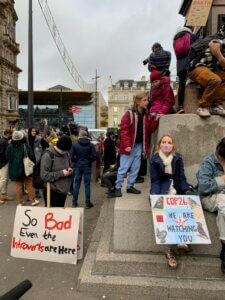
Randall Abate captured these photos from the Nov. 6 Global Day of Action for Climate Justice demonstration held outside of COP26. Mass mobilizations were organized in cities around the world.
Protestors show their displeasure with world leaders.
Thousands take part in a march in Glasgow.
ABATE: Youth Climate Activism May Be Our Last Hope
Nov. 8, 2021
In my youth, I didn’t think about the fate of the planet unless I was reading a science fiction novel. I was enjoying the world around me and soaking up all it had to offer, never imagining how fragile and exhaustible our ability to sustain life on this planet could be. I didn’t have to bear witness to unrelenting life-snuffing disasters as a result of climate change. I perceived nature and the built environment on this planet to be indestructible and infinite.
Times have changed so quickly. Within the span of my lifetime, humanity’s perceptions of the Earth have shifted from an unlimited paradise of resources to support our comfortable lives to requiring emergency life support measures to give ourselves and Earth’s systems a chance to endure what climate change has in store. This abrupt pivot in our relationship to nature affects all of us deeply, regardless of how fully we acknowledge it. But this learned helplessness that we feel as a result of this perilous new normal disproportionately burdens youth. Their carefree childhoods – and potentially the promise of their futures – have been stolen.
Climate change governance is challenging for many reasons: It is extremely costly, it has been plagued by debates about the reliability of the scientific data, and it requires forward-looking, altruistic behavior, rather than simply responding to clean up a mess. This temporal challenge of climate regulation is even more daunting during a pandemic and a global economic crisis. It is difficult, if not impossible, to overcome the human proclivity to just focus on getting through this month before we focus on what’s in store next year and ten years from now. But climate science demands that we respond with a lens that carefully considers short-term and long-term future scenarios.
Youth climate activism is the check in place in this process to help ensure that a forward-thinking approach to climate governance is sufficiently ambitious. While the enhanced youth engagement is encouraging, it may not be a game-changer in raising the ambition of the outcomes of COP26. Youth voices face many of the same obstacles that indigenous communities and small island nations faced in the COPs from previous decades. Structured processes for their participation are just starting to take hold and are growing quickly. YOUNGO is one example of a youth organization that has a formal advisory role to play in the proceedings, which I witnessed during COP26. But most youth are limited to protests in the streets to convey their concerns and suggestions.
Youth climate litigation in the past decade has been inspiring and impressively impactful in raising the ambition of climate regulation. But lawsuits and protests won’t save the planet in time. The domestic and international levels of governance need to approve and appoint future generations commissions with a charge that is specific to providing advice and consent in climate change legislation and litigation. Such commissions with broader charges to speak on behalf of future generations already exist in several countries around the world. Kim Stanley Robinson’s recent climate fiction novel, The Ministry for the Future, proposes a similar model. Efforts to address climate change simply should not be undertaken without a structured process to reflect youth participation and consent – after all, it’s their future at stake. Indigenous peoples have made progress in the past two decades with the concept of free, prior, and informed consent for projects that may impact their traditional lands. While this mechanism is a start, unless it is considered to represent a veto power on the project, it doesn’t go far enough. Similarly, mere participation of youth advocates in the climate governance process will guarantee that we fall short of what is necessary to protect their futures, and the futures of their children.
Youth climate activism is a social movement like many other social movements in the U.S. and the world. Some of these movements secured legal protections and social and cultural legitimacy relatively quickly, such as the LGBTQ+ movement, whereas others continue to struggle to secure the protections they deserve even more than a century after the movement began. For example, the Black Lives Matter movement is a reminder of the long shadow of slavery in the U.S. that perpetuates race discrimination in this country – something that the Civil War, the Thirteenth Amendment, and the Civil Rights movement failed to rectify. Youth climate activism needs a rapid trajectory like the LGBTQ+ movement to gain a foothold in securing the protection of their interests because there is very little time remaining to get this right.
In many ways, COP26 will likely be remembered as the beginning of a new era of holding governments accountable to youth expectations in climate governance decisions. The Rio Convention in 1992 marked the beginning of these global youth concerns with the rollout of three new major international environmental agreements, including the UN climate change treaty. I was moved by a 2020 short film, “Only a Child,” which I viewed at COP26. The film is based on a speech delivered by a 12-year-old girl at the Rio Convention. It compellingly portrays youth concerns at that time of what was at stake in the need for effective global environmental action. Unfortunately, those concerns have gone largely unaddressed. A quarter-century of empty promises on climate change governance has caused youth concerns to reach a boiling point.
Youth accountability efforts will continue to take the form of climate protests and climate litigation in the near term. But to the extent that politicians continue to fail to regulate climate change for the emergency that it is, youth climate activism may have no choice but to move beyond “tokenistic” objections with little to no impact, and resort to more confrontational methods of engagement, ranging from strategic direct action against the fossil fuel industry to organizing an Eco-Marxist revolution in climate governance.
Urban Coast Institute Artist in Residence Kimberly Callas, assistant professor in the Monmouth University Department of Art and Design, was interviewed in the Oct. 27 edition of the New Jersey-based arts podcast, The Stolen Hour, with host Dennis Dalelio. Callas discusses nature and the ocean’s influence on her art and life, her Discovering the Ecological Self project, her work with the UCI and more.
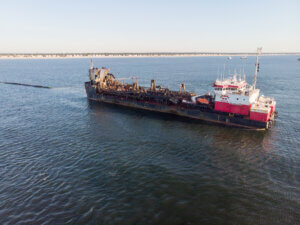
UCI Associate Director Thomas Herrington and Texas A&M University Center for Dredging Studies Director Ram Mohan collaborated on an article in the fall issue of the Journal of Marine Environmental Engineering titled “Coastal Resiliency Considerations for America’s Four Coasts: Preparing for 2100.” In the article, the authors make the case for more widespread reuse of sediments dredged from waterways and ports to counter the effects of sea level rise and climate change along America’s coasts.
Although Herrington and Mohan cite examples of how these materials have been successfully used to replenish eroded wetlands, they note that, “Permitting of these projects can be challenging as projects are typically reviewed by regulatory agencies as ‘disposal’ or ‘placement’ projects, as opposed to ecosystem restoration projects, which provide a distinct ecological uplift benefit.” The article calls for policy reforms to encourage the reuse of dredged materials and research that can help quantify the practice’s economic benefits.
Herrington serves as the journal’s editor in chief.
UCI Communications Director Karl Vilacoba was a presenter on an Oct. 13 NOAA Central Library Seminar Series session covering regional ocean planning in the Mid-Atlantic and the work of the Mid-Atlantic Regional Council on the Ocean (MARCO). Vilacoba, who serves as project manager for MARCO’s Mid-Atlantic Ocean Data Portal, provided an overview of how the site is being used to inform ocean management decisions and previewed what data products are on the horizon.
The Monmouth University Institute for Global Understanding (IGU) and Urban Coast Institute (UCI) kicked off the second season of their joint Global Ocean Governance Lecture Series on Oct. 13 with a panel discussion of international issues and challenges concerning the protection of whales. The discussion was moderated by Professor Randall Abate, director of the IGU, and included the following presentations and speakers:
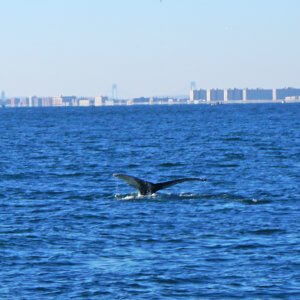
“Modernizing the International Whaling Commission’s Approach to Aboriginal Subsistence Whaling,” University of Alberta (Canada) Associate Professor of Law Cameron Jefferies
“Saving the Critically Endangered North Atlantic Right Whale: Challenges and Opportunities,” Natural Resources Defense Council (NRDC) Staff Scientist Francine Kershaw
“Ensuring the Continuing Recovery: Protecting the Great Whales in the Context of 21st Century Challenges,” Wildlife Conservation Society Ocean Giants Program Director Howard Rosenbaum
Abstracts & Bios
Modernizing the International Whaling Commission’s Approach to Aboriginal Subsistence Whaling
ABSTRACT: Over the past three decades, the primary conflict at the International Whaling Commission (IWC) has centered around the future of internationally sanctioned commercial whaling. In the aftermath of the International Court of Justice’s Whaling in the Antarctic decision, Japan has ceased ‘Special Permit’ whaling in the Southern Ocean, has withdrawn from the IWC, and has stated its intention to only whale within its Exclusive Economic Zone. Other whaling nations, including Iceland, have reported a declining demand for whale meat and are looking towards a post-commercial whaling world. The next challenge that is positioned to come to the forefront of international whale management is the IWC’s approach to Aboriginal Subsistence Whaling (AWS). The IWC has, at least to a certain extent, recognized the cultural, nutritional and social importance of whaling for many of the world’s Indigenous peoples since its inception. The IWC’s current ASW procedure requires Contracting Governments to submit “needs statements” on behalf of Indigenous communities to the IWC for scientific scrutiny and, ultimately, Commission approval. This process does not afford Indigenous peoples the opportunity to participate in decision-making nor does it account for Indigenous rights from international (e.g., United Nations Declaration on the Rights of Indigenous Peoples and the International Covenant on Civil and Political Rights) or domestic legal orders. Canada withdrew from the IWC in 1981 citing, in part, concerns that the IWC’s ASW process failed to discharge Canada’s constitutional obligation to protect marine mammal harvesting rights for Indigenous peoples and this talk will use Canadian experience to explore the shortcomings of the IWC’s AWC process and the need for modernization.
BIO: Cameron S.G. Jefferies, B.Sc., LL.B., LL.M., S.J.D., is an associate professor of law at the University of Alberta in Edmonton, Canada, where he specializes in international and domestic environmental law and energy law. He currently teaches Environmental Law, International Environmental Law, Basic Oil and Gas Law, and Oceans Law and Policy. He was admitted to the Law Society of Alberta in 2010. He completed his graduate degrees at the University of Virginia, School of Law, where he studied as a Fulbright Scholar. Before entering academia, Dr. Jefferies practiced at Field LLP in Edmonton, Alberta, and worked as a research associate at the Health Law Institute at the University of Alberta. He has published several book chapters and articles in Canadian and U.S. law journals, including the Energy Law Journal and the Journal of Environmental Law and Practice. He is the author of Marine Mammal Conservation and the Law of the Sea (OUP, 2016), co-author of Tort Law, 6th ed. (Carswell, 2017), and co-editor of Global Environmental Change and Innovation in International Environmental Law (CUP, 2018). He is an award-winning teacher and researcher and has been an invited speaker to a number of national and international conferences. In addition to his academic and professional curiosity in environmental law, oceans law, and wildlife conservation, Dr. Jefferies maintains a keen interest in public interest advocacy and remains active in promoting local environmental law reform.
Saving the Critically Endangered North Atlantic Right Whale: Challenges and Opportunities
ABSTRACT: After making a painstaking recovery from the impacts of industrialized whaling, the North Atlantic right whale is once again declining rapidly towards extinction. As climate change alters the distribution of their main prey, right whales – in hot pursuit – are moving into new areas and spending more time in habitats where they were once seasonal migrants. The result: shocking levels of mortality, morbidity, and reproductive decline resulting from entanglement in commercial fishing gear and vessel strikes. The fight to save the right whale from these impacts is further complicated by the need to advance offshore wind energy at a commercial scale in a way that will not introduce additional risk to the species. This presentation will speak to the challenges of reducing risk of entanglements in a dynamic ocean where fisheries reign, and the tightrope of considerations when advancing a new ocean industry in what are now some of the right whale’s most important habitats. We will then explore opportunities presented by technological innovations to both save the right whale and improve our resilience to climate change.
BIO: Dr. Francine Kershaw uses the best available scientific information to advocate for improved protections for marine mammals related to a variety of issues, including ocean noise, ship strikes, and bycatch. She currently leads NRDC’s work to end large whale entanglements and dedicates a large part of her portfolio to advancing responsible offshore wind development. Still a whale population geneticist at heart, in her spare time she also advocates for improved uptake of genetic information into conservation policy decisions. Kershaw is an active member of the International Union for Conservation of Nature (IUCN) Marine Mammal Protected Area Task Force, the Global Ocean Biodiversity Initiative, and the Group on Earth Observations Biodiversity Observation Network Genetic Composition Working Group, and an associate member of the Indian Ocean Network for Cetacean Research. She holds a Ph.D. in ecology and evolutionary biology from Columbia University and is currently based in Greenville, South Carolina.
Ensuring the Continuing Recovery: Protecting the Great Whales in the Context of 21st Century Challenges
ABSTRACT: Whales and other marine life face many 21st century challenges, including bycatch (incidental entanglement in fishing gear), ship strikes, increasing levels of anthropogenic ocean noise, coastal development in essential habitats; and the impacts of oil spills and other ocean pollutants. The impacts from a changing climate also loom, and range from potentially shifting the abundance and distribution of essential prey species to exposing whales to more human activity in previously inaccessible places such as the Arctic. Dr. Rosenbaum will speak about how science, technology, and innovative approaches helps inform decision-making to better protect and minimize impacts to whales in the New York Bight and Arctic Beringia.
BIO: Dr. Howard Rosenbaum is a senior conservation scientist and director of the Wildlife Conservation Society’s (WCS) Ocean Giants Program, which aims to secure the future of whales, dolphins, and other marine species. He is a senior scientist at the American Museum of Natural History, core faculty member at Columbia University, a member of the International Union for Conservation of Nature (IUCN) Cetacean Specialist Group and Important Marine Mammal Area Task Force, and the International Whaling Commission’s Scientific Committee. Rosenbaum has led marine mammal conservation projects around the world, including the Indian, Pacific, and Atlantic oceans and the Arctic. For more than 30 years, Rosenbaum’s innovative science has helped protect marine species from current and emerging threats in their most important habitats. In the New York Bight, Rosenbaum leads WCS’s efforts for research and conservation of marine mammals, which includes a collaborative effort to use state-of-the-art near real-time acoustic monitoring and other technologies to study whales and ocean noise. Rosenbaum is a member of New York’s (NYSERDA) Environmental Technical Working Group and on the Specialist Committee for Best Management Practices related to Offshore Wind Development. Rosenbaum has also been a subject matter expert for two past Bureau of Ocean Energy Management workshops related to marine mammals and offshore wind development, and recently served on IUCN’s panel on Mitigating Biodiversity Impacts to Wind Energy Development. He has authored 95 peer-reviewed publications, co-edited a book on genomics, and his work has been featured widely in many popular media outlets. Rosenbaum grew up on Long Island and earned his Ph.D. from Yale University.
Rechnitz Family/UCI Endowed Chair in Marine and Environmental Law and Policy Randall Abate delivered two recent presentations on his work-in-progress article, “Youth and Indigenous Voices in Climate Justice: Leveraging Best Practices from U.S. and Canadian Litigation.” The article will be published in the Spring 2022 issue of the Public Land and Resources Law Review.
Climate justice litigation seeks to secure remedies for communities that have been and will be disproportionately burdened by climate change impacts. The article examines the origins and evolution of climate justice cases in the U.S. and Canada and makes a series of recommendations for helping secure successful outcomes, including capitalizing on the intersections between youth and indigenous claims in future litigation.
Abate delivered a second presentation on the article on Oct. 1 at the 39th Annual Public Land Law Conference, hosted by the University of Montana School of Law. The conference theme was “Forging a Climate of Justice: Reconnecting People and Place.”
The environmental gains that will be seen by replacing carbon-based energy sources with power generated by offshore wind farms are oft-discussed, but questions remain about the impacts that construction of this infrastructure could have on marine life and habitats. Monmouth University student Riya Ajmera recently completed a white paper that examines the nature and scope of the risks in the Mid-Atlantic and science-based policy options that can mitigate harm to marine species and promote marine biodiversity.
Ajmera conducted her research over the summer with support from the UCI’s Heidi Lynn Sculthorpe Scholars Program and guidance from faculty mentor Randall Abate, Rechnitz Family/UCI endowed chair in marine and environmental law and policy. Experts interviewed for the project include Julia Beaty, fishery management specialist, Mid-Atlantic Fishery Management Council; Doug Copeland, development manager, Atlantic Shores Offshore Wind; Tim Dillingham, executive director, American Littoral Society; Jim Ferris, bureau chief of new technology, Clean Energy Division, New Jersey Board of Public Utilities (NJ BPU); Suzanne Hornick, founder, Ocean City, New Jersey Flooding Committee; and Kris Ohleth, executive director, Special Initiative on Offshore Wind.
Paper title: Mutual Benefits for Offshore Wind Energy in the Mid-Atlantic: Science and Policy Strategies to Mitigate Harm to Marine Species and Maximize Benefits for Renewable Energy
Student Researcher: Riya Ajmera
Year and Major: Junior, Chemistry with a Concentration in Biochemistry/Minor in Journalism
Q: Among the three impacts you cover from offshore wind to human communities are the disruption to commercial fishing and the possibility that the visibility of turbines on the horizon could drive away tourists. Some readers might not be familiar with the third category, which covers Native American cultural impacts. Can you explain what the concern is and how it is being approached?
Native American communities have protected land that is essential to their history and culture. Some of these lands have been buried due to rising sea levels from the last ice age. Offshore wind turbines can put those lands at risk.
The Bureau of Ocean Energy Management (BOEM) and offshore wind companies are aware of this concern. For the Vineyard Project, which can serve as an exemplar of the process for other offshore wind sites in the Mid-Atlantic, BOEM has signed a Memorandum of Agreement with the offshore wind company regarding various Native American properties that are critical to protect. The Agreement addresses mitigation measures and avoidance of these lands for this project. Furthermore, partnerships such as the Atlantic Shores Offshore Wind, LLC, hold mandatory meetings with Native American tribes. Proper communication with the tribes allows for direct and open acknowledgement of how the tribes perceive offshore wind projects and what measures they seek for the protection of their cultural resources.
Q: Your paper also delves into impacts on marine life, including questions on how construction noise could affect marine mammals with sound sensitivities. What do we know about this from the experience in Europe and other research that’s been done to date?
Various studies have addressed marine species’ responses to offshore wind turbines. One study examined the migration patterns of porpoises in response to the pile-driving construction at the first German offshore wind farm. The study concluded that all of the porpoises near the construction site had moved somewhere else, with the first sighting seen 20 km away. The study also determined that porpoises were seen around the site again after the piling phase had ended. However, the return of the species did not alleviate the concern that the species had decreased fitness due to its fearful flight response and also being moved away from its habitat into an area that is unknown to them. This behavior may occur in other marine species, which raises concerns regarding the unpredictability of the impacts on marine species in implementing offshore wind facilities.
Another example is based on the endangered North Atlantic right whale. Past research has shown that vessel strikes are a major cause of injury and death of right whales. This vulnerability is a concern given the amount of vessel traffic during the construction of the turbines. BOEM indicated in the Vineyard Report that vessels must travel at speeds of less than 10 knots because studies have shown that the greatest risk of injury to a large whale is with speeds from 8.6 to 15 knots. However, even a collision with a large ship can be harmful to the whale species. The only mitigation efforts in response to this concern have been to slow down and stop vessels when any sighting of a large whale or right whale occurs within 328 feet of the vessel.
Q: You offer some recommendations in the areas of policy reform and improving transparency and public outreach around offshore wind projects. What are some of the steps that can be taken to make these processes better for stakeholders?
These projects are vast, complicated, and multi-faceted efforts that need to be coordinated so every participant in the offshore wind industry siting process is working together. The most significant resolution for this is proper communication and collaboration. First, there needs to be more communication among BOEM, NOAA, state agencies such as NJDEP, and the construction companies. A related concern is the need for greater communication in the application process. Finally, the level of transparency in the process can be improved. These transparency concerns have three dimensions regarding what information needs to be made available to the public: 1) dissemination of key information on the offshore wind turbines and responses to concerns from the public; 2) clarification of what information cannot be made available to the public at certain phases due to confidentiality concerns; and 3) identification of what role the public holds in the process and what opportunities are available for public participation.
The second area that needs attention is the focus placed on research and mitigation efforts. There is not much research on offshore wind turbines in the U.S. because it is still a new area, which makes the research that is conducted during these processes highly valuable for the future of offshore wind in the nation. However, if all of the turbines are constructed in a relatively short period, there will not be enough time for the research that is conducted to be applied to future offshore wind facilities. Moreover, given that much of the mitigation efforts for large whales and right whales relies exclusively on the eyes of the workers, the lives of these vulnerable marine species are at the mercy of the level of care that the workers exercise. There should be a mandatory training program for these workers in sighting species and how to properly and safely implement these mandatory mitigation efforts.


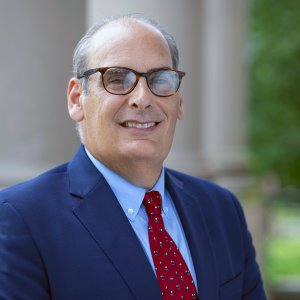 Randall Abate is the inaugural Rechnitz Family/Urban Coast Institute endowed chair in marine and environmental law and policy and a tenured full professor in the Department of Political Science and Sociology. He teaches courses in domestic and international environmental law, constitutional law, and animal law. Professor Abate joined Monmouth in 2018 with 24 years of full-time teaching experience at six U.S. law schools, most recently from Florida A&M University College of Law in Orlando, where he also served as associate dean for academic affairs. Professor Abate has published five books and more than 30 law journal articles and book chapters on environmental and animal law topics, with a recent emphasis on climate change law and justice. Early in his career, Professor Abate handled environmental law matters at two law firms in Manhattan.
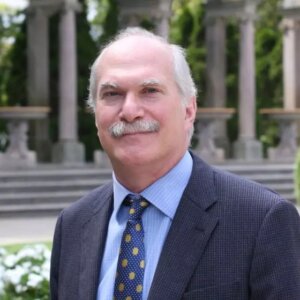 Steven Bachrach became the dean of the School of Science at Monmouth University in 2016. Previously, he was the Dr. D. R. Semmes distinguished professor of chemistry at Trinity University in San Antonio, Texas. He also served terms as the assistant vice president for special projects, and Department of Chemistry chair. He began his academic career at Northern Illinois University where he earned the rank of full professor. Bachrach was an American Council on Education (ACE) fellow at the University of Redlands during the 2014-15 academic year. He maintains an active research program in computational organic chemistry, having published with dozens of undergraduate students. Dr. Bachrach has authored more than 150 publications, including his book Computational Organic Chemistry, and served as editor-in-chief of the Internet Journal of Chemistry. His latest book, Thinking Like a Physical Organic Chemist, is scheduled to be published next year with Oxford University Press. Bachrach is the recipient of more than $2 million in grant funding, most notably from the National Science Foundation, American Chemical Society, and the Welch Foundation.
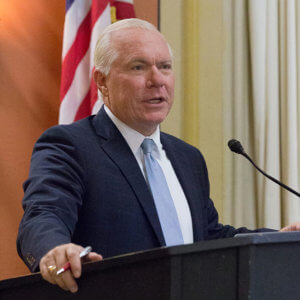 Tony MacDonald is director of the Monmouth University Urban Coast Institute (UCI). He was previously the executive director of the Coastal States Organization (CSO) from 1998-2005. CSO, based in Washington, D.C., represents the interests of the governors of the nation’s 35 coastal states and territories on coastal and ocean policy matters. Prior to joining CSO, Tony was the special counsel and director of environmental affairs at the American Association of Port Authorities, where he represented the International Association of Ports and Harbors (IAPH) at the International Maritime Organization on negotiations on the London Convention. Tony has also practiced law with a private firm in Washington, DC, working on environmental and legislative issues, and served as the Washington, DC, environmental legislative representative for the mayor of the City of New York.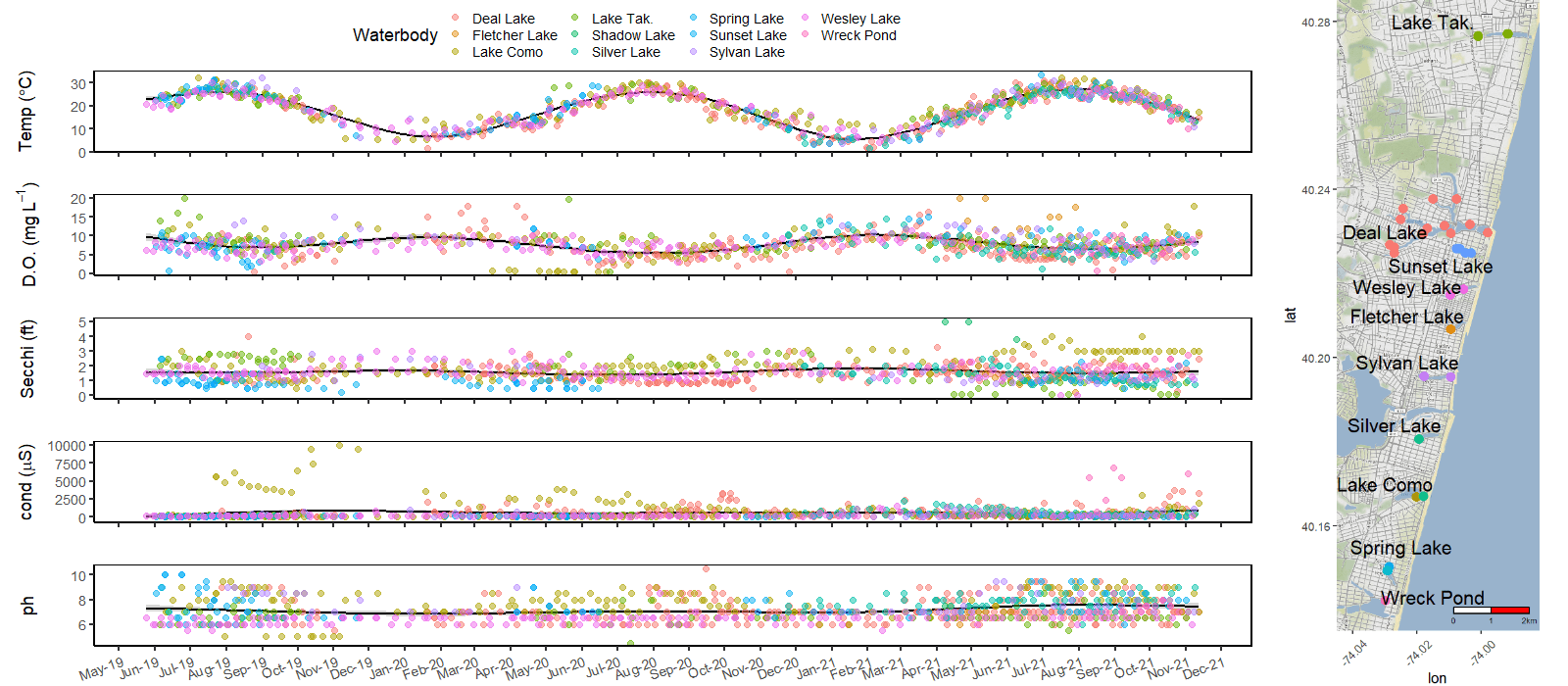


 Finally, in addition to the challenge of mobilizing political will in developed nations on climate regulation ambitions, those laudable intentions often fall short in reality. Many countries have not fulfilled the emission reduction commitments they made at Paris in 2015. Therefore, COP26 is a day of reckoning to get on track toward even more ambitious goals. Based on the current state of compliance with Paris Agreement targets, a UNFCCC Secretariat report from July 2021 found that global greenhouse gas emissions are on track to increase by 16% by 2030, instead of the 45% decrease needed. This dark cloud will hover over the deliberations in Glasgow and propel an unforgiving “no margin of error” mandate to the projected outcomes.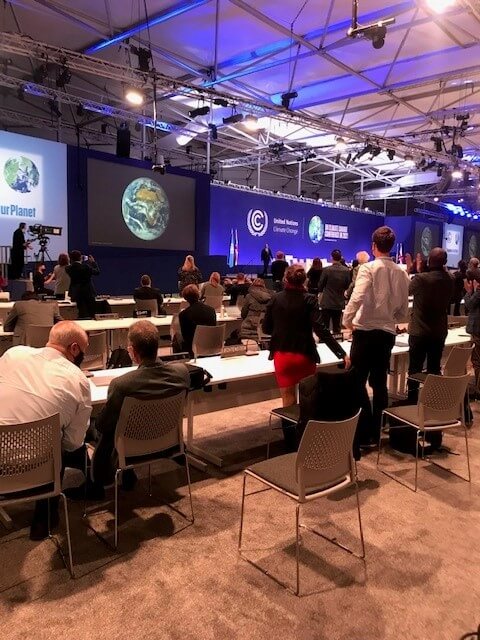


 Times have changed so quickly. Within the span of my lifetime, humanity’s perceptions of the Earth have shifted from an unlimited paradise of resources to support our comfortable lives to requiring emergency life support measures to give ourselves and Earth’s systems a chance to endure what climate change has in store. This abrupt pivot in our relationship to nature affects all of us deeply, regardless of how fully we acknowledge it. But this learned helplessness that we feel as a result of this perilous new normal disproportionately burdens youth. Their carefree childhoods – and potentially the promise of their futures – have been stolen.
 Youth climate litigation in the past decade has been inspiring and impressively impactful in raising the ambition of climate regulation. But lawsuits and protests won’t save the planet in time. The domestic and international levels of governance need to approve and appoint future generations commissions with a charge that is specific to providing advice and consent in climate change legislation and litigation. Such commissions with broader charges to speak on behalf of future generations already exist in several countries around the world. Kim Stanley Robinson’s recent climate fiction novel,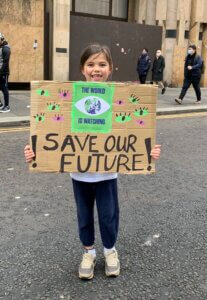
 UCI Associate Director Thomas Herrington and Texas A&M University Center for Dredging Studies Director Ram Mohan collaborated on an article in the
  “Modernizing the International Whaling Commission’s Approach to Aboriginal Subsistence Whaling,” University of Alberta (Canada) Associate Professor of Law Cameron Jefferies
 BIO: Cameron S.G. Jefferies, B.Sc., LL.B., LL.M., S.J.D., is an associate professor of law at the University of Alberta in Edmonton, Canada, where he specializes in international and domestic environmental law and energy law. He currently teaches Environmental Law, International Environmental Law, Basic Oil and Gas Law, and Oceans Law and Policy. He was admitted to the Law Society of Alberta in 2010. He completed his graduate degrees at the University of Virginia, School of Law, where he studied as a Fulbright Scholar. Before entering academia, Dr. Jefferies practiced at Field LLP in Edmonton, Alberta, and worked as a research associate at the Health Law Institute at the University of Alberta. He has published several book chapters and articles in Canadian and U.S. law journals, including the Energy Law Journal and the Journal of Environmental Law and Practice. He is the author of Marine Mammal Conservation and the Law of the Sea (OUP, 2016), co-author of Tort Law, 6th ed. (Carswell, 2017), and co-editor of Global Environmental Change and Innovation in International Environmental Law (CUP, 2018). He is an award-winning teacher and researcher and has been an invited speaker to a number of national and international conferences. In addition to his academic and professional curiosity in environmental law, oceans law, and wildlife conservation, Dr. Jefferies maintains a keen interest in public interest advocacy and remains active in promoting local environmental law reform.
 BIO: Dr. Francine Kershaw uses the best available scientific information to advocate for improved protections for marine mammals related to a variety of issues, including ocean noise, ship strikes, and bycatch. She currently leads NRDC’s work to end large whale entanglements and dedicates a large part of her portfolio to advancing responsible offshore wind development. Still a whale population geneticist at heart, in her spare time she also advocates for improved uptake of genetic information into conservation policy decisions. Kershaw is an active member of the International Union for Conservation of Nature (IUCN) Marine Mammal Protected Area Task Force, the Global Ocean Biodiversity Initiative, and the Group on Earth Observations Biodiversity Observation Network Genetic Composition Working Group, and an associate member of the Indian Ocean Network for Cetacean Research. She holds a Ph.D. in ecology and evolutionary biology from Columbia University and is currently based in Greenville, South Carolina.
 BIO: Dr. Howard Rosenbaum is a senior conservation scientist and director of the Wildlife Conservation Society’s (WCS) Ocean Giants Program, which aims to secure the future of whales, dolphins, and other marine species. He is a senior scientist at the American Museum of Natural History, core faculty member at Columbia University, a member of the International Union for Conservation of Nature (IUCN) Cetacean Specialist Group and Important Marine Mammal Area Task Force, and the International Whaling Commission’s Scientific Committee. Rosenbaum has led marine mammal conservation projects around the world, including the Indian, Pacific, and Atlantic oceans and the Arctic. For more than 30 years, Rosenbaum’s innovative science has helped protect marine species from current and emerging threats in their most important habitats. In the New York Bight, Rosenbaum leads WCS’s efforts for research and conservation of marine mammals, which includes a collaborative effort to use state-of-the-art near real-time acoustic monitoring and other technologies to study whales and ocean noise. Rosenbaum is a member of New York’s (NYSERDA) Environmental Technical Working Group and on the Specialist Committee for Best Management Practices related to Offshore Wind Development. Rosenbaum has also been a subject matter expert for two past Bureau of Ocean Energy Management workshops related to marine mammals and offshore wind development, and recently served on IUCN’s panel on Mitigating Biodiversity Impacts to Wind Energy Development. He has authored 95 peer-reviewed publications, co-edited a book on genomics, and his work has been featured widely in many popular media outlets. Rosenbaum grew up on Long Island and earned his Ph.D. from Yale University.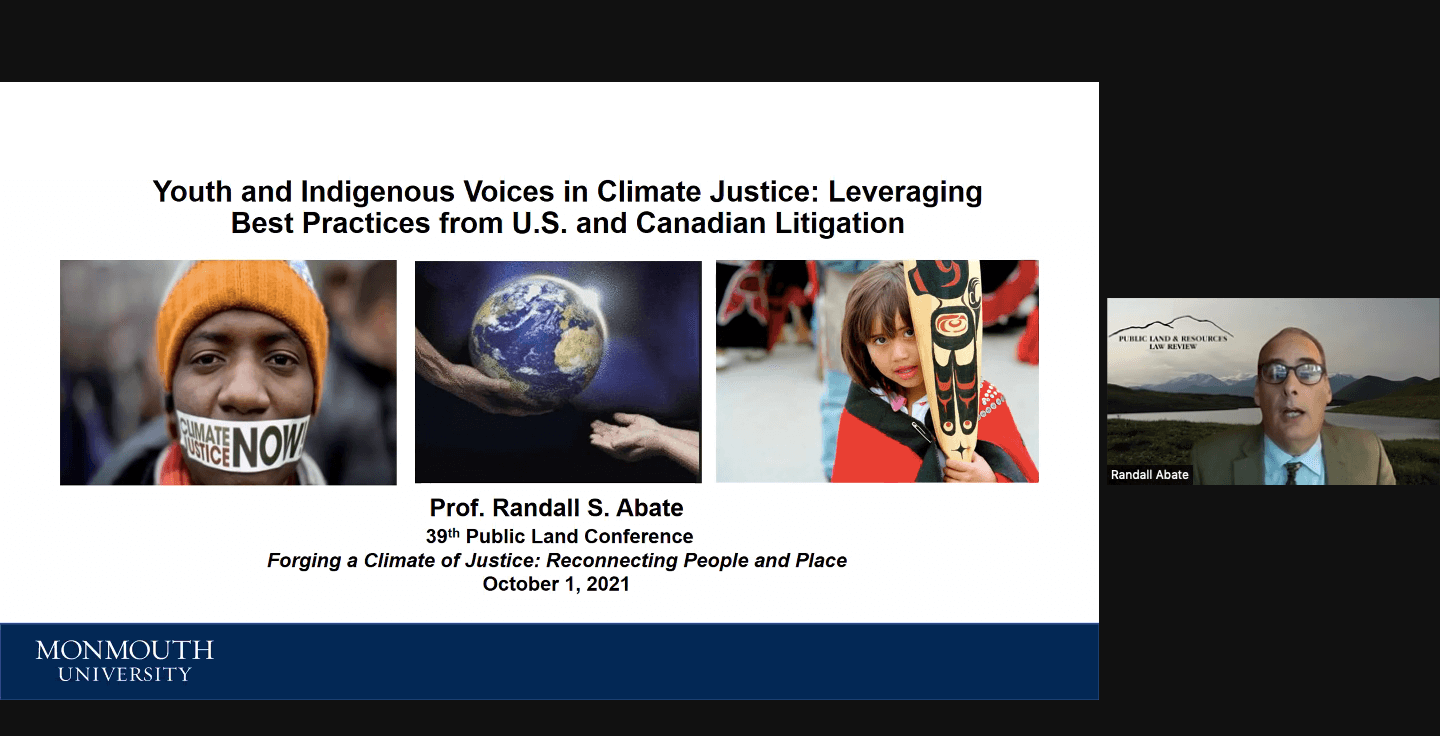
 The environmental gains that will be seen by replacing carbon-based energy sources with power generated by offshore wind farms are oft-discussed, but questions remain about the impacts that construction of this infrastructure could have on marine life and habitats. Monmouth University student Riya Ajmera recently completed a white paper that examines the nature and scope of the risks in the Mid-Atlantic and science-based policy options that can mitigate harm to marine species and promote marine biodiversity.