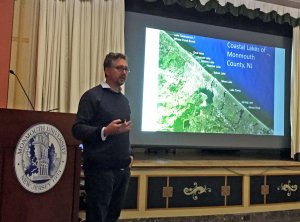
 Citizen scientists, New Jersey Department of Environmental Protection (NJDEP) representatives, and Monmouth University researchers who’ve been participating in the Coastal Lakes Observing Network (CLONet) gathered at a UCI-hosted workshop Nov. 1 to discuss their initial findings and experiences. From June through September, the community volunteers collected more than 150 water samples from Deal Lake, Lake Como, Lake Takanassee, Spring Lake, Sunset Lake, Sylvan Lake and Wesley Lake, recording information such as water temperatures, dissolved oxygen levels, pH and weather conditions at the time of their sampling.
The goal of CLONet is to help solve environmental problems facing these lakes, such as harmful algal blooms (HABs), by building a better understanding of their root causes. Monmouth University staff and students trained the community members to use sampling kits and file their results through an online database, where each lake’s data could be analyzed and compared.
If four months of placing the lakes under a microscope has taught Endowed Associate Professor of Marine Science Jason Adolf one thing, it’s this: “A coastal lake is not a coastal lake is not a coastal lake.” Although they’re all small water bodies next to Monmouth County beaches, Adolf found their physical makeups and dynamics to be surprisingly different.
The following are a handful of results from the first season of sampling that were revealed at the workshop.
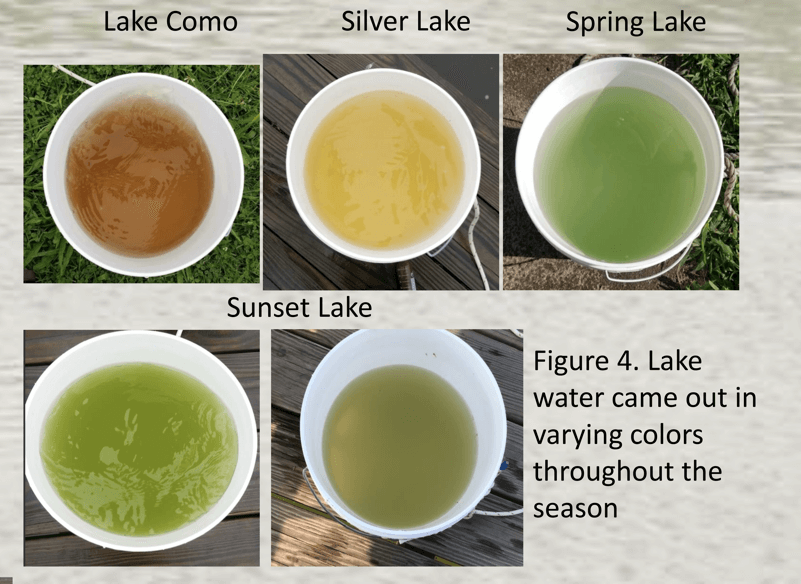
Water colors varied widely from lake to lake. Colors can be influenced by a wide range of factors, including plankton living in the waters and the sediments found on the bottom. Adolf said they can also be indicators of HAB presence.
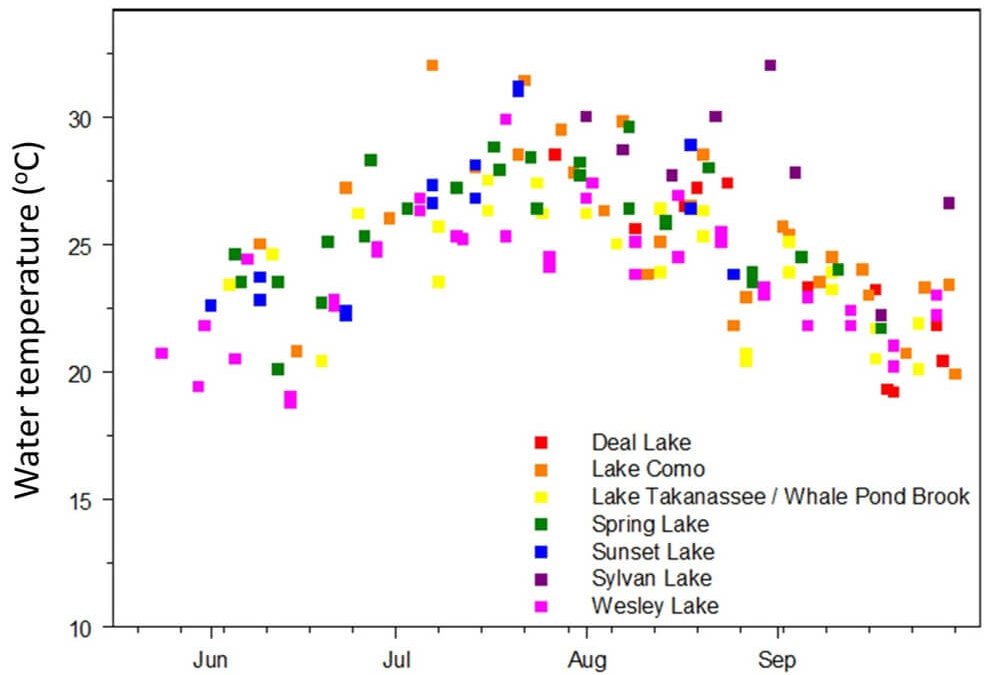
There were significant differences in lake temperatures, too. Overall, the waters were found to be warm, a favorable condition for HABs. Adolf found Deal Lake’s temperatures were 5-10 degrees Celsius higher than data recorded in the summer of 1978. He said climate change could not account for a gulf that wide, and speculated that a change in depth over the decades could be responsible.
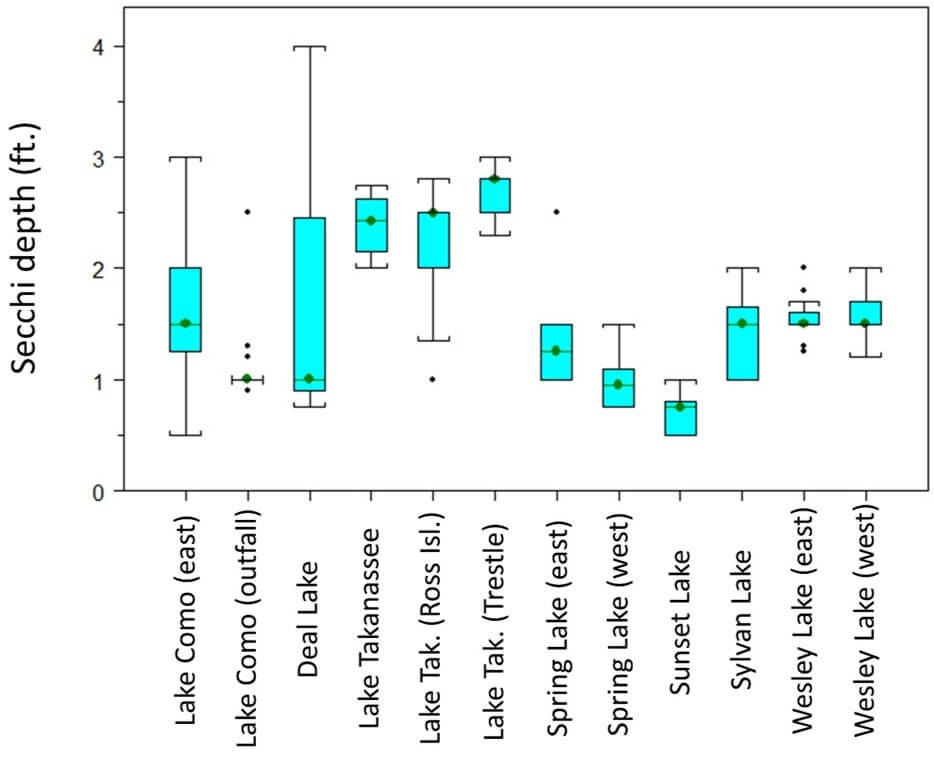
The waters were murky. A lake’s clarity (turbidity) can be measured using a piece of equipment called a Secchi disk. The black and white disc is slowly lowered into the water, and when it is no longer visible, the CLONet participants recorded the depth. Sunset Lake, Deal Lake and portions of Lake Como and Spring Lake were among those found to have mean Secchi depths in the range of 1 foot or lower. Low Secchi depth during sampling was found to be a strong indicator of HAB abundance.
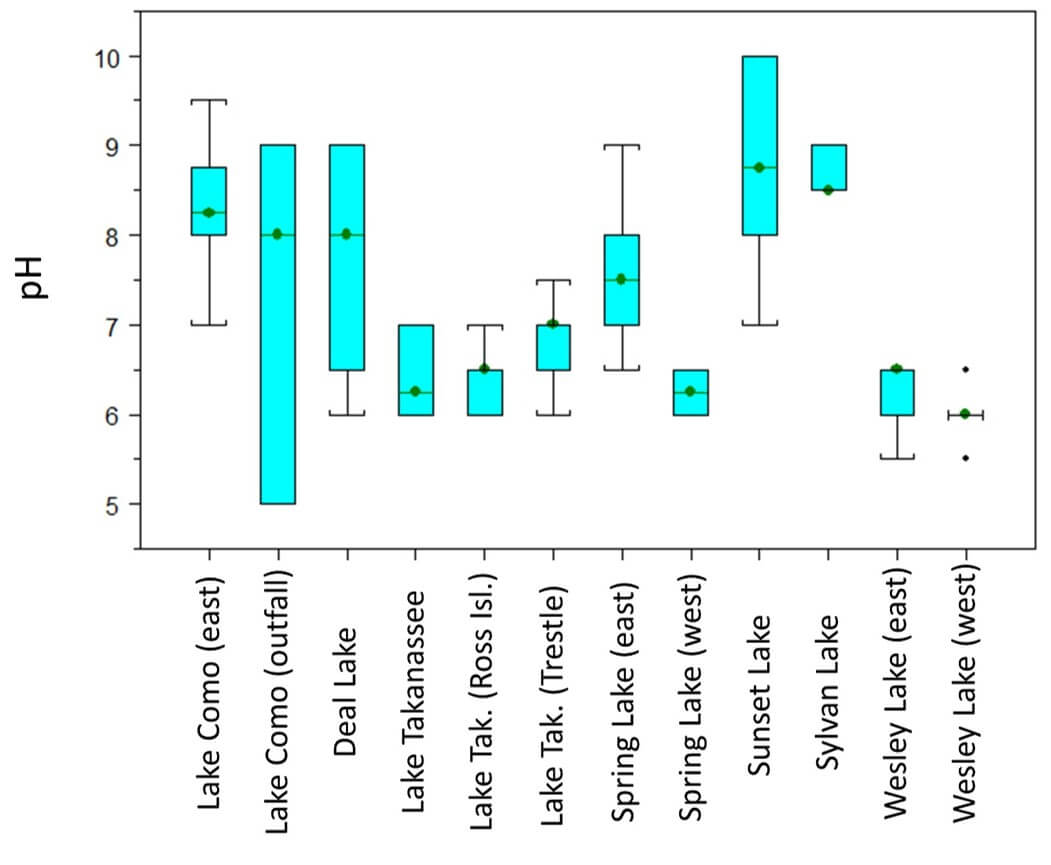
pH levels varied widely among lakes. A lake’s pH range can determine its suitability as a habitat for wildlife species. For example, those with low pH (high acidity) are not favorable for animals such as turtles, which can struggle to grow and maintain healthy shells, while frogs and fish such as trout and pike prefer such environments. The testing indicated Spring Lake, Wesley Lake and Lake Takanassee had low pH while Sunset Lake and Sylvan Lake were on the higher end of the spectrum.
To view additional results, download the presentation slides from Adolf and UCI Associate Director Thomas Herrington.
Sampling will continue in the fall and winter months and through next year. Adolf said the data gathered over the last few months can serve as a baseline that the impacts of specific management and restoration projects can be measured against – for example, lake dredging, the installation of green infrastructure, or housing developments under construction along a lake’s tributaries.
The work is being conducted with grant funding provided by the Jules L. Plangere, Jr. Family Foundation and through a collaboration between Monmouth University and the NJDEP Marine Monitoring Lab at Leeds Point. For more information on CLONet, visit monmouth.edu/clonet.

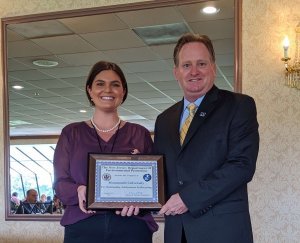 Monmouth University was among nine businesses, organizations, and individuals recognized at the 39th Annual Association of New Jersey Recyclers symposium held Oct. 10 at the Jumping Brook Country Club in Neptune, New Jersey. The university was recognized as an institutional leader for its broad-based program that resulted in recycling 46% of the waste generated on campus in 2018. UCI Associate Director Thomas Herrington, the co-chair of the university’s Sustainability Advisory Council, accepted the award on Monmouth’s behalf.
  The Superstorm Sandy-inspired “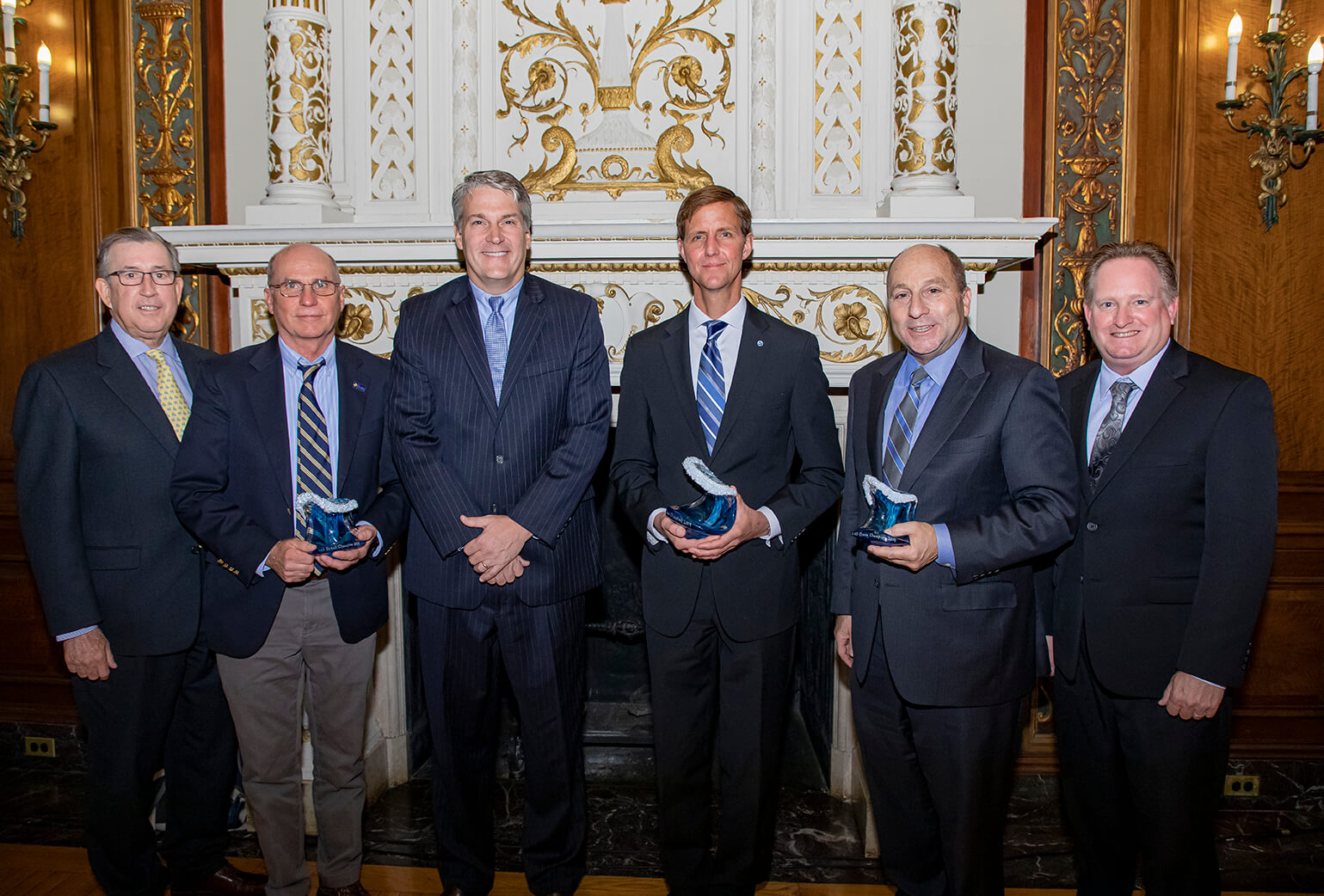
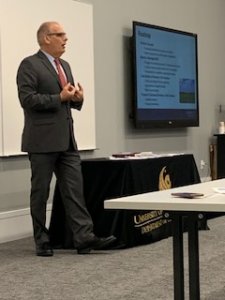 Rechnitz Family/UCI Endowed Chair in Marine and Environmental Law and Policy Randall Abate delivered two talks on his forthcoming book, Climate Change and the Voiceless: Protecting Future Generations, Wildlife, and Natural Resources, on Oct. 8.
 Monmouth University President Emeritus and UCI Ocean Policy Fellow Paul G. Gaffney II will moderate the panel discussion, which will present perspectives from the government, ports/maritime, offshore wind, ocean sciences and marine conservation communities. Rear Admiral Timothy Gallaudet, deputy administrator of the National Oceanic and Atmospheric Administration (NOAA), will deliver plenary remarks.