The Urban Coast Institute’s (UCI) Heidi Lynn Sculthorpe Scholars program will provide funding for 11 students and 10 faculty members to conduct summer research on topics ranging from the prevalence of home raising and rebuilding in Monmouth County since Hurricane Sandy to which plant species have the best potential for restoring New Jersey’s ghost forests.
The Heidi Lynn Sculthorpe Scholars program supports students and faculty of all disciplines in pursuing their passions for marine and coastal issues through experiential research. The program provides grant opportunities for student researchers and faculty mentors to conduct projects of their own design that advance the Urban Coast Institute’s mission and Monmouth’s Strategic Plan. Each year, the program funds dozens of hands-on research positions that provide real-world experience to students while helping make a positive impact in coastal communities.
In this round, funding was approved for four student-faculty collaborative summer research grants and two faculty enrichment grants. The program also provides support for projects administered through the Monmouth University School of Science Summer Research Program (SRP) that advance the goals and objectives of the UCI. Two SRP projects being conducted by four student researchers will receive UCI grants this summer.
The projects below commenced in May and will continue throughout the summer.
Barnegat Bay Marsh Island Restoration Planning
Student Researcher and Major: Keilan Swanzey and Jagger Turano-Riley, Marine and Environmental Biology and Policy
Faculty Mentor: UCI Associate Director Tom Herrington
The team will work to develop a restoration plan for marsh islands off Long Beach Township in Barnegat Bay that can improve the system’s ecological health and protect nearby communities from flooding, coastal storms and climate threats. The researchers will study effective methods for restoration, conduct fieldwork with Barnegat Bay Partnership and U.S. Fish and Wildlife Service personnel, and deploy current meters and other instrumentation in the area of the islands to inform the restoration plan.
Exploring Restoration Strategies for Salt-Flooded Maritime Forests
Student Researcher and Major: Emma Gould, Marine and Environmental Biology and Policy
Faculty Mentor: Professor Pedram Daneshgar, Department of Biology/Marine and Environmental Biology and Policy Program
This research will focus on which native plant species would be best to reintroduce into ecosystems where saltwater intrusion has established ghost forests, and when the optimal time to reintroduce native species would be. Fieldwork will be conducted at Cattus Island County Park in Toms River and Gateway National Park in Sandy Hook to survey which species are growing in ghost forests and healthy forests. Seedlings of those plants will be grown in the Monmouth University greenhouse and undergo experiments to determine their salt tolerance and the best time for them to be reintroduced into ghost forests after a coastal flooding event.
Sea-Level Rise Impacts in Monmouth County, New Jersey: A GIS-Based Analysis of Home Adaptation, Protection, and Elevation Modifications Since Hurricane Sandy (2012)
Student Researcher and Major: Alessandra Conte, Anthropology (M.A.)
Faculty Mentor: Assistant Professor of Geography Geoffrey Fouad, Department of History and Anthropology
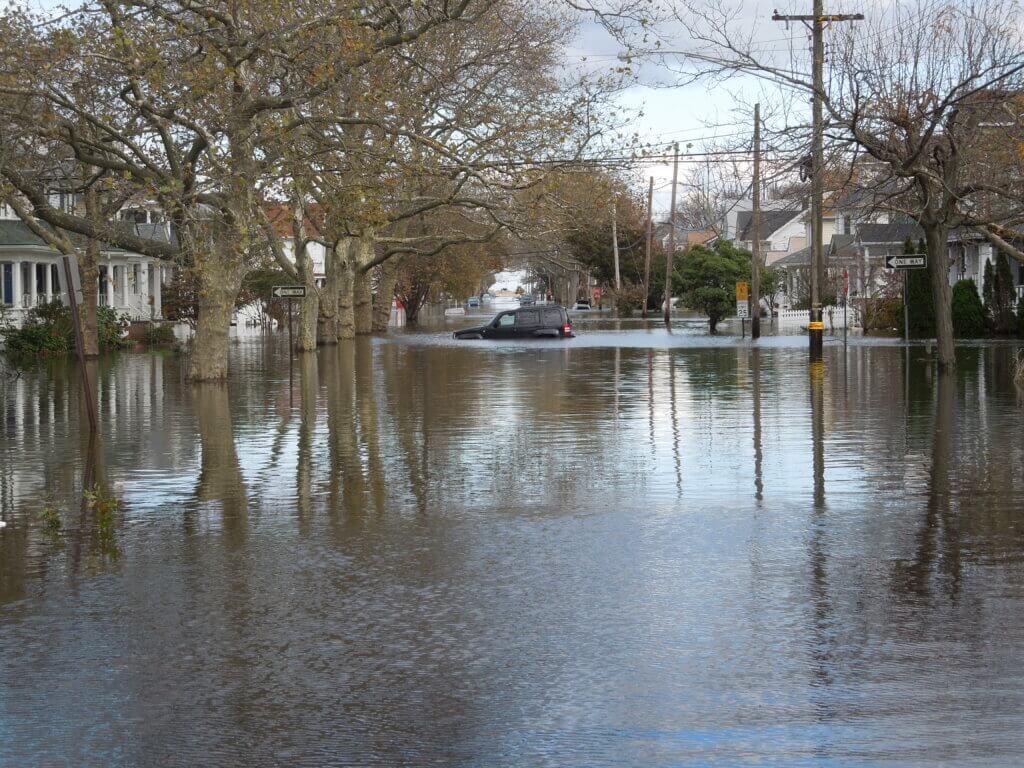
This project is a graduate master’s thesis focusing on the response of communities in Monmouth County since Hurricane Sandy in the form of elevating homes to protect against future floods. The project will gather and analyze public records to create a publicly accessible GIS map that visualizes homes that have been raised across the county since the October 2012 storm.
Voice-Assistive Technology for Elderly and Individuals with Complex Cognitive and Communication Needs: Increasing Access to Care for Those Apart of Coastal Communities
Student Researcher and Major: Claire O’Connor, Speech-Language Pathology (M.S.Ed.)
Faculty Mentor: Assistant Professor Yao Du, Department of Speech-Language Pathology
The investigators will recruit two coastal residents (one a senior citizen with mild cognitive deficits and another individual who requires an augmentative and alternative communication device) and examine how they can use the Amazon Alexa technology to access online healthcare services. The study aims to review the efficacy of how assistive technology can promote independence remotely in individuals of vulnerable populations, explore the limitations of accessing healthcare when living in coastal areas, and how assistive technology can be modified for access to healthcare.
Faculty Enrichment Grant Projects
Beyond East, West, National, and International Norms: Decolonizing Development, Climate Change, and Indigenous Women in India
Student Researcher: Lenien Jamir Student, Political Science
Faculty Mentor: Professor Rekha Datta, Department of Political Science and Sociology
This grant will support the student researcher to travel to Kolkata, India, to present a paper at the International & Interdisciplinary Conference in January. The paper explored whether economic development and climate change priorities have addressed or ignored the needs and demands of indigenous communities.
Ecotherapy: Taking it into Practice
Faculty Researcher: Associate Professor Megan Delaney, Chair, Department of Professional Counseling
Student Researcher: Marielle Spero (graduate research assistant), Department of Professional Counseling
The study seeks to explore the utilization of ecotherapy practices of counselors previously enrolled in an ecotherapy course and how the concepts and tenets explored and experienced in class shape emerging counselor identity. Participants of this study will be graduates of the Monmouth University Professional Counseling program and former students of the ecotherapy class.
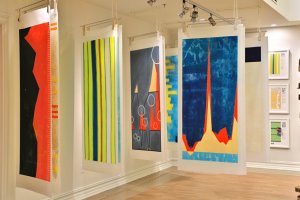
‘Just Beachy/After Sandy’ Art Exhibit
Faculty Researcher: Professor Karen Bright, Department of Art and Design
This funding will support the installation of portions of Professor Bright’s “Just Beachy/After Sandy” exhibit at the Center for the Arts at Brookdale Community College for the 10th anniversary of Superstorm Sandy.
Superstorm Sandy and Monmouth County 10th Anniversary Interviews
Faculty Researcher: Specialist Professor of Public History Melissa Ziobro, Department of History and Anthropology
Oral history interviews will be conducted with 20-25 narrators from Monmouth County coastal communities, with particular attention paid to factors that influenced decisions on whether or not to raise or rebuild their homes. The interview transcripts will be made publicly available, including through their addition to the Monmouth University libguide Tracking Sandy: Monmouth County Remembers.
School of Science Summer Research Projects
Harmful Algal Blooms in Monmouth County Coastal Lakes
Student Researchers and Majors: Marie Mauro and Nicholas Occhiogrosso, Marine and Environmental Biology and Policy
Faculty Mentor: Endowed Professor of Marine Science Jason Adolf, Department of Biology/Marine and Environmental Biology and Policy Program
This project will build on research that started in 2018 on the prevalence and causes of harmful algal blooms in Monmouth County’s coastal lakes, including citizen science water quality monitoring work conducted through the Coastal Lake Observing Network (CLONet). Students will focus on (1) determining the diurnal cycle of dissolved oxygen in coastal lakes, and (2) the impacts of coastal lakes on ocean beach water quality this year.
Reptile and Amphibian Ecology and Conservation in Urbanized and Suburbanized Ecosystems
Student Researchers and Majors: Adriana Simancas and Christopher Meehan, Marine and Environmental Biology and Policy
Faculty Mentor: Assistant Professor of Wildlife Ecology Sean Sterrett, Department of Biology/Marine and Environmental Biology and Policy Program
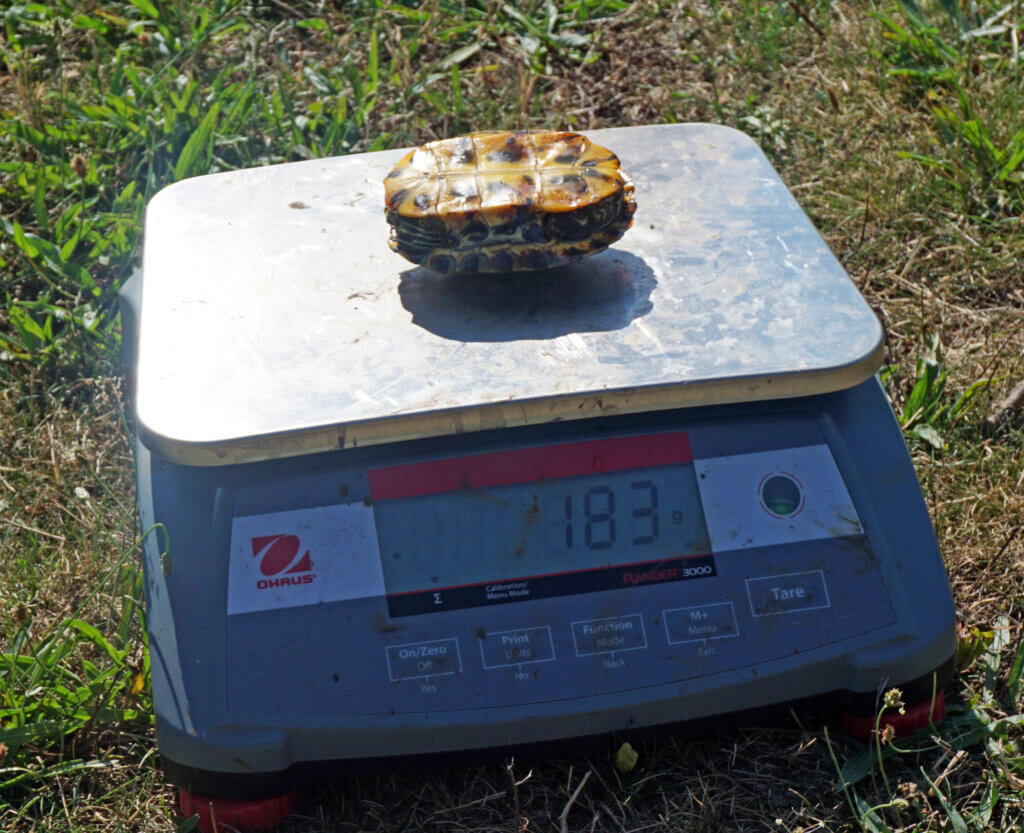
The team will study the persistence of reptiles and amphibians in areas heavily developed by humans through activities including surveys of turtle populations in Monmouth County’s coastal lakes and experiments with the use of drone technologies to detect and estimate their populations. More specifically, students will be contributing to three projects around this theme: 1) long-term data collection of turtle population dynamics in Lake Takanassee; 2) assessing the relative abundance of the non-native red-eared slider in coastal lakes and evaluating its competitive advantage on native turtles; and 3) developing methods for measuring carapace length and determining sex of diamond-backed terrapins from drone images.
Fall Funding Opportunities
Monmouth University students and faculty are invited to apply now for fall Heidi Lynn Sculthorpe Scholars funding opportunities. Fall grants available include:
- Faculty Enrichment Grants for the enhancement of existing curriculum, new curriculum development, research and scholarship, and team-teaching opportunities. Proposals will be accepted through Aug. 12, 2022.
- Mini-Grants are also available to faculty and students for conference fees, symposia, guest speaker honoraria, equipment and supplies, and other needs to be determined on a case-by-case-basis. Applications can be submitted at any time and are reviewed on a rolling basis.
Those interested may apply via the UCI Funding Opportunities page on the MyMU Portal (Monmouth University sign-in credentials required). For more information, contact UCI Associate Director Thomas Herrington at therring@monmouth.edu.
These opportunities have been made possible through the generous support of many corporate and private donors. If you would like to make a tax-deductible gift to the UCI, please use our Give a Gift Now form.
 Abate will deliver a May 31 presentation at the University of Eastern Piedmont (Italy) during a “Climate Change and the Protection of Future Generations and Biodiversity” panel event (
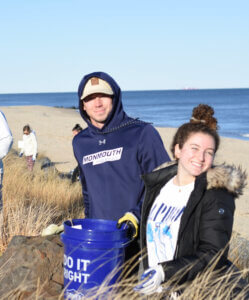 Monmouth University students Mia Njad and Evan Rankl are forming a Monmouth chapter of Love Blue, a nonprofit organization dedicated to protecting oceans through community outreach and beach cleanups. The group, which is currently in the process of obtaining club recognition by the University, has begun its work of planning student-led beach sweeps along the Jersey Shore. Its next will be held at 11 a.m. on April 24 at Seven Presidents Park’s beach in Long Branch.
 The Urban Coast Institute (UCI) has been granted special accreditation for the
 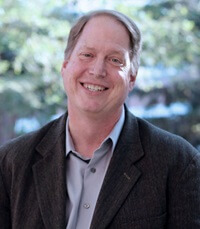 Bio: Mark Gold joined the California Ocean Protection Council (OPC) in July of 2019. As executive director of OPC and the deputy secretary for ocean and coastal policy for the California Natural Resources Agency, he serves as a key advisor to the governor and the secretary of natural resources and directs policy, scientific research, and critical partnerships to increase protection of coastal and ocean resources in California. Prior to his appointment, he was the associate vice chancellor for environment and sustainability at UCLA, where he led their Sustainable Los Angeles Grand Challenge effort. Prior to UCLA, Gold was the first hire at Heal the Bay, where he served as their president for 18 years. During that time, he worked on ocean and coastal legislation and policy, stormwater, watershed management, and marine conservation and coastal restoration issues, projects and programs. Over the course of his career, his research focused on beach water quality and health risks, as well as sustainable water resources management. Mark received his bachelor’s and master’s in biology as well as his doctorate in environmental science and engineering, all from UCLA.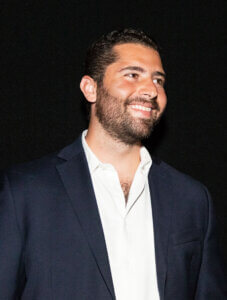
 Bio: As the director of NOAA’s National Marine Protected Areas Center, Lauren Wenzel focuses on connecting and strengthening the nation’s diverse marine and coastal protected area programs through capacity building, information and tools, communication, and collaborative governance. Her focus is on building partnerships among U.S. and international marine and coastal programs and stakeholders to demonstrate the value of protecting the ocean’s most important places. Lauren has been with the MPA Center since 2004.
 The American Shoreline Podcast Network’s “Capitol Beach” podcast kicked off a five-part series on the 50th anniversary of the federal Coastal Zone Management Act (CZMA) with an episode featuring National Oceanic and Atmospheric Administration (NOAA) Administrator Rick Spinrad and Urban Coast Institute Director Tony MacDonald. The conversation explored Spinrad and MacDonald’s careers in ocean policy, the landmark legislation’s historic impacts, and its staying power in the face of mounting challenges such as climate change, new and competing ocean uses, and America’s growing economic reliance on coastal resources. The podcast is moderated by Coastal States Organization (CSO) Executive Director Derek Brockbank.