
 Monmouth University student Kyra Velock recently authored a white paper that examines challenges and opportunities for the Biden administration to advance its America the Beautiful initiative in the Mid-Atlantic region. Also known as the “30 by 30” initiative, the plan seeks to conserve and protect 30% of U.S. land and ocean areas by the year 2030.
Velock researched the topic over the summer with funding support from the UCI’s Heidi Lynn Sculthorpe Scholars Program. Rechnitz Family/UCI Endowed Chair in Marine and Environmental Law and Policy Randall Abate served as a faculty mentor on the project.
Experts interviewed include: Monmouth University Endowed Associated Professor of Marine Science Jason Adolf; Wildlife Conservation Society (WCS) New York Seascape Program Director Merry Camhi; WCS New York Seascape Program Associate Director Noah Chesnin; American Littoral Society Executive Director Tim Dillingham; New Jersey Department of Environmental Protection Environmental Specialist Kevin Hassell; Pew Charitable Trusts Senior Officer for International Conservation Masha Kalinina; and Monmouth University School of Science Assistant Dean John Tiedemann.
Scroll below to read our Q&A with Velock and view her white paper in its entirety.
Paper Title: “The ‘30 by 30’ Initiative: Implementing Area-Based Management Strategies to Confront Marine Biodiversity Loss in the Mid-Atlantic Region”
Student Researcher: Kyra Velock
Year and Major: Senior, Health Promotion
Q: What are some challenges unique to the Mid-Atlantic that the Biden administration may face in carrying out its “30 by 30″/”America the Beautiful” initiative?
The Mid-Atlantic has a long history of commercial and recreational fishing, as well as protected fishing practices in many indigenous communities in the region. Some challenges include commercial, recreational, and cultural resistance to implementation of more marine protected areas (MPAs) in the Mid-Atlantic because of real and perceived impacts to fishing access. Many fishers also oppose implementation of offshore wind farms, which could be valuable tools in reaching the 30 by 30 goal, because these facilities also restrict access to significant areas of the ocean. Fishing communities also generally don’t believe that offshore wind farms can aid in fisheries conservation. Lastly, ecosystem-based management methods of conservation are still a new concept in ocean governance; therefore, reliable science and research are essential to identify areas eligible for designation as MPAs. It may take a longer time to connect science, policy, and outreach to stakeholders in the Mid-Atlantic to fulfill the 30 by 30 objectives.
Q: The paper examines several policy tools for protecting ocean areas, such as the designation of marine protected areas, marine sanctuaries, and national monuments. Do you see any of them holding particular promise for the Mid-Atlantic?
I think “de facto” and “under-the-radar” marine protected areas (MPAs) hold the most promise for the Mid-Atlantic region. These are regions of the ocean where human activity is limited or restricted for reasons other than biodiversity protection and conservation. They are not considered to be “official” MPAs, so there is no lengthy congressional process to designate this type of MPA. Some examples include offshore wind farms (de facto) and other effective conservation methods (OECMs), which may have different reasons for restricting human access, yet they offer additional biodiversity and habitat protection nonetheless.
Q: You explore objections from the fishing industry to the designation of marine protected areas and other measures that limit their ability to fish. What steps can the government take to ease these conflicts and find palatable solutions?
 One of the most important steps the government can take to ease these conflicts is to involve fishing communities in the science and the process of establishing new MPAs because fishers often feel excluded from the designation process. When an area is designated to promote fish sustainability, such as a spawning ground for fish or to protect significant ecological features, it is important to involve fishers in the rationale behind the MPA. Including fishermen in the process of designating an MPA is also beneficial because they are more familiar with the marine environment than most government officials and policymakers.
Q: What reforms could the administration enact to help recover marine species and accomplish its 30 by 30 goals?
Reforming the Endangered Species Act (ESA) and the Magnuson-Stevens Fishery Conservation and Management Act (MSA) may promote the recovery of marine species and protect biodiversity. In the paper, I recommend additional protections for endangered and threatened marine species by incorporating MPA objectives and characteristics into these legal frameworks for an added layer of protection from climate change-related threats. Through these adjustments, habitat degradation would decrease, food webs would remain more stable, and human disturbances would be more limited.
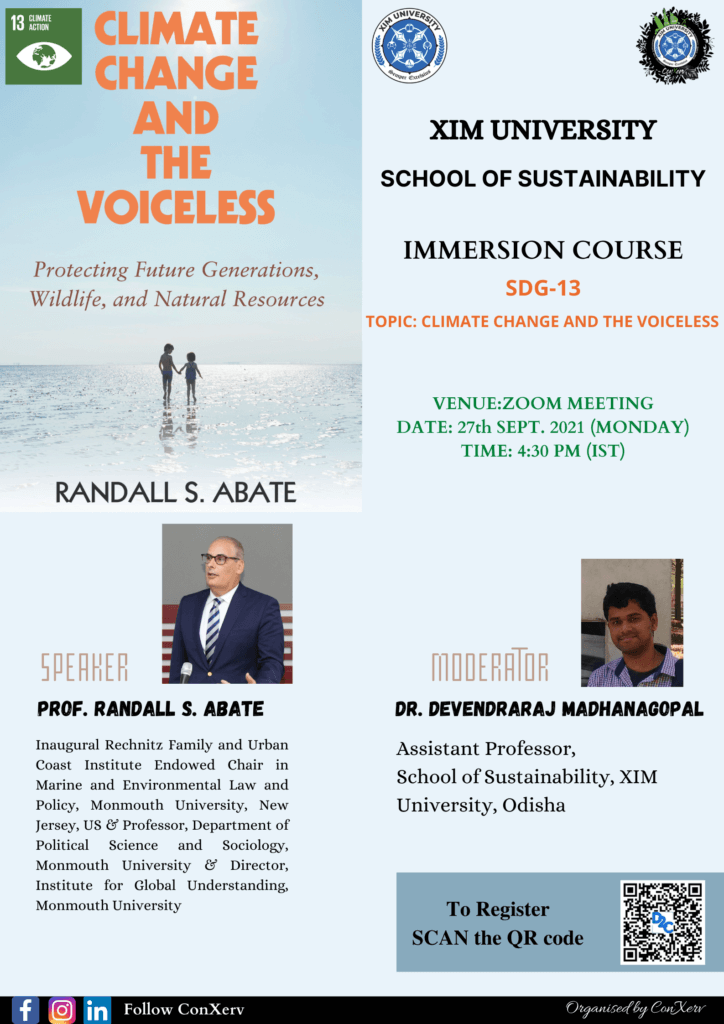
 About the Speaker: Dr. Angela Abolhassani is a postdoctoral fellow for the Ocean Nexus Center at the University of Washington. She has studied transboundary tuna management from an interdisciplinary perspective for nearly a decade. Her work is primarily concerned with improving the equity outcomes of tuna management for developing coastal states. In 2020, she completed her Ph.D. with the University of Tasmania, which was a joint project between the Faculty of Law and Institute for Marine and Antarctic Studies. Prior to her Ph.D., she completed an honors thesis at Arizona State University which applied common pool resource theory to management of the South Pacific albacore tuna fishery. Dr. Abolhassani has also worked in the intergovernmental settings she studies, including with the United Nations Food and Agriculture Organization, the Western and Central Pacific Fisheries Commission, and the Commission for the Conservation of Antarctic Marine Living Resources.
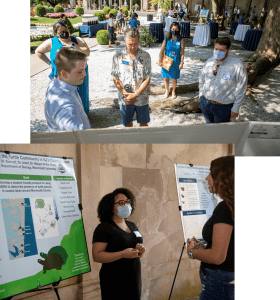 The Monmouth University School of Science Summer Research Program Symposium returned to its traditional home at Erlanger Gardens on Aug. 12 with in-person poster presentations by over 40 students. The annual event is the culmination of 10 weeks of collaborative research in biology, chemistry, mathematics, computer software and engineering topics by students and faculty mentors.
 The UCI has created
 GIS Program Director Geoffrey Fouad and student Lissette Peña produced interactive maps depicting percentages of Black and white residents by Census tract in Monmouth County who are uninsured and below the poverty level. Both factors could contribute to disparities in infection rates or treatments.
 Monmouth University student Johanna Vonderhorst recently completed a paper titled “
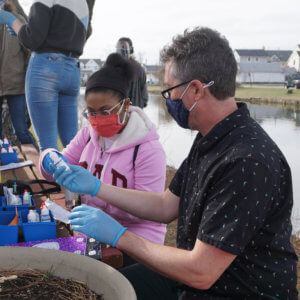 Through CLONet, university scientists and students have trained and equipped community members to sample Monmouth County’s beach-adjacent lakes for properties such as temperature, salinity, clarity and dissolved oxygen levels, then file their readings into an online database. Since the summer of 2019, citizen scientists have been sampling Deal Lake, Fletcher Lake, Lake Como, Lake Takanassee, Sunset Lake, Sylvan Lake and Wesley Lake. Monmouth students and scientists have supplemented the data by regularly sampling the same bodies, along with Silver Lake, Spring Lake, Sylvan Lake and Wreck Pond.
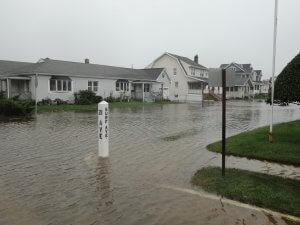 The UCI has awarded three Faculty Enrichment Grants for projects that will research whether sea level rise has impacted Jersey Shore home values, how engagement in climate activism influences young people’s social views and identities, and the psychological benefits of experiencing nature.