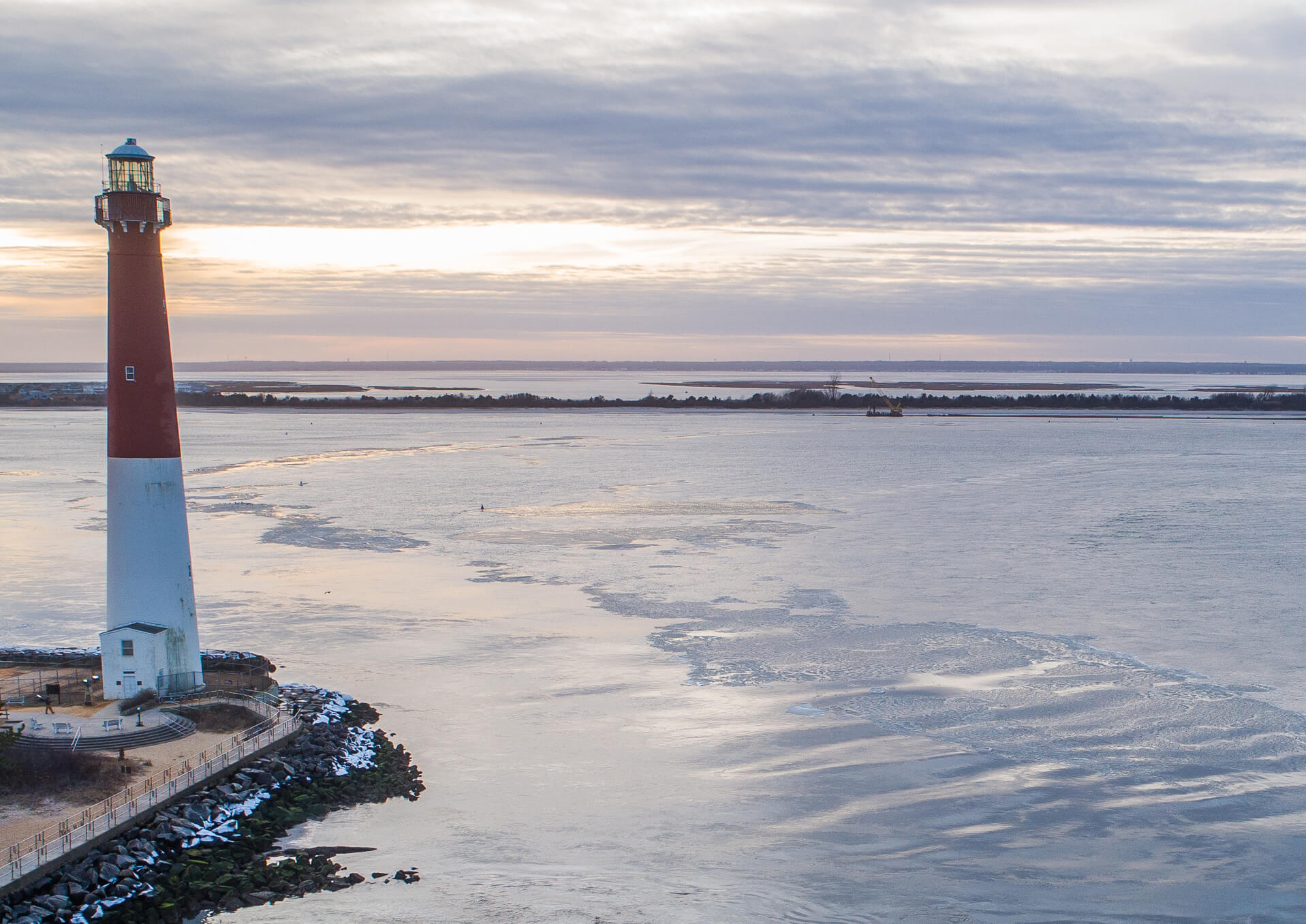
The Monmouth University Institute for Global Understanding (IGU) and Urban Coast Institute (UCI) hosted the virtual panel discussion “Diversity, Equity, Inclusion, and Ocean Justice” on March 9. The event was this year’s first installment of the Global Ocean Governance Lecture Series, which assembles international experts to discuss scientific and policy issues that hold important implications for coastal and marine ecosystems. The discussion was moderated by Professor Randall Abate, director of the IGU, and included the following presentations and speakers:
- “From Accounting for, to Accountability to: Reciprocity and Restitution in Collaborative Climate Change Research” by Monica Barra, assistant professor at the University of South Carolina School of the Earth, Ocean & Environment and Department of Anthropology
- “Environmental Justice Impacts of Marine Litter and Plastic Pollution” by Juliano Calil, senior fellow at the Center for the Blue Economy and adjunct professor at the Middlebury Institute of International Studies
- “Preparing the Prospective NOAA-Mission Workforce for a More Just Future” by Sharmini Pitter, assistant director of the National Oceanic and Atmospheric Administration (NOAA) Center for Coastal and Marine Ecosystems
Scroll below to read the speakers’ biographies and presentation abstracts. You can also read a recap of the webinar on the IGU blog.
Speaker Bios & Abstracts
Dr. Monica Barra
 BIOGRAPHY: Monica Patrice Barra, Ph.D., is a cultural anthropologist and assistant professor of race and environment in the School of the Earth, Ocean & Environment and Department of Anthropology at the University of South Carolina. Her research focuses on the ways racial inequalities and geographies are forged in and through scientific knowledge and practices, racial histories, and transformations of coastal environments in the U.S. Gulf South. These topics animate her first book project, “Good Sediment: Race, Science, and the Possibilities of Restoration,” which is an ethnographic examination of the ways Black ecological practices and imaginaires disrupt and re-orient techno-scientific understandings of environmental restoration in the context of coastal Louisiana’s coastal wetland loss crisis. Portions of her research in Louisiana have been published in the Annals of the Association of American Geographers and The Professional Geographer. Her research has been supported by several national grants, including the Wenner Gren Foundation for Anthropological Research, the National Academies of Sciences Gulf Research Program, the Louisiana Endowment for the Humanities, and the National Center for Atmospheric Research. She has collaborated with and presented her work to a variety of environmental groups and organizations, including: NOAA, The National Marine Sanctuaries Foundation, and The Water Institute of the Gulf.
ABSTRACT: In a time of global health pandemics, widespread uprisings about racial injustice, and persistent reminders about the catastrophic impacts of climate change, in what ways can climate change science align itself with the aspirations of cultivating social justice? To what extent do the environmental sciences, broadly construed, have an obligation and opportunity to mobilize science in the service of wider calls for confronting social and environmental inequalities? What shifts in research practice and individual/collective mentalities of scientists would such goals require? This presentation examines these questions through the lens of Indigenous and Black thinkers and communities grappling with the acute impacts of climate change. It will draw from examples of community based and collaborative research along the U.S. Gulf coast to consider how matters of reciprocity and restitution — matters of working towards reconciliation and justice — can begin to shift the culture of science to more squarely align with the efforts and needs of historically marginalized communities to achieve forms of racial, economic, and climate justice.
Further reading and resources on this topic.
Dr. Juliano Calil
 BIOGRAPHY: Juliano Calil, Ph.D., is a senior fellow at the Center for the Blue Economy and adjunct professor at the Middlebury Institute of International Studies. Calil is the co-founder of Virtual Planet Technologies and a pioneer in science communication. His work and academic research are motivated by the urgent need to reduce climate change impacts by adopting equitable solutions through inclusive community engagement. Calil and his team are developing interactive virtual reality experiences to communicate climate change impacts and solutions to diverse audiences. Virtual Planet is working with communities across the country, from Turner Station, MD to Santa Cruz, Long Beach, and Paradise in California, to address complex issues related to coastal flooding, wildfires, and conservation. Calil has published studies related to the use of immersive solutions to address climate impacts and coastal adaptation studies in California, Florida, the Gulf of Mexico, the Mid-Atlantic region, and Latin America and the Caribbean. Recently, he published two studies: “Using Virtual Reality in Sea Level Rise Planning and Community Engagement” and “Neglected: Environmental Justice Impacts of Marine Litter and Plastic Pollution” for the United Nations Environment Programme. Calil received his Ph.D. in ocean sciences from the University of California Santa Cruz in 2017 and his master of environmental science and management from the Bren School at the University of California, Santa Barbara in 2012.
ABSTRACT: Plastic pollution is greatly contributing to the global environmental justice crisis. In this session, Dr. Calil, the lead author of “Neglected: Environmental Justice Impacts of Marine Litter and Plastic Pollution” published by UNEP, will share the report’s main findings including the impacts of the COVID-19 pandemic on plastic pollution, a brief outlook of plastic production, how plastic pollution delays the implementation of nearly all Sustainable Development Goals, and finally, some recommendations to reduce future impacts, including some promising policies being discussed in California.
Dr. Sharmini Pitter
 BIOGRAPHY: Sharmini Pitter, Ph.D., is the assistant director of the NOAA Center for Coastal and Marine Ecosystems. Pitter is a graduate of Stanford University’s Department of Environmental Earth System Science in collaboration with the Stanford Archaeology Center. Her transdisciplinary research background includes geochemical studies of the link between changes in the paleoenvironment, cultural technology, and decision-making during the Neolithic period. Pitter utilizes her research background to assist students in preparing for the future, transdisciplinary workforce.
ABSTRACT: In this presentation, Pitter will address the role of education and training in developing awareness of and solutions to climate and ocean justice issues for the future. The NOAA Center for Coastal and Marine Ecosystems is a NOAA Cooperative Science Center established through a competitive award funded by the NOAA Educational Partnership Program with Minority Serving Institutions (EPP/MSI). The goal of the NOAA Center for Coastal and Marine Ecosystems (CCME) cooperative agreement is to educate and train a new generation of scientists, particularly from historically underrepresented communities, in NOAA-relevant STEM disciplines and social sciences, equipped to utilize interdisciplinary approaches to address issues confronting marine and coastal communities. This cooperative agreement reflects a 20-year legacy of partnership with Florida A&M University and the NOAA EPP/MSI. In 2021, the NOAA CCME agreement was renewed to continue five additional years of providing opportunities for students to gain skills for entering the competitive future NOAA-mission aligned workforce, with particular emphasis on the NOAA Science and Technology Focus areas including environmental justice and citizen science.
NOAA CCME will host the Tenth Biennial NOAA EPP/MSI Education and Science Forum on April 6-8 in Tallahassee, Florida, at Florida A&M University with opportunities to network with students, faculty, and NOAA and industry researchers. For more information about the Forum and how to attend please visit https://ccme.famu.edu/eppforum2022/.
 The Urban Coast Institute has awarded two spring Faculty Enrichment Grants for projects that will expand green teams in New Jersey schools and create art inspired by utopian societies that once existed in Jersey Shore communities.

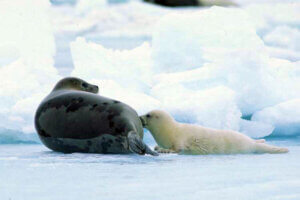 This presentation compares Inuit and commercial hunting activities, highlighting the differences between the purpose, practices, and scale of these hunts. With the distinctions between the two practices made clear, it explores the historic and ongoing ways in which the commercial sealing industry and federal government have perpetuated the conflation of the two. By failing to acknowledge the differences between Inuit and commercial sealing practices, special interest groups have been complicit in perpetuating this conflation as well, although several of these groups have recently worked to clarify the distinction between the two. As a result of the muddied dialogue on commercial and Inuit sealing, both food security and the survival of culture and livelihoods has been compromised in Inuit communities. Despite these ramifications, some Inuit support the commercial hunt because of how anti-sealing campaigns have adversely affected Inuit hunters. At the same time, other Inuit believe that the industry constitutes a wrongful appropriation of their sacred cultural practice, and are seeking to reclaim the practice as their uniquely protected right.
 Sarah Levy is a Ph.D. candidate at the Faculty of Law, University of Oxford, where she is conducting research on the laws surrounding Canadian sealing activities. In her doctoral project, she is exploring the conflation of Inuit sealing practices and the commercial sealing industry, with a focus on the intersections of animal, environmental, and Indigenous rights in this context. Sarah has been called to the Bar of Ontario and held positions at the Ministry of Environment, Conservation and Parks at the Government of Ontario and Animal Justice Canada. She holds a B.A. (Hons) from Trinity College, University of Toronto in Ethics, Society, and Law and Environmental Studies, and a J.D. and Master of Environmental Studies from Osgoode Hall Law School at York University. She completed her master’s research on the topic of direct-action and international marine wildlife conservation laws, in which she explored the ways in which nongovernmental organizations fill the gap between law and enforcement where nation states fail to institutionalize conservation.
 Student Researcher: Michelle Etienne
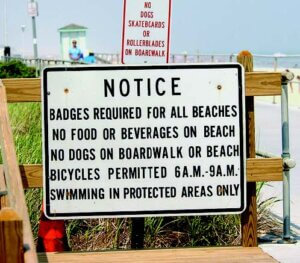 Beach badges were first introduced by the town of Bradley Beach in 1929 for the sole purpose of limiting beach access to only town residents and visitors in town hotels. But it quickly was recognized as a revenue-generating method and many beach towns followed suit. In 1972, in the landmark case of Borough of Neptune v. Avon-by-the-Sea, Avon-by-the-Sea attempted to charge less for badges for town residents and more for out-of-town residents to access its beaches. The court held that municipalities may not discriminate against nonresidents with badge fees. Although this case established that there may not be any discrimination in pricing, badge fees still restrict some people from being able to go to the beach. These fees also have no limit to how much they can be increased each year. In Avon-by-the-Sea alone, daily badge fees went up by $3 in just two years and a regular adult season badge increased by $10. Although these badge fees are the same for everyone, these fees are becoming more expensive, ultimately making it less affordable for some New Jersians to access the beach. This reality undermines the goals of the public trust doctrine and the duty that state and local governments have to ensure adequate access to public trust lands.
 Student Researcher: Samantha Pawlik
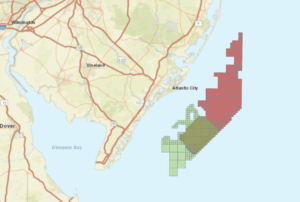 Mitigating these risks through technology and policy reforms is key to implementing such a large-scale project in a safe manner. Cutting-edge technology has been a crucial component in the construction of offshore wind farms. My project discussed suction bucket and gravity-based foundations, which are new technologies that can be used in place of monopile foundations as a quieter and less disruptive alternative during construction. Collaboration between agencies to provide efficient documentation of progress and findings, transparency of information with shore towns and public education on the projects, and continued research efforts are all key to attenuate the threats posed by offshore wind farms. Duke University recently received a $7.5 million grant from the U.S. Department of Energy (DOE) to assess the risks that offshore wind energy development along the East Coast may pose to birds, bats, and marine mammals. This type of research will help inform decisions and identify steps that can be taken to reduce harmful impacts on marine wildlife as offshore wind deployment increases.
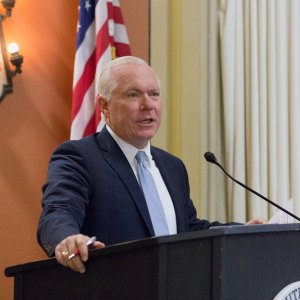 Urban Coast Institute Director Tony MacDonald has been named a member of the Law and Policy Task Force for the Metuchen, New Jersey-based Citizens Campaign. Founded in 1997 by government law and policy expert Harry Pozycki, the mission of the Citizens Campaign is to educate all Americans to the fullness of their political power and to introduce them to the shared experience of public service performed by participating in “No-Blame Problem Solving” of public issues.