The Monmouth University Office of Alumni Engagement and Annual Giving hosted a panel discussion Feb. 23 with experts from the UCI covering mounting issues facing the nation and Florida’s coast, including beach erosion, sea level rise, flooding and harmful algal blooms. The session included presentations and a Q&A with UCI Director Tony MacDonald, Associate Director Tom Herrington and Endowed Associate Professor of Marine Science Jason Adolf.
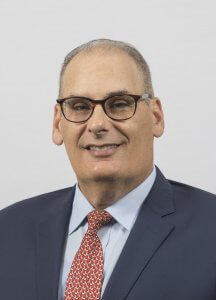
In an article published by the Columbia Journal of Environmental Law in February, Professor Randall Abate argues that the animal and environmental law movements should join forces on legal action that would compel the fossil fuel and animal agriculture industries to cease practices that are accelerating climate change.
According to Abate, the Rechnitz Family/UCI endowed chair in marine and environmental law and policy, the two industries are major greenhouse gas emitters that have been shielded from accountability through regulatory loopholes and are heavily subsidized by American taxpayers. He contrasted this to the auto industry, which has gradually improved its environmental track record in response to decades of bipartisan federal legislation such as the Clean Air Act of 1970.
“A number of recent lawsuits seek to break through the federal government’s protective circle, which enables these destructive private sector entities,” Abate said. “Collaboration is essential to realize the threat of massive common law liability and incentivize cooperative federal regulation. This two-headed dragon of fossil fuel and industrial animal agriculture can be slayed only if the animal and environmental law movements work together.”
Although both have common interests, including their concern for climate change, Abate contends there has been little coordination between these two movements on legal matters to date. He also observed that while animal law advocates have largely embraced environmental causes, environmental advocates have not always shown the same support for animal law movement issues like encouraging Americans to transition to plant-based diets.
“Given that fossil fuel combustion and industrial animal agriculture are two of the largest contributors to climate change, addressing them as connected threats rather than independent problems to be addressed by different advocacy efforts is the proper way forward,” Abate said. “Operating in silos is counterproductive in this era of urgently necessary transformation of our economy and society.”
Abate has delivered several talks on the article, including an Oct. 2 McGill University Faculty of Law (Montreal) lecture; a Nov. 11 Osgoode Hall Law School (Toronto) lecture; a Jan. 18 kickoff lecture at the Meat the Law Series, hosted by the University of Amsterdam; a Feb. 3 Daksha Fellowship Lecture hosted by Sai University (Chennai, India); a Feb. 10 lecture at Elisabeth Haub School of Law at Pace University; and a presentation at the March 9 Climate Change Symposium hosted by the Columbia Journal of Environmental Law.
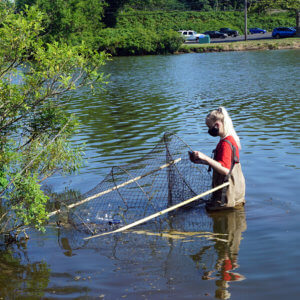
The Urban Coast Institute (UCI) invites Monmouth University undergraduate and graduate students of all disciplines to apply for 2021 Heidi Lynn Sculthorpe Scholars Summer Research Grants. Funding is available for projects proposed by students that will be completed under the guidance of a faculty mentor, or projects proposed by a faculty member that will be completed with the support of student researchers.
For the first time this year, two exceptional student proposals will be selected to join Monmouth University’s interdisciplinary summer research Living and Learning Community. The program allows students to live on campus over the summer with other summer scholars while working collaboratively with a faculty member on a project. Students must be undergraduates with at least two semesters remaining after the summer to be eligible.
The UCI seeks to fund research projects that advance the understanding of:
Enhancing consideration for social justice, diversity, equity and inclusion as coastal communities adjust to a changing climate
Risk and resiliency of coastal communities and environments
Coastal migration in the age of climate change
The blue economy
Coastal ecosystem adaptation planning
Financing resilience
Coastal community capacity building to address climate change
Proposals are due by Friday, March 22, at 11:59 p.m. To apply for Heidi Lynn Sculthorpe Scholars Summer Research Grants, visit this page (Monmouth student/staff login credentials required). Questions may be directed to UCI Associate Director Thomas Herrington at therring@monmouth.edu.
Requirements and Additional Information
Faculty are encouraged to work with students to submit proposals. Students submitting proposals must identify a faculty sponsor and mentor to oversee their research.
Funding is available for students at University research student rates for up to 10 weeks of work (@$3,120/student). A stipend of $800 is available for faculty mentors.
It is anticipated that funding is available for 3-5 student research proposals in 2021, including funding for two undergraduate students to participate in Monmouth University’s Summer Scholars Program.
Students must present their work at a Summer Research Symposium in August and provide a final report or product summarizing their research at the end of the 10th
Proposals will be evaluated by a panel of three Monmouth employees for research relevance, methodology and research plan, and the furtherance of the mission and goals of the UCI.
The Associated Press interviewed UCI Associate Director Tom Herrington about Ocean City, New Jersey’s growing struggle with coastal flooding. Herrington, an Ocean City native, says in the story’s accompanying video segment (above) that climate change poses a threat to the barrier island community’s future. “The question is, how long can you stay? I think we have one more generation left that can sustain what we have, but at some point it will be too costly.”
As part of Brookdale Community College’s Global Citizenship Project’s lecture series, UCI Associate Director Tom Herrington gave a virtual talk on Feb. 9 about the impact of rising sea levels on coastal communities. The lecture was sponsored by the American Library Association and moderated by Brookdale Assistant Professor Judith Ungar.
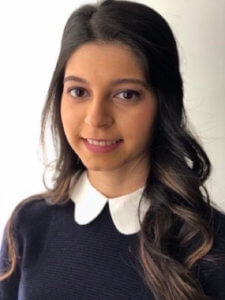
Graduate student Lisha Samuel recently completed a paper detailing her fall research on climate change communication in the city of Kolkata, India. Rechnitz Family/Urban Coast Institute Endowed Chair in Marine and Environmental Law Randall Abate served as a faculty mentor and the project was supported with funding from the UCI.
We caught up with Lisha recently to ask a few questions about her takeaways from the project. You can also watch this video of her talk on the topic from Monmouth University’s fall Climate Teach-In.
Paper Title: Climate Change Communication in Kolkata: Applying Communication Theories to Address the Threat of Climate Change Displacement
Student Researcher: Lisha Samuel
Year and Major: Graduated December 2020 with a master’s degree in communication
Q: What interested you in exploring the topic of climate change communication and why did you choose Kolkata, India, as a case study?
Climate change communication is a fairly a new topic. I have always been interested in climate change and my background in communications was a great fit as I wanted to conduct research on the Indian media and use communication theories for my proposal. My reason for choosing Kolkata was because I grew up in India and understand India’s mindset towards climate change. I wanted to learn more about India’s approach to climate change and how the coastal communities were being affected. Kolkata is the second largest city in India after Mumbai (where I grew up). It was a valuable focus for the paper because it is a city that is surrounded by rivers and is the fourth most vulnerable city in India to sea-level rise.
Q: Your paper notes that you found many “missing links” in climate change communication in India. What were some of the most significant and what risks might those gaps pose for the populace of vulnerable areas?
There are two major gaps in climate change communication in India. The first is a language barrier because most news coverage is conducted by English-language newspapers. In India, different states speak different languages; therefore, vulnerable populations that do not speak English do not receive appropriate information and warnings about climate change threats. The second gap is the Indian mindset on climate change. Indians believe that climate change is a Western concept and that they are being burdened with a responsibility that should be shouldered by Western developed nations. Due in part to the Indian’s government failure to recognize the importance of climate change policies, only 7% of the Indian population knows what climate change is. The coastal vulnerable areas are facing severe challenges due sea-level rise; however, they lack the resources or knowledge to adapt to these impacts, including the threat of forced migration.
Q: What do you believe can be done to improve climate change communication in Kolkata?
The media can be a very effective mechanism to increase climate change communication in India. Incorporating an agenda to report climate change and tell the public compelling stories about climate change impacts would help increase awareness of climate change. Using All India Radio (radio available throughout India), creating more animated short documentaries, increasing the number of trained journalists, and engaging popular Bollywood actors and cricketers would facilitate this necessary transition in communicating the imminent threat of climate change in Kolkata.
Thanks to New Jersey Digest for highlighting the UCI Blog in its list of “4 New Jersey Colleges Doing Blogs the Right Way.” The Jan. 28 article notes that our blog stands out for its focus on environmental issues and marine research work done by students and faculty. Check it out here!
The Monmouth University Institute for Global Understanding (IGU) and Urban Coast Institute (UCI) hosted “Global Perspectives on Adapting Marine Shipping Governance and Maritime Sovereignty to Respond to Climate Change” on Feb. 19, 2021. The event was part of the IGU-UCI Global Ocean Governance Lecture Series, which assembles international experts to discuss scientific and policy issues that hold important implications for coastal and marine ecosystems. The discussion was moderated by Professor Randall Abate, director of the IGU, and included the following presentations and speakers:
“Climate Change and Global Marine Shipping Governance,” by Beatriz Martinez Romera, University of Copenhagen (Denmark)
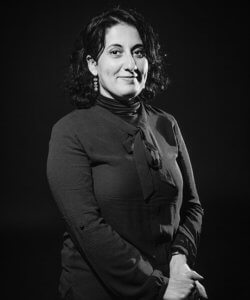
“Applying the Atmospheric Waqf Principle in Muslim Countries to Promote Nature’s Trust in the Marine Environment,” by Samira Idllalène, Cadi Ayyad University (Morocco)
“Maritime Sovereignty of Submerged Pacific Islands,” by Joanna Siekiera, University of Bergen (Norway)
Abstracts & Bios
Climate Change and Global Marine Shipping Governance
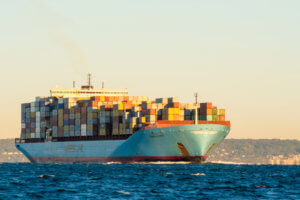
ABSTRACT: If they could be accounted as a country, greenhouse gas emissions from maritime transport would be one of the world’s top 10 emitters. Moreover, shipping emissions are forecast to increase 50-250% by 2050 and the contribution of shipping to climate change will further intensify, as routes in the Arctic become available. In spite of this, shipping remains largely unregulated, being the last sector of the economy to contribute to climate change mitigation targets in line with the Paris Agreement. This presentation will examine the legal and regulatory frameworks of the United Nations Framework Convention on Climate Change (UNFCCC) regime, the International Maritime Organization, and the role of the European Union in regulating climate-related impacts from shipping.
PRESENTER BIO: Dr. Beatriz Martinez Romera is associate professor of environmental and climate change law at the University of Copenhagen Faculty of Law. Martinez Romera has a keen interest in the international climate negotiations, and the regulatory processes at the International Civil Aviation Organization and the International Maritime Organization, as well as the developments at the EU level. Her research includes environmental and climate change law and policy; aviation and maritime transport sectors; law-making processes at international and EU levels; environmental taxation, carbon pricing and related fiscal measures; renewable Energy; fragmentation of international law and regime interaction; environmental and climate-related regulation of the Arctic; ocean governance; and corporate environmental responsibility. She has been teaching climate change law for the last 10 years, and is the founder of TRAMEREN (Transatlantic Maritime Emissions Research Network with NYU School of Law) and ArcEnGov (Arctic Environmental and Climate Change Governance Network with Canadian Research Institutions).
Applying the Atmospheric Waqf Principle in Muslim Countries to Promote Nature’s Trust in the Marine Environment
ABSTRACT: The public trust doctrine is an important legal tool used in common law countries. It imposes limits on governmental action and provides public access rights to trust resources. The public trust doctrine is grounded in common law principles as it stems from the principle of the trust. This principle exists also in Islamic law. The public trust doctrine provides a legal framework for protecting maritime resources and the global climate system. Around the world, climate change litigation is based on the principle of the public trust (atmospheric trust litigation). Comparatively, in Muslim countries, the principle of the trust (called Waqf) has fallen into disuse for political and historical reasons. A revival of the trust in Muslim countries in the Middle East and North Africa (MENA) region and Indonesia can benefit from a comparative law perspective (common law and Islamic law). A closer analysis of Waqf can reframe the environmental legal system and enhance international efforts for environmental action. Therefore, Islamic environmental law could find synergistic opportunities at the global level in the growth of the spiritual ecology movement (Eco-Islam) and at the domestic level in conjunction with Islamic finance. This paradigm shift is urgent and necessary to protect marine resources, especially given the stresses that the marine environment is experiencing from climate change impacts.
PRESENTER BIO: Dr. Samira Idllalène is a professor of law at Cadi Ayyad University at the polydisciplinary Faculty in Safi, Morocco. She teaches environmental law, law of the sea, international law, and comparative law. She is the author of several publications in coastal environmental law in Morocco. Idllalène was a visiting associate professor at the University of Oregon School of Law as part of a Fulbright grant. She also has taught marine environmental law at the Higher Institute of Maritime Studies (Casablanca) as part of the Advanced Cycle in Maritime Affairs in collaboration with the University of Quebec in Rimouski (Canada). Idllalène is member of the Jury: Trophy of Her Royal Highness the Princess Lalla Hasnae “Sustainable Coastal Zone” (Littoral durable) and board member of the Moroccan Association for the Protection of the Underwater Cultural Heritage. She is a partner with Environmental Law Alliance Worldwide (ELAW) and pro bono legal consultant in environmental law for several Moroccan NGOs and for the Economic, Social and Environmental Council (CESE) and the National Fisheries Research Institute (INRH). Idllalène holds a Ph.D. in marine environmental law from the University of Western Britanny in Brest (France), a master’s degree in maritime studies from the same university, and a degree in comparative law from the International University of Comparative Law (Strasbourg-France).
Maritime Sovereignty of Submerged Pacific Islands
ABSTRACT: Global climate change scenarios are seen as future concerns, but this is not the case for the Pacific island countries and territories (PICT). The natural sciences have already built substantial knowledge about the oceanographic, geological, and atmospheric processes associated with global warming and ocean change. Nonetheless, input from the social sciences and the law needs to be collected, analyzed, and executed to determine what happens when climate change impacts threaten the viability of sovereign states. Small island developing states (SIDS) contribute the least to global climate change, yet they are suffering the most from its effects, while the legal consequences of losing the most or all of their territory will threaten loss of sovereign status for those states in the international arena. As the largest water basin on Earth, the Pacific Ocean remains an isolated region in terms of geopolitics and research. This presentation examines the future of the Pacific states regarding their recognition as equal entities among other sovereign states and offers some international law proposals on this issue. The presentation also seeks to sensitize European and American audiences to certain issues of the geographically remote South Pacific that may eventually have impacts for the global community. Threats to human security, food security, land security, and statehood will also be addressed.
PRESENTER BIO: Dr. Joanna Siekiera is an international lawyer and doctor of social sciences in public policy sciences. Since 2019 she has worked as a postdoctoral fellow at the University of Bergen. She was a scholarship holder of the New Zealand Government at the Victoria University in Wellington in 2015-16. She defended her doctoral thesis in 2017 at the Collegium of Socio-Economics of the Warsaw School of Economics in Poland on regional policy of the states in the South Pacific. Siekiera researches public international law, the law of the sea, and (ocean) science diplomacy. Her specialization is legal and political relations in the South Pacific. She works as a legal adviser on the Research Council of Norway grant “Mare Nullius” at the Bergen Pacific Studies Research Group. Her work on this project focuses on the legal consequences of ocean change and sea level rise on the sovereignty of states in the Pacific. Siekiera is the author of over 80 scientific publications in several languages, as well as co-author of three monographs. She is a participant in 11 scientific grants from the European Union, Norway, and Poland and is a co-investigator on the Worldwide Universities Network grant.
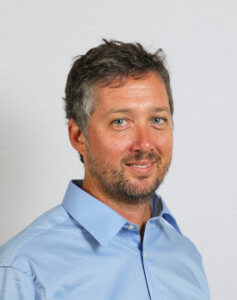
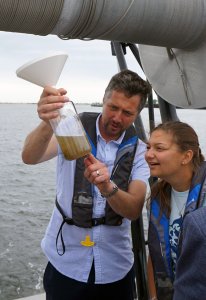
Monmouth University Endowed Associate Professor of Marine Science Jason Adolf has been selected to lead a Harmful Algal Bloom (HAB) Expert Team formed to provide guidance to the New Jersey Department of Environmental Protection (NJDEP) on HAB prevention, mitigation and management for the state’s lakes and other waterbodies.
Through an initiative launched by Gov. Phil Murphy, the NJDEP Division of Water Monitoring and Standards and the New Jersey Sea Grant Consortium recruited Adolf and nine other cyanobacterial HAB and lake management experts to help build the state’s capacity for HAB response. The team will complete a comprehensive literature review on the prevention and treatment of HABs, examine HAB and water quality data, and develop guidance documents for New Jersey lake managers that include best management practices for the prevention and management of HABs.
The team will also provide technical advice and reviews on proposed mitigation technologies for lakes and review the progress of NJDEP-funded HAB mitigation grant projects. Additionally, the team will develop a HAB lake management training program for NJDEP staff and interested stakeholders and conduct training workshops at various locations in the state. More information on HABs in New Jersey and the governor’s initiative can be found at nj.gov/dep/hab/.
The HAB issue gained increased statewide attention in 2019, when lengthy closures at the summer tourism destinations of Lake Hopatcong and Greenwood Lake strained local economies. In an op-ed published by New Jersey news outlets at the time, Adolf warned that the situation could have been far worse, as toxin levels remained relatively low in the lakes even though HAB biomass was elevated. However, he wrote that “it is only a matter of time before our luck runs out.”
A harmful algal bloom in Deal Lake.
“The impacts of humans, including excess nutrient loading to lakes, elevated CO2 levels and rising water temperatures due to climate change, will not only ensure the reoccurrence of these blooms but stack the odds in favor of them becoming toxic and a far more menacing public health threat than what we currently see in New Jersey,” Adolf wrote. “Research into these linkages must play an important role in directing actions for solutions.”
Adolf coordinates the Coastal Lakes Observing Network (CLONet), an innovative citizen science effort that is building a greater understanding of the prevalence and causes of HABs in Deal Lake, Fletcher Lake, Lake Como, Lake Takanassee, Silver Lake, Spring Lake, Sylvan Lake, Sunset Lake, Wesley Lake and Wreck Pond. Adolf runs the Phytoplankton and Harmful Algal Bloom research lab (PHABLab) at Monmouth University, where he is also working with undergraduates to study HABs in Monmouth County surfing beaches and waterways including Sandy Hook and Raritan bays and the Shrewsbury and Navesink river watersheds.
He joined Monmouth in 2017 after nine years at the University of Hawaii at Hilo, where he served as the chair and associate professor of marine science. Adolf, whose research background is in the field of phytoplankton ecology and evolution, has made significant contributions to the literature in the area of HABs. Before going to Hilo, he spent five years at the University of Maryland Institute of Marine and Environmental Technology in Baltimore, conducting HAB research that included Chesapeake Bay; the Swan River Estuary in Perth, Western Australia; and the Plymouth Culture Collection of the Marine Biological Association of the U.K.
A short documentary created by Monmouth University student London Jones examines the possibility that economic pressures caused by factors such as sea level rise and increased coastal flooding could one day push minorities from Asbury Park’s West Side community through a process known as climate gentrification.
London Jones
The film includes interviews with Monmouth University professors Melissa Alvaré, who discussed climate gentrification’s impacts around the country, and Walter Greason, who provided historical context on how “redlining” once shaped the West Side and left it particularly vulnerable today. According to Greason, the now illegal practice of redlining began in the 1930s and involved lenders grading neighborhoods based on racial composition, thereby depressing property values and investment in places like the West Side. However, Jones notes that as climate change makes today’s more affluent beachfront areas less desirable, residents could retreat inland and displace residents in areas like the West Side.
“Today, the West Side still houses the majority of Asbury Park’s minority communities and is characterized as a lower-income community compared to the east,” Jones observed in the film. “This financial reality disproportionately burdens its members when disasters occur, or in this case, climate change-induced sea level rise. While the West Side’s current residents — some whose families have resided there for the past 100 years — may not be concerned with sea level rise ruining their legacies and livelihoods, they might be when it washes away any hope of passing that part of town down to their future generations.”
The video, “Keep the Culture, Change the Fate: Responding to the Threat of Climate Gentrification to Asbury Park’s West Side,” was produced as an honors credit project in Jones’ Climate Change and the Voiceless course, taught by Rechnitz Family/Urban Coast Institute (UCI) Endowed Chair in Marine and Environmental Law and Policy Randall Abate. The project builds on her UCI-supported summer research work examining discriminatory barriers to beach access in Asbury Park and other New Jersey municipalities.

 In an article published by the
  The Urban Coast Institute (UCI) invites Monmouth University undergraduate and graduate students of all disciplines to apply for 2021 Heidi Lynn Sculthorpe Scholars Summer Research Grants. Funding is available for projects proposed by students that will be completed under the guidance of a faculty mentor, or projects proposed by a faculty member that will be completed with the support of student researchers.
 Graduate student Lisha Samuel recently completed a paper detailing her fall research on climate change communication in the city of Kolkata, India. Rechnitz Family/Urban Coast Institute Endowed Chair in Marine and Environmental Law Randall Abate served as a faculty mentor and the project was supported with funding from the UCI.
 Thanks to New Jersey Digest for highlighting the UCI Blog in its list of “4 New Jersey Colleges Doing Blogs the Right Way.” The Jan. 28 article notes that our blog stands out for its focus on environmental issues and marine research work done by students and faculty.
  “Climate Change and Global Marine Shipping Governance,” by Beatriz Martinez Romera, University of Copenhagen (Denmark)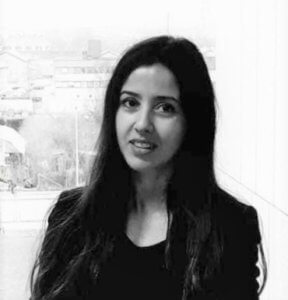

 Through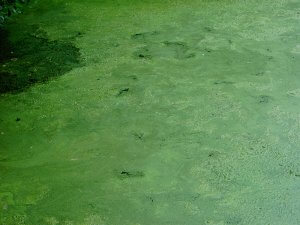
 He joined Monmouth in 2017 after nine years at the University of Hawaii at Hilo, where he served as the chair and associate professor of marine science. Adolf, whose research background is in the field of phytoplankton ecology and evolution, has made significant contributions to the literature in the area of HABs. Before going to Hilo, he spent five years at the University of Maryland Institute of Marine and Environmental Technology in Baltimore, conducting HAB research that included Chesapeake Bay; the Swan River Estuary in Perth, Western Australia; and the Plymouth Culture Collection of the Marine Biological Association of the U.K.