
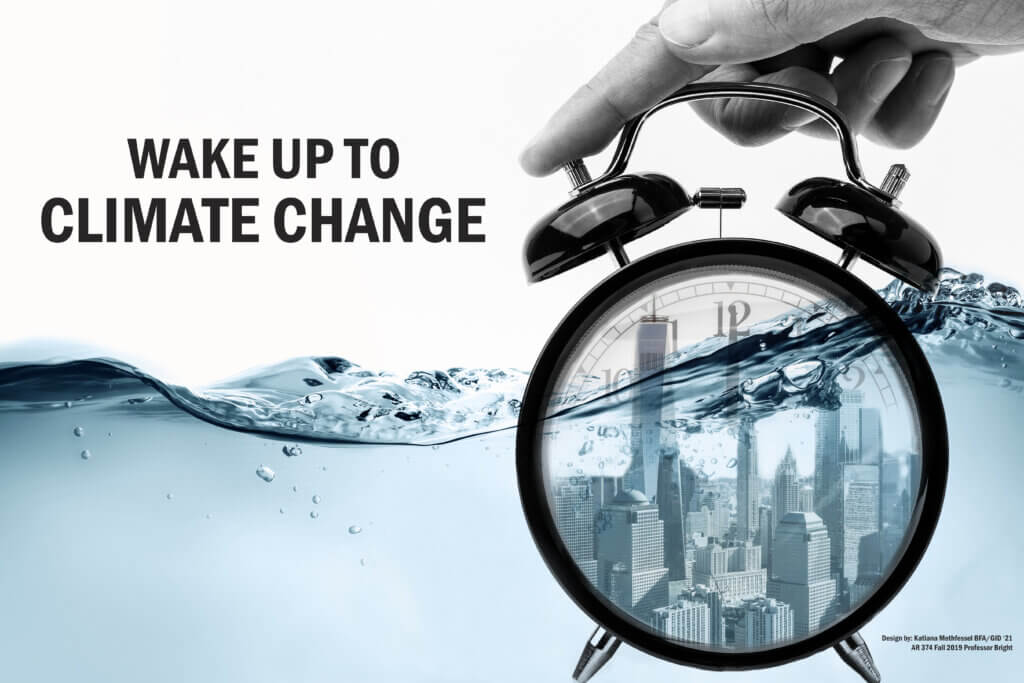
The climate crisis or climate emergency is a threat to life on earth as we know it and will bring immense suffering. The goal of the climate crisis teach-in is to generate discussion about climate impacts and solutions with the goal of improving life for humans and other living things.
The Climate Crisis Teach-in is an ongoing event in the 2025–2026 school year. If you would like to contribute an event or have questions please contact Joseph Coyle, Ph.D., dean of the School of Science.
Upcoming Events
Marine Carbon Dioxide Removal and
its Potential Role in U.S. Climate Policy
October 22, 2025, 1:00 – 2:30 p.m., Edison 201
Wil Burns (Ph.D., Co-Director of the Institute for Responsible Carbon Removal) from American University will speak about carbon removal and its role in climate policy.
In the ensuing years after the entry into force of the Paris Agreement, it has become increasingly apparent that achievement of its temperature objectives will require both aggressive emissions reduction initiatives and large-scale deployment of carbon dioxide removal/negative emissions technologies to either avoid passing critical climatic thresholds or address temperature “overshoot” scenarios. While much of the early research on carbon dioxide removal methods focused on terrestrial approaches, there has been increasing attention to the potential role of the world’s oceans, given both sustainability considerations and the fact that oceans already serve as a huge carbon sink, with substantial additional potential for storing carbon. These “marine carbon dioxide removal” (mCDR) options include ocean iron fertilization, ocean alkalinity enhancement, ocean upwelling/downwelling, and
ocean biomass sinking. This presentation will provide an overview of mCDR approaches and developments in the U.S., including the emerging regulatory framework for deployment of mCDR.
We are posting the event details here to promote the talk. This particular event is jointly sponsored by the Department of Political Science and Sociology and the Urban Coast Institute. If you have questions, please contact Peter Jacques at pjacques@monmouth.edu
Weather Derivatives: Financial Tools for a Changing Climate

Monday, Sept. 29, 2025, 6:30 p.m., Edison 201
The agriculture sector faces increasing risks of erratic weather patterns, and even more in developing economies. Weather derivatives are considered an efficient way to hedge climate risks for agricultural producers. In this session, we will first talk about weather derivatives in general (what, how, where), followed by an application for the case of coffee producers in the province of Caldas, Colombia. The latter is based on a recent publication in Stochastic Environmental Research and Risk Assessment, co-authored with Adriana Abrego and Carlos Valencia from Universidad de los Andes (Bogota, Colombia).
Dr Tjeerd Boonman is the McMullen Family Professor in Economics in the Leon Hess Business School. Dr. Boonman holds a Ph.D. in finance from the University of Groningen, and M.Sc. in econometrics from the University of Amsterdam. Before joining Monmouth University in 2019, he taught at Tec de Monterrey in Mexico, Fudan University and Zhejiang University in China, and University of San Diego. He also has practitioner experience in the banking and investment industry in the Netherlands, financial consultancy in Mexico, and was a senior financial specialist at Banco de Mexico, Mexico’s central bank. His research on international and regional finance and economics topics has been published in top-ranking peer-reviewed journals. He is Visiting Researcher at FernUniversität Hagen in Germany, external assessor for the University of Cape Coast in Ghana, and associate editor for three leading journals, including the International Journal of Finance and Economics..
Climate Change and Mental Health: Fostering Hope and Connection

Wednesday, October 8, 2025, 6:00 p.m., Edison 201
This presentation explores the growing mental health impacts of climate change, with a focus on community-level strategies that promote resilience, hope, and collective agency. Drawing on emerging research and best practices, it highlights how climate anxiety and ecological grief—particularly among Gen Z—are shaped by systemic inequities, uncertainty, and disruption. The session emphasizes the importance of intergenerational dialogue, mutual aid, and relational care in fostering emotional support and wellbeing. Participants will be introduced to tools, resources, and evidence-informed approaches for creating communities of care where climate-related emotions are validated and shared. Together, we will envision how interdisciplinary groups and diverse professionals can build climate-responsive mental health systems grounded in justice, connection, and collective action.
Rachel Forbes, MSW (’11M), is the community outreach and engagement specialist at the Urban Coast Institute at Monmouth University. Forbes’s current research and teaching examines the impacts of climate change on mental health and protective factors at the community level. Her work has been published in environmental justice and human rights journals, and has been funded by the CSWE Katherine A. Kendall Institute for International Social Work and the Hispanic Access Foundation. She is editor of the award winning book “Ecosocial Work: Environmental Practice and Advocacy” (NASW Press 2023).
Previous Events in the 2025 Teach-In
Exploring the “How” of Sustainability Transformations
Monday, Jan. 27, 2025, 6:30 p.m. | Pollak Theatre
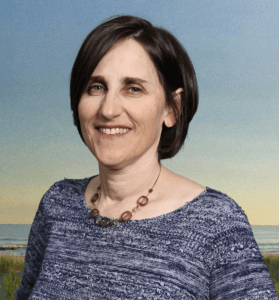
Addressing the climate crisis and related challenges provides many opportunities for promoting sustainability transformations. Yet significant questions remain about what such transformations might entail, how to support them, and how to sustain and scale these efforts. This talk explores the practical, political, and personal dimensions of transformation, drawing upon the model of the “Three Spheres of Transformation”. The talk also considers recent efforts to promote sustainability transformations, based upon the speaker’s work with university students and her on-going research on bicycling and non-motorized transportation infrastructure. The talk discusses implications and lessons learned from these case examples for fostering and supporting transformative change.
Robin Leichenko, Ph.D., is a distinguished professor of geography as well as dean of Social and Behavioral Sciences at Rutgers University. Her research explores the economic and equity dimensions of climate change impacts, vulnerability, and adaptation. Leichenko has led or served on climate change assessments for the City of New York, New Jersey, New York State, and the Intergovernmental Panel on Climate Change (IPCC). The second edition of her book, “Climate and Society: Transforming the Future” (Polity Press, with Karen O’Brien), was released in summer 2024.
Surviving Climate Change in an Authoritarian State
Monday, Feb. 17th, 2025, 4:30-5:50 p.m. | Edison Hall Room 201
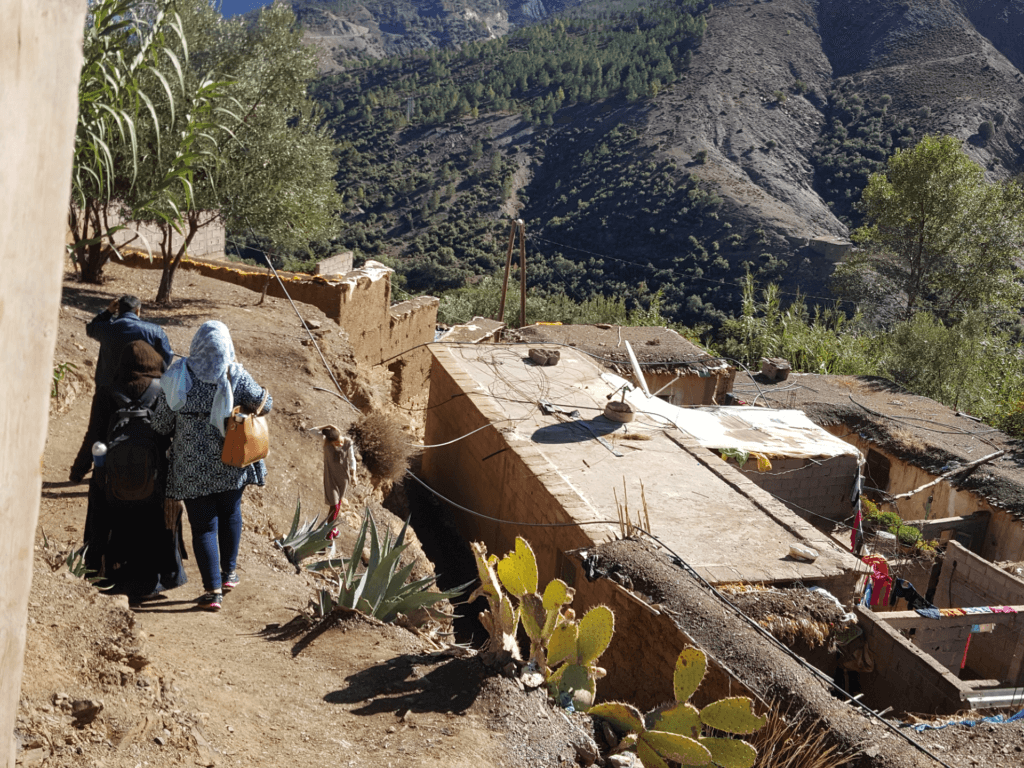
The Indigenous Amazigh people of the High Atlas Mountains in Morocco are one of the world’s oldest cultures, and they have handed down practices that have helped them survive several millennia of environmental changes in North Africa. However, they live under the authoritarian rule of King Mohammed VI and they are prevented from using these tools while at the same time some villages ran out of drinking water two summers ago. How will they survive these next few decades when they face grinding poverty and political oppression? In fact, they have a plan and it is one that everyone should hear.
Leading this Teach-In is Dr. Peter J. Jacques, the Rechnitz Family/UCI Endowed Chair in Marine and Environmental Law and Policy within the Department of Political Science and Sociology. This event is part of the Climate Crisis Teach-in at Monmouth University, and sponsored by the Council for Endowed Chairs and the Institute for Global Understanding.