

Jump To
Program Details
About
- Master of Arts in Criminal Justice (MA)
- Hybrid: A mix of in-person and online
- 30 Credits
Application Deadlines
Summer
May 1
Fall
July 15
Spring
December 1
Get Started
Program Overview
Protect. Serve. Advocate. Investigate. Whether you’re a first responder wishing to advance in your career or a working professional who wants to play a decisive role in safeguarding your community and country, a master’s in criminal justice can help you reach your goals.
Monmouth University’s dynamic graduate program will give you a multidisciplinary perspective on the justice system and its institutions and processes. You’ll learn from an expert faculty while honing your problem-solving ability, building technical skills, and gaining a deeper understanding of moral and ethical issues.
You’ll have the opportunity to customize your degree with a career-focused tracks including one of the nation’s few Intelligence Analyst tracks in partnership with the International Association of Law Enforcement Intelligence Analysts (IALEIA). Enrich your education by also pursuing independent research, study abroad experiences, or internships with local, national, and international agencies.
Career Outcomes
Our graduate criminal justice alumni pursue meaningful roles with organizations such as:
- Central Intelligence Agency (CIA)
- Drug Enforcement Agency (DEA)
- Federal Bureau of Investigations (FBI)
- U.S. Marshals Service
- Homeland Security Investigations
- New Jersey State Police
- New York Police Department
- Middlesex County Prosecutor’s Office
Alumni Success is Our Strength

Jeanna Galanakis ’19
Mission Support Specialist
Homeland Security Track
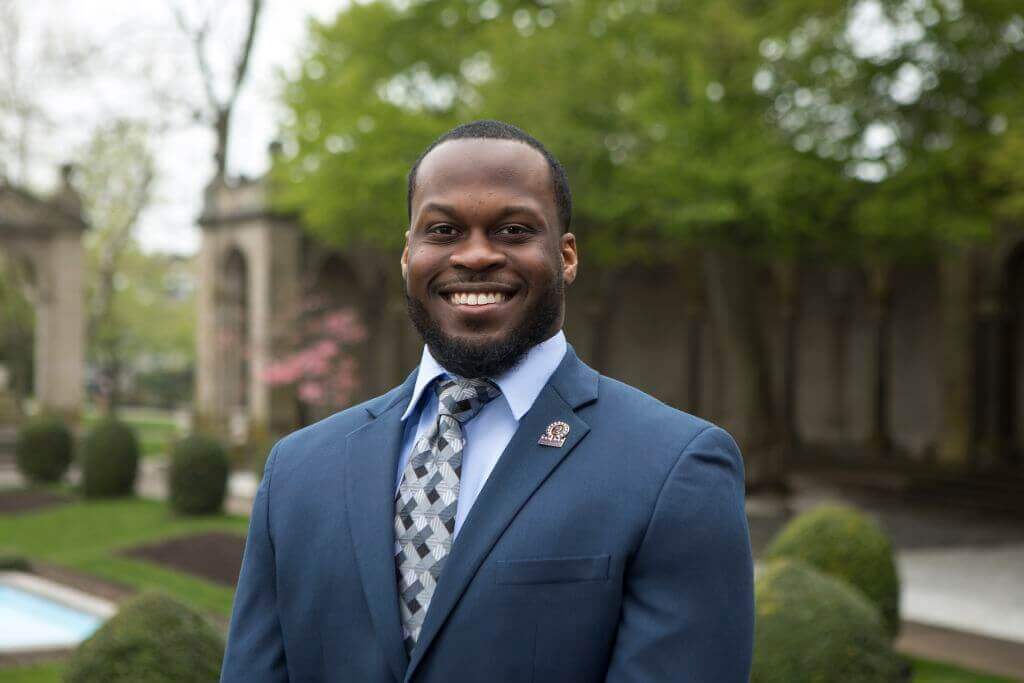
Marcus Leslie ’19
County Prosecutor’s Office Agent
Leadership Track

Christine D’Ottaviano ’13
Government Intelligence Analyst
M.A. Criminal Justice

Alana DeForest ’20
Police Officer
Leadership Track

Kayla Hueston ’19
County Prosecutor’s Office Agent
Leadership Track

Brittney Telesnick ’21
Homeland Security Track
Criminal Justice Specializations
Develop specialized skills and knowledge with one of our optional career-focused tracks:
Intelligence Analyst Track
As technology continues to advance and data sharing is faster than ever, intelligence analysis has been established as a crucial facet of the criminal justice field. Learn about analytical techniques, data interpretation, intelligence reporting, and meet the training requirement for the International Association of Law Enforcement Intelligence Analysts (IALEIA) Professional Certification Program, setting you apart in the job market and giving you an edge over your peers.
Developed in part by an Intelligence Analyst Working Group comprised of practitioners in the private sector as well as federal, state, and county law enforcement, our program is uniquely positioned to prepare students for success in the field with a domestic and global approach.
Community-Law Enforcement Relations Track
Be on the forefront of a new era of criminal justice. Focus on building trust and collaboration between communities and law enforcement agencies. As a graduate of this program, you will be equipped with the tools, strategies, and unique perspectives needed to be a leader and create positive change within your community.
As policing in the United States continues to move toward a community-based model that focuses on solving issues through prevention and de-escalation, more criminal justice and non-profit organizations are opting to hire professionals with experience in creating and implementing outreach programming. You will stand out in a changing job market as a law enforcement professional equipped with the knowledge, skills, and abilities in both criminal justice and social work disciplines. In these roles, you will be positioned to institute change while potentially creating policies and procedures that will help make an impact in the community.
Leadership Track
Today’s employers are seeking adaptable problem solvers with strong leadership capabilities. Prepare for roles in criminal justice/law enforcement management, policy, and strategic planning. Under the direction of faculty with prominent experience in the criminal justice field, you will learn how to analyze complex public sector challenges and manage the day-to-day operations of law enforcement and public agencies.
This track is tailored to prepare students for an executive role within the field of criminal justice and will benefit law enforcement officers, criminal justice professionals, government employees at the federal, state, county, and municipal levels, members of the Armed Services, and more.
Curriculum Requirements
Your MA in Criminal Justice will include core courses, electives, and a capstone project. You can also add one of our three specialized tracks to further customize your degree.
Core Requirements
All graduate criminal justice students will complete foundational courses, which may include classes such as:
- Applied Data Analysis in Criminal Justice
- Seminar: Ethics, Law, and Society
- Cyberterrorism
- Knowledge Into Practice: Criminal Justice Capstone Course
View full degree requirements and course descriptions at the graduate catalog.
Additional Courses & Electives
Customize your criminal justice master’s degree by choosing elective credits that match your interests. You might explore topics like intelligence, leadership, and terrorism. We also offer a rotating selection of Special Topics electives; the themes will vary from semester to semester.
Track Requirements
If you’re choosing one of our specialized tracks, you’ll also complete a series of required and elective courses. Refer to the graduate catalog links provided here for full requirements:
- Intelligence Analyst Requirements – courses include Cyberterrorism; and GIS, Crime Mapping & Analysis meet certification requirements for the International Association of Law Enforcement Intelligence Analysts. Additional information about the certification program can be found on IALEIA’s website.
- Community-Law Enforcement Relations Requirements – elective options intersect with social work courses, such as Domestic Violence and Crisis Intervention.
- Leadership Requirements – courses include Seminar: Leadership and Management; Policy Analysis and Professionalism.
Application Overview & Requirements
Here’s an overview of the admissions process for our master’s degree in criminal justice:
Admissions Criteria & Application Requirements
To be considered for admission:
- A four-year baccalaureate degree with a:
- minimum 2.75 overall GPA
- minimum 3.0 GPA in the undergraduate major
Your application must also include:
- Two letters of recommendation; these should be from a professional or academic contact, such as a supervisor, mentor, or colleague
- 300-word personal essay that describes your professional and academic goals and how a graduate degree will help you reach them
International Association of Law Enforcement Intelligence Analysts

We are proud to be an Academic Institution Member of the International Association of Law Enforcement Intelligence Analysts (IALEIA).
Monmouth University’s Master of Arts in Criminal Justice – Intelligence Analyst Track (CJ 621 Fundamentals of Intelligence Analysis; CJ 622 Advanced Issues in Intelligence and CJ 636 Structured Analytic Techniques) meets IALEIA’s criteria for a basic intelligence course. These criteria are based on guidelines provided in the Law Enforcement Analytic Standards (2012) and the Minimum Criminal Intelligence Training Standards (2007) published by the US Department of Justice Global Justice Information Sharing Initiative. Individuals who complete this Program meet the training requirement for IALEIA’s Professional Certification Program. Together, these courses have been added as an accepted program. Additional information about the certification program can be found on IALEIA’s website.
Why Monmouth for Your MA in Criminal Justice?
4
Career-Focused Tracks
Choose an area of focus that aligns with your academic interests or professional aspirations.
Expert Faculty
Learn from faculty members with a wide range of research interests and industry experience.
Real-World Experiences
Gain practical experience through internships, capstone projects, and international policing-themed trips.

More Affordable
Learn more about tuition and financial aid options for graduate students.
Program Faculty
Our faculty includes a mix of academic researchers and former practitioners. Research specialties include policing, criminology, forensic psychology, crime analysis, juvenile justice, victimology, and homeland security. Faculty members also have professional experience in law enforcement, intelligence, criminal law, victim advocacy, and psychology.

Program Director

Program Contact
Director of Professional Outreach and Engagement;
Adjunct Professor

Thomas Carey, Ed.D.
Specialist Professor

John Comiskey, Ed.D.
Associate Professor

Giuseppe M. Fazari, Ph.D.
Assistant Professor

Meg Forney, Ph.D.
Associate Professor

Peter Liu, Ph.D.
Professor

Nicholas Sewitch, J.D.
Specialist Professor;
Chair
Take the Next Step
Apply Now
Ready to apply to Monmouth’s master’s in criminal justice? Start your application today.