
The Works in Progress Seminar is a forum for presenting work under way in an area of scholarship or teaching for a seminar-style discussion among faculty of the Department of History and Anthropology and the broader campus community, originally conceived and developed by Hettie V. Williams, Ph.D. The mission of this seminar is to foster awareness about the research interests among faculty, improve communication about areas of teaching and scholarship, facilitate discussions across disciplines, and encourage collaborative research opportunities.
Fall 2025–Spring 2026 Calendar
Schedule
- Wednesday, Sept. 24, 2025—Organized Crime and Abortion
- Wednesday, Oct. 22, 2025—Aww Shucks…. Oyster Exploitation in New Jersey and Delaware from the 18th to 20th Centuries
- Wednesday, Jan. 28, 2026—”California Dreamin’”: A 1960s Anthem
- Tuesday, Feb. 24, 2026—Teaching “About” Communism in New Jersey’s High Schools: Curricular Arguments in Cold War Grammar
- Tuesday, March 24, 2026—The Philosophical Anthropology of Rodolfo Kusch
- Wednesday, April 22, 2026—Examination of Differences in Height, Weight, and Body Mass Index of Students From Two Disparate School Districts in Central New Jersey
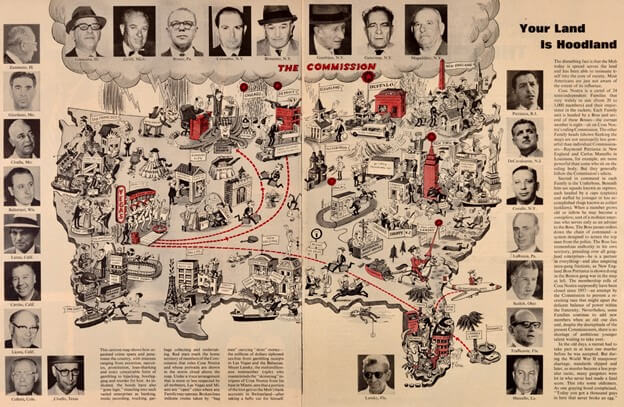
Wednesday, Sept. 24, 2025—Organized Crime and Abortion
1:15–2:35 p.m., Howard Hall 342
Presenter: Katherine Parkin, Ph.D.
Organized crime played a role in the experience of many securing, providing, and paying for abortions before they were legalized. The high rates for the procedure made illegal abortion in the 1960s the third largest moneymaker for organized crime. However, most studies by historians, criminologists, and sociologists have not considered how, where, and when organized criminals and their accomplices profited from abortion. This study of organized crime includes those providing abortions and lending money nationally, including relatives of Frank Sinatra and Drea de Matteo (“The Sopranos”) who provided illegal abortions in New York City.
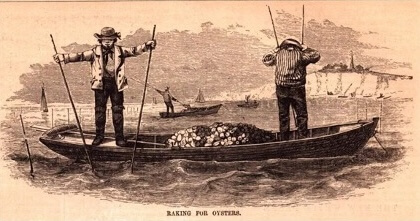
Wednesday, Oct. 22, 2025—Aww Shucks…. Oyster Exploitation in New Jersey and Delaware from the 18th to 20th Centuries
1:15–2:35 p.m., Howard Hall 342
Presenter: Adam R. Heinrich, Ph.D.
Oysters have been receiving a lot of attention recently due to efforts to revive their beds in the waters around New Jersey. Oysters have been a popular resource around the Raritan and Delaware bays since Native Americans arrived to the region, and Europeans brought their oyster appetites during colonization. The story of oysters is interesting and complex, but most notably has been on over-harvesting and pollution impacts. This project is aiming to study how archaeologically recovered oyster shells dating from the early 18th century until the 20th century can reflect the degree of human pressures on our local oyster beds as well as how historic management strategies were able to sustain productive resources.

Wednesday, Jan. 28, 2026—”California Dreamin’”: A 1960s Anthem
1:15–2:35 p.m.
Presenter: Kenneth Campbell, Ph.D.
This talk draws from a long-form essay in progress on the Mamas and the Papas’ 1965 hit “California Dreamin’.” The project examines the song’s musical style, lyrical themes, and cultural resonance, and will ultimately be part of a larger book that brings together a collection of essays by multiple authors on iconic late-1960s songs such as “Suite: Judy Blue Eyes.” Together, these essays consider how certain songs captured the era’s spirit of personal longing, social change, and musical innovation.
Tuesday, Feb. 24, 2026—Teaching “About” Communism in New Jersey’s High Schools: Curricular Arguments in Cold War Grammar
2:45–4 p.m., Howard Hall 342
Presenter: Chris DeRosa, Ph.D.
After Red Scare tactics successfully chased American leftists out of the teaching profession, right-wing groups pressured schools to indoctrinate students in their versions of “Americanism” and anticommunism. This effort too made considerable progress in the late 1950s and early 1960s. However, by reframing the recent history of this campaign, liberals coopted it and implement what they regarded as their superior anticommunism, based on the values of the nation’s supposed mid-century political consensus. Throughout, long-standing curricular battles adapted to the grammar of the Cold War. Seemingly esoteric debates like “history versus social studies” and “life adjustment versus college prep” were now to determine whether the next generation of Americans would be living under a totalitarian communist regime by the end of the century. Just as the Democrats’ Cold War liberalism prevailed nationally in 1960, liberals by some measures won the contest over anticommunism in secondary school curricula, especially in New Jersey, where it turned decisively in their favor in 1963. The triumph proved short-lived, as the late 1960s revealed the fragility of the American consensus. In the end, public schools made easy targets for political attacks, but faulty instruments for the transmission of political values. So may they prove again, in the case of New Jersey requiring its middle schools, starting in 2022, to teach civics.
Tuesday, March 24, 2026—The Philosophical Anthropology of Rodolfo Kusch
2:45–4:10 p.m.
Presenter: Manuel Chavez, Ph.D.
Wednesday, April 22, 2026—Examination of Differences in Height, Weight, and Body Mass Index of Students From Two Disparate School Districts in Central New Jersey
1:15–2:35 p.m.
Presenter: Hillary DelPrete, Ph.D.
School collected data on height, weight, and body mass index offers tremendous potential to examine factors that affect growth and development. It is well documented that several factors, including socioeconomics and ancestry, have a marked impact on overall growth and growth trajectories demonstrating the plasticity of human growth and development. This study examines the height, weight, and BMI of 1,858 students, 896 females, and 962 males, between the ages of 5 and 14 from two disparate school districts in New Jersey; although these school districts are less than 15 miles apart, they have substantial differences in their socioeconomic environment and their self-identified primary ethnicity. In order to compare these populations, Mann-Whitney U tests and Kruskal-Wallis tests were conducted on height, weight and BMI, which identified statistical differences between these populations in all of the variables. Dunn post-hoc pairwise tests indicated that the differences were due to self-identified primary ethnicity and socioeconomic factors, which is in agreement with previous research. In addition, it appears that in this study, socioeconomic factors have a greater impact than primary ethnicity because there are more differences across districts comparing White and Hispanic or Latino students than within the district with both groups present. Further, White individuals from the less affluent population are, on average, shorter than their more privileged White counterparts. Unfortunately, there were not enough individuals in the other ethnic groups in both populations to compare.