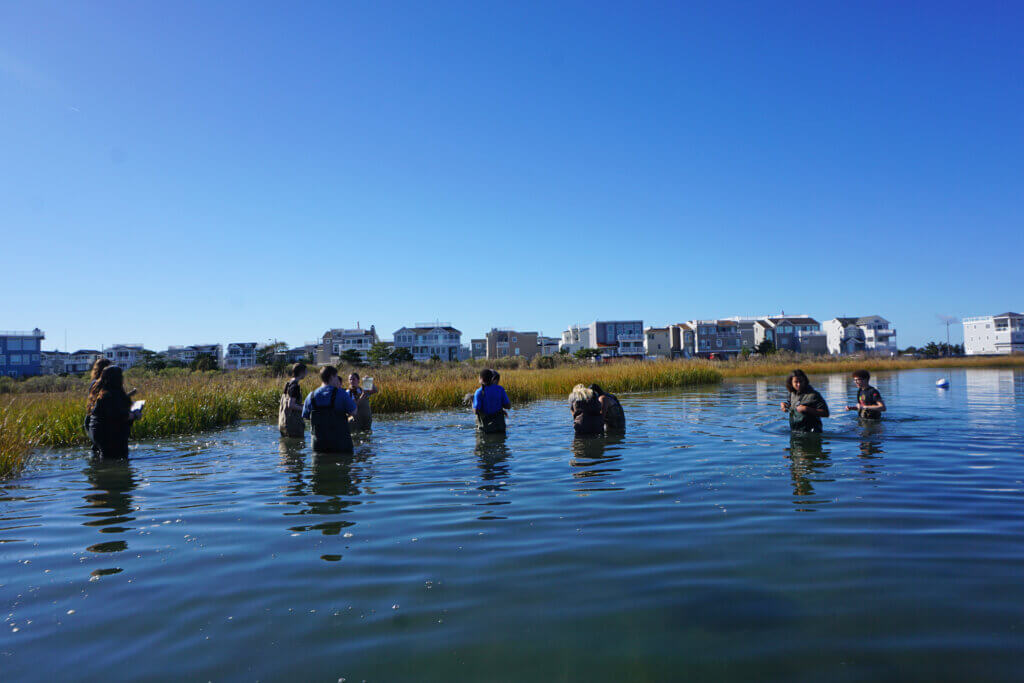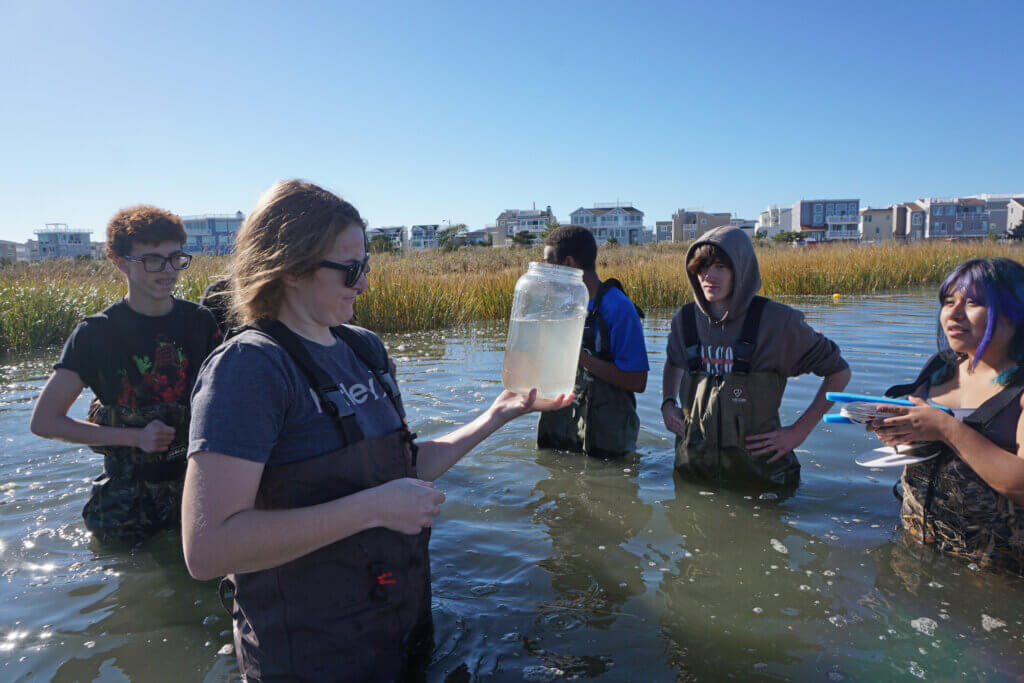
Fourteen years to the day since Hurricane Sandy landed on the Jersey Shore, Monmouth University Urban Coast Institute (UCI) staff provided a tour to Cape May Technical High School (Cape Tech) students of a tidal marsh that was damaged by the storm and measures now underway to improve its resilience.
The UCI is a partner on multiple research and restoration efforts focused on Clam Cove, a coastal wetlands area on Little Egg Harbor jointly owned by Long Beach Township and Ocean County. The township and county purchased the property and other adjacent pockets of marshland totaling 22 acres shortly after Sandy to protect them from development and attempt to reverse years of erosion exasperated by boat wakes, coastal storms, tidal inundations, and other contributors.
Until a few years ago, Clam Cove was a small marsh peninsula that visitors could walk across to go fishing. But after Sandy, a small stream that existed in the marsh expanded and bisected the tract, rendering part of it an island and threatening to severely erode the marsh. A focus of the UCI’s work is implementing nature-based solutions that would close the breach and help restore Clam Cove.
As a first step, the UCI has been developing a hybrid living oyster reef in the waters off Clam Cove that would help guard it against waves and currents while providing new habitat to marine life. Once the shoreline is better secured, work will turn towards backfilling the cut, topping the marshlands with sand, and expanding dune grasses and native plants that will help accumulate and hold sediments on the tract.
Cape Tech Coastal and Marine Sciences Teacher Nicole Cappolina, a 2024 graduate of Monmouth University’s Marine and Environmental Biology and Policy (MEBP) program, and her marine science students met with the UCI at the Long Beach Township Marine Education Field Station for a lesson on the challenges faced by the adjacent Clam Cove. The site is a familiar one for Cappolina, who was awarded a UCI Heidi Lynn Sculthorpe Scholars grant in 2023 to analyze how sea level rise would influence future tidal flooding at Clam Cove.
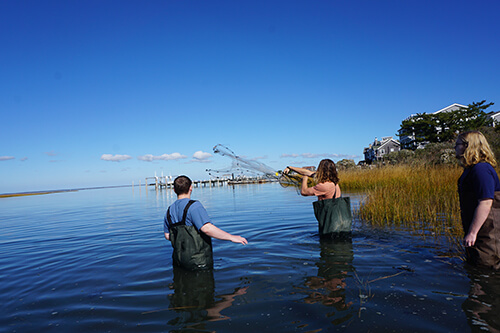
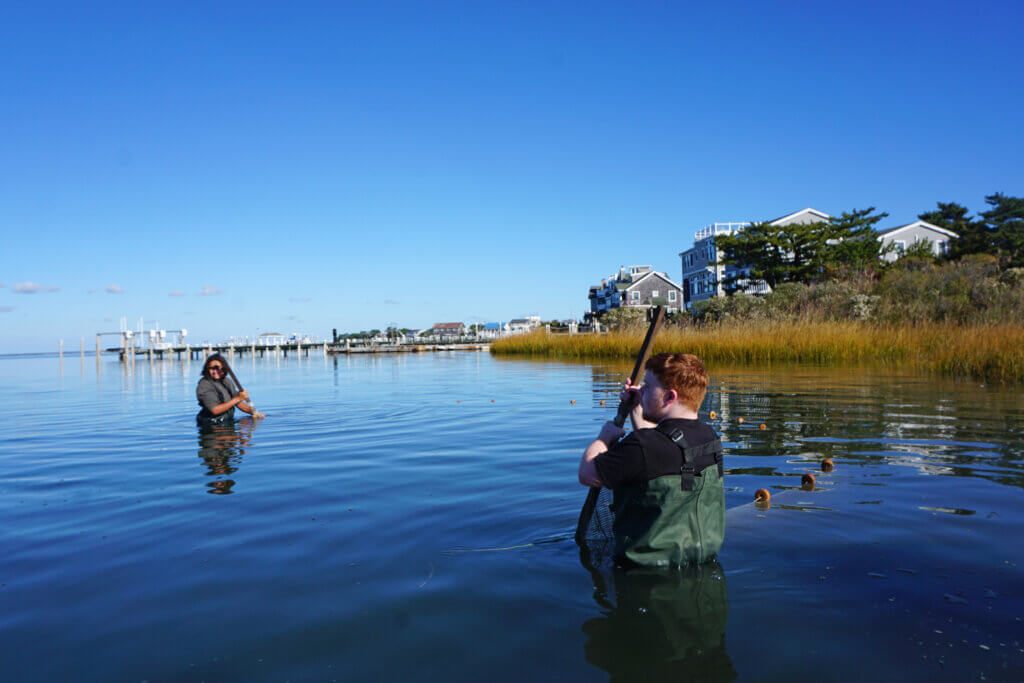
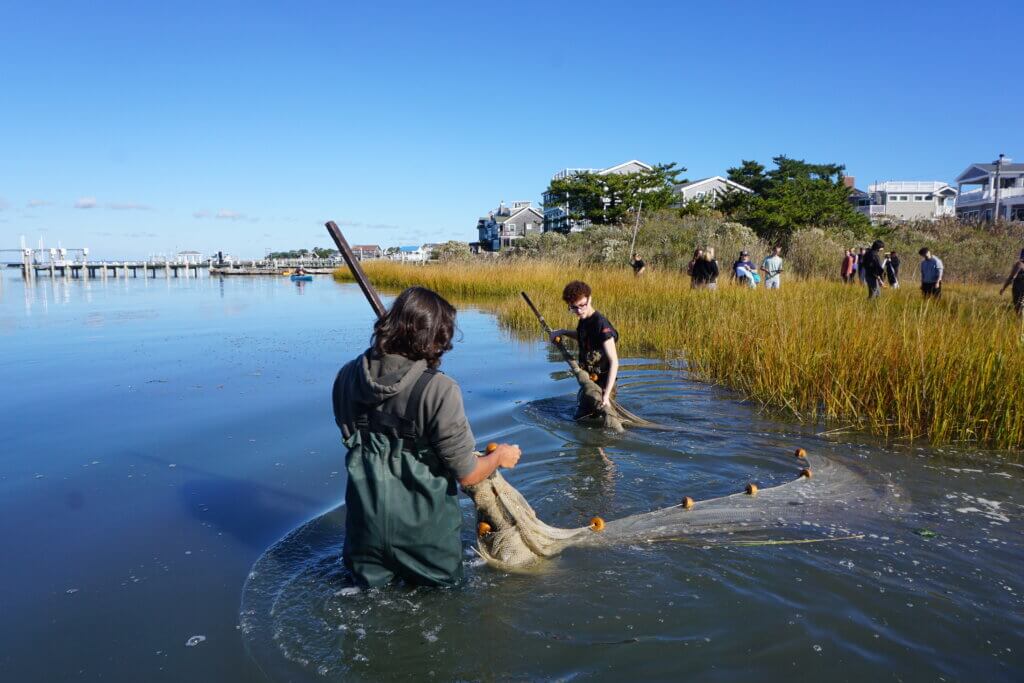
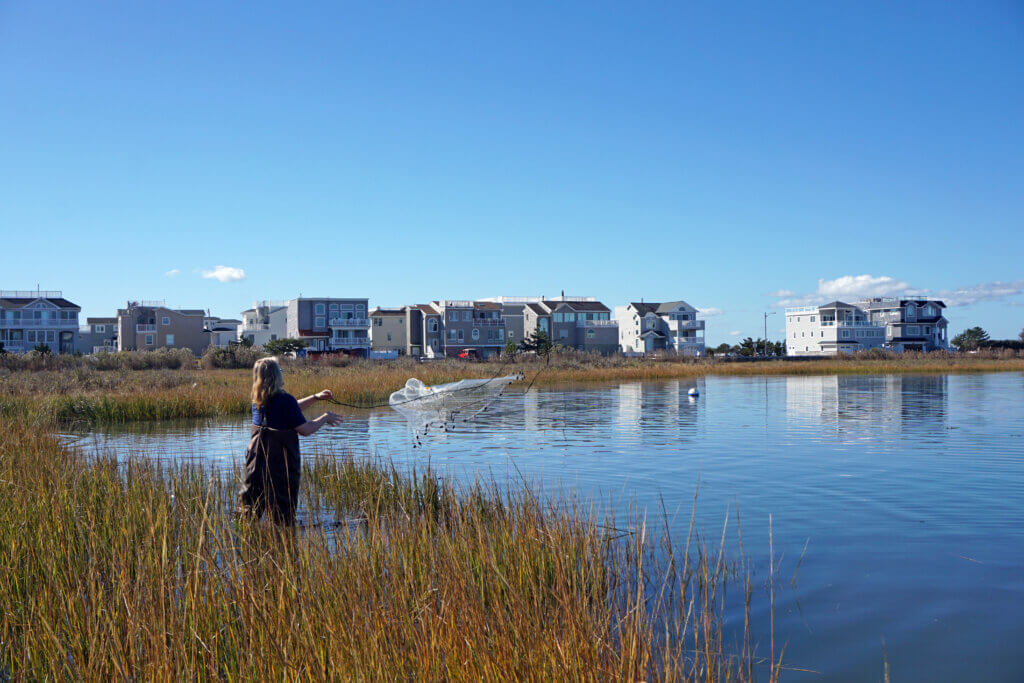
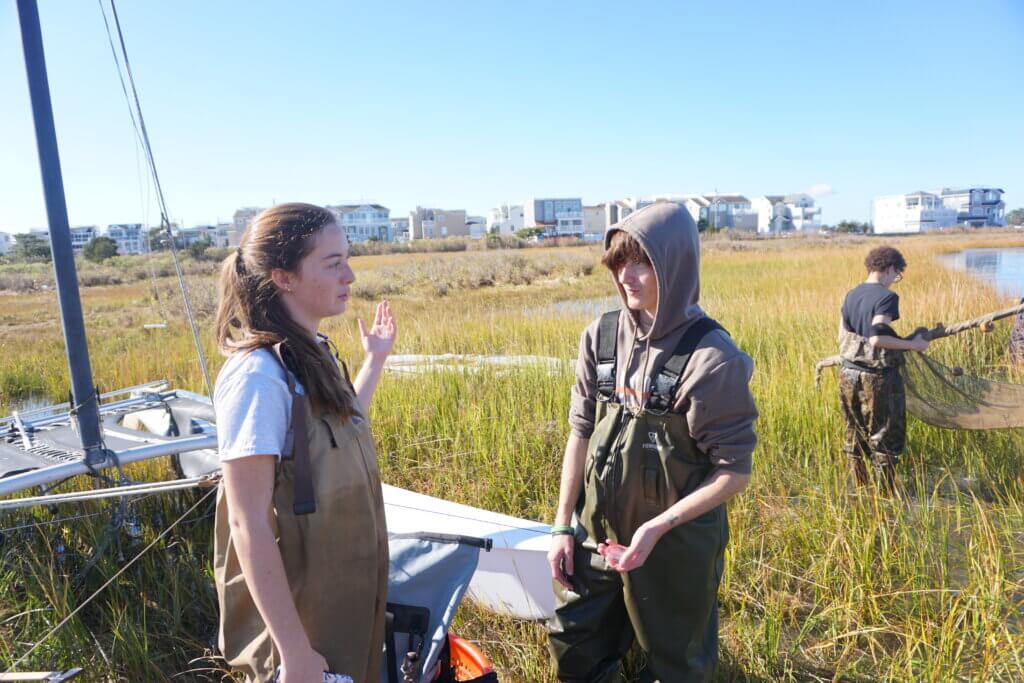
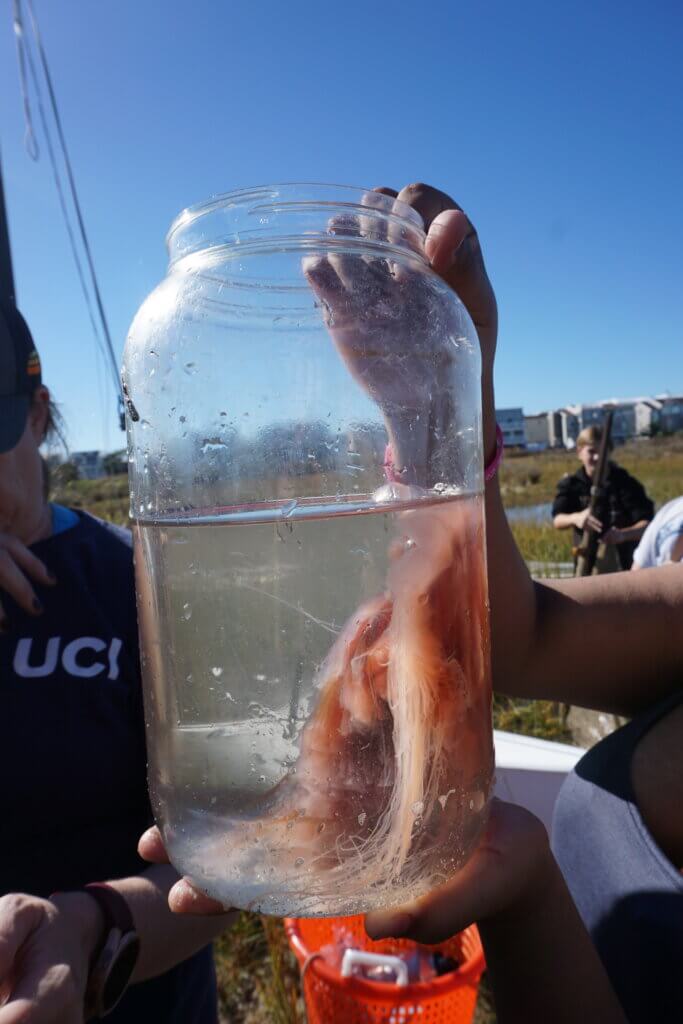
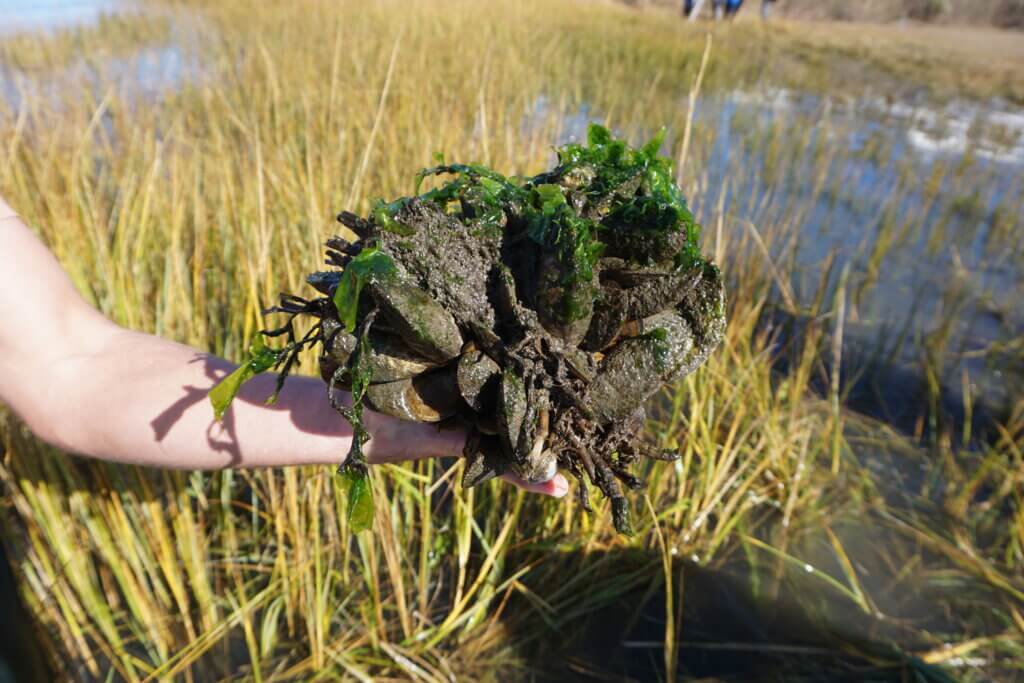
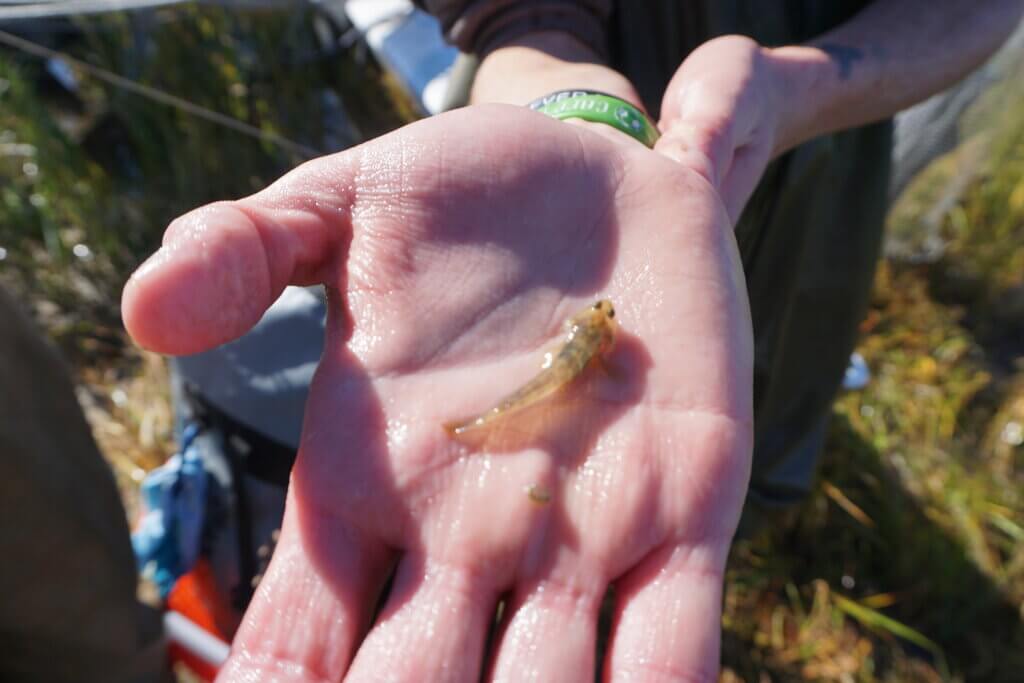
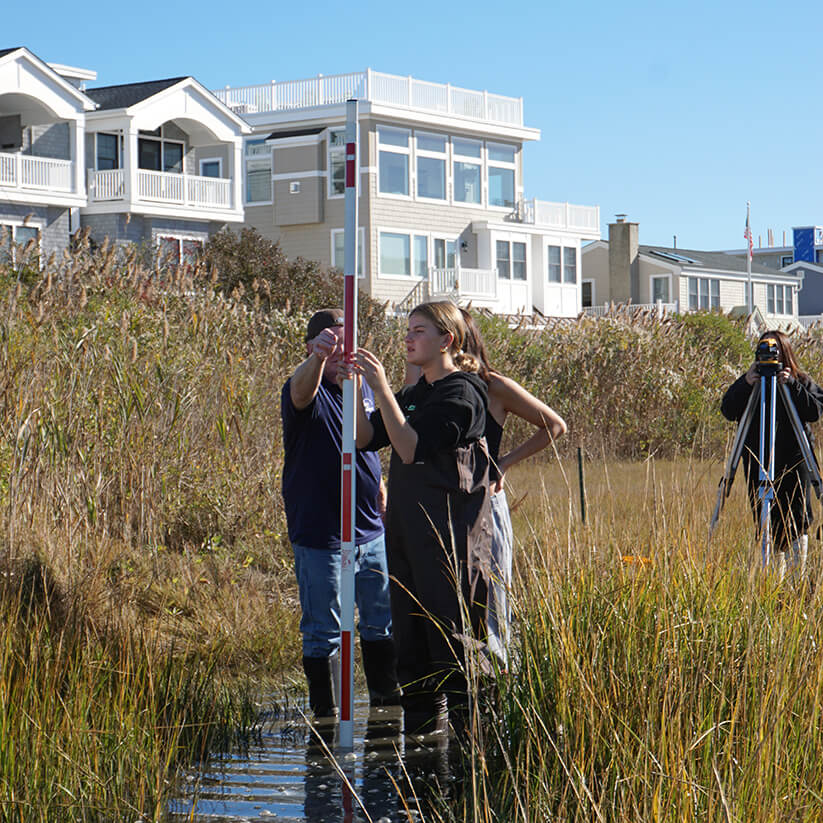
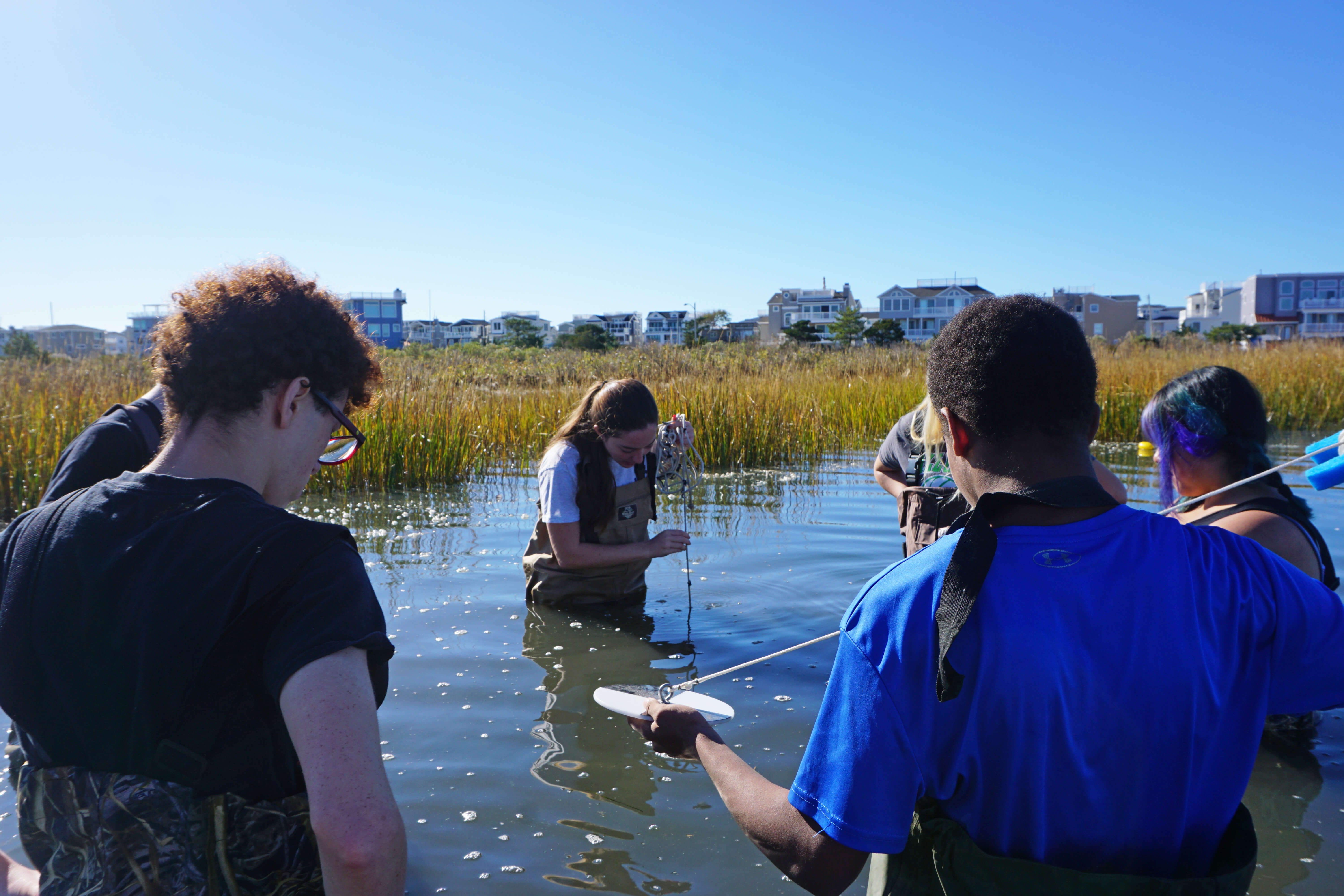
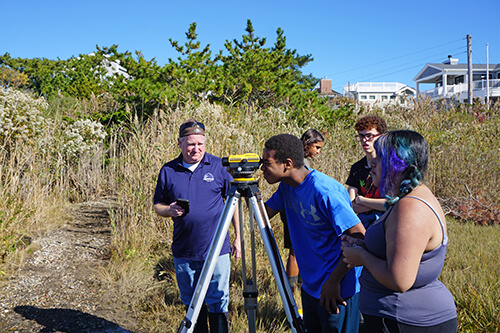
The UCI organized four stations at the marsh where the students learned about techniques and equipment used to monitor the resilience and health of ecosystems like Clam Cove. The group gained hands-on experience conducting topographical surveys with a survey level and rod; using a quadrant to gather a snapshot of the size and composition of plant communities on the tract; seining with nets to learn about the fish, mollusks, and other organisms living in the system; and operating technologies to gather data on water conditions in the area.
The lessons were guided by Cappolina, Field Station Director Angela Andersen, and UCI Acting Director Tom Herrington, Coastal Resilience and Restoration Practitioner Meredith Comi, Marine Biologist Amanda Boddy, and Coastal Restoration Technician Grace Schleiden. The UCI’s work in partnership with Long Beach Township at Clam Cove has been supported by two National Fish and Wildlife Federation grants, a donation from New Jersey Resources, and a contribution from the New Jersey Corporate Wetlands Restoration Partnership.