Volume XV, Issue 2
Note from the Chair
One of the things I am most proud of about the Monmouth University English department is the way that we value our adjunct faculty colleagues, integrate them into the life of the department, support their professional development, and assist them in achieving their career goals. This important and longstanding aspect of our department culture was already well-established when I arrived as a new Assistant Professor hire in 2014, thanks not only to the leadership of my predecessors as department Chair—Caryl Sills, Sue Starke, and Susan Goulding—but also to the hard work and initiative of several Directors and Associate Directors of First-Year Composition (FYC)—Stan Blair, David Tietge, Heather Brown, and Lisa Vetere—who had created and obtained administrative support for the FYC program’s professional development workshop series, instituted effective procedures for regularly observing and providing feedback to part-time faculty, and laid the groundwork for the strong sense of community that continues to exist among the full-time and part-time faculty who teach in our FYC program today. I consider it an essential part of my job as department Chair to continue this legacy and am especially proud of having been able to work with the Samaras family, the SHSS Dean’s Office, and my colleagues in the English department to inaugurate our new Virginia K. Samaras Memorial Award for Academic Writing, which testifies to the way we continue to value and support our adjunct faculty by honoring the memory of “Ginny” Samaras, an adjunct colleague who taught ably and impactfully as a member of the Monmouth University English department from 1997 to 2011. I hope you will take the time to read the article that kicks off this edition of our newsletter and learn more about Professor Samaras’s contributions to the English department and her service to our students.
In addition to wanting to express my appreciation to the Samaras family and everyone involved in creating our new award, I also wanted to focus especially on our adjunct faculty in this Note from the Chair because I wanted to share some exciting news and say farewell (and thank you) to some members of our department who will be moving on to new opportunities. In recent years, we have had the pleasure of seeing a number of our highly capable adjunct colleagues (who are also often, but not always, graduates of our MA in English program) use their experiences teaching at Monmouth as a launching pad to obtain full-time, tenure-track positions at local community colleges or to gain admission to highly selective PhD programs. This year has been, as it turns out, a bit of a banner year for our adjunct colleagues, and I would like to congratulate Arianna Tepedino MA’16 on having been hired as a full-time, tenure-track Assistant Teaching Professor at Middlesex College; Faith Bates ‘24MFA on having been hired as a Writing and Teaching Consultant at Bucknell University; Emma Varga ’24M on having been accepted into the University of Massachusetts-Amherst’s PhD program in English with a concentration in Composition and Rhetoric; and Valerie Aristy-Reyes ‘24M having been accepted into Syracuse University’s PhD program in Composition and Cultural Rhetoric. We will greatly miss all of these once-in-a-lifetime former students who went on to become amazing instructors and respected colleagues, just as we miss (and are, at the same time, enormously proud of) Ray Dademo, Amanda Connelly, Corinne Cavallo, Mary Rademacher, Eric Brown, and other former adjuncts and/or students who have gone on to accomplish great things elsewhere.
Having said this, it’s important to recognize that, throughout the history of our department, we have had adjunct faculty colleagues who have accomplished similarly great things while remaining right here at Monmouth. Perhaps foremost among those who fall into this category is Jerry Cook, who graduated with his BA in English from Monmouth College in 1963 and with his MAT, also from Monmouth College, shortly thereafter. Jerry began teaching at Monmouth as a Lecturer in Composition and Creative Writing in 1966, and, with the exception of a brief period from 1976 to 1981, he has been an integral part of our department ever since. Over the years, he has taught a wide variety of courses, including Remedial Composition, Composition I, Composition II, Critical Reading and Composition, World Masterpieces, British Literature, American Literature, Creative Writing (Short Story), Film Form and Analysis, Literature I, and Literature II. He was also a fixture on the team that used to devote a full week at the end of each semester to administering and evaluating the department’s Writing Proficiency Examination, and he served for years as the English department’s primary liaison with the library. On behalf of the department, I would like to thank Jerry for his decades of service to Monmouth nd its students, for his friendship, and for his invaluable contributions to forming and sustaining the spirit of this academic unit.
Before closing, I’d also like to thank everyone who pitched in to help bring Dr. Piper Kendrix Williams to campus as this year’s Toni Morrison Day keynote speaker (the Intercultural Center, the Office of the Provost, the SHSS Dean’s Office, the Leon Hess School of Business, the Guggenheim Memorial Library, the Monmouth Review, and Sigma Tau Delta); everyone who helped Dr. Vetere’s Place and Space in American Literature students cover the costs associated with their Spring Break trip to New Orleans (the Office of the Provost, the SHSS Dean’s Office, the School of Education, and the KDP Education Honorary Society); and the anonymous donor who has given multiple gifts to support Creative Writing at Monmouth. We sincerely appreciate your support for the important work that our faculty and students are doing. We couldn’t do what we do without you. Best wishes for a restful and productive summer!
English Department Renames Award After Beloved Professor
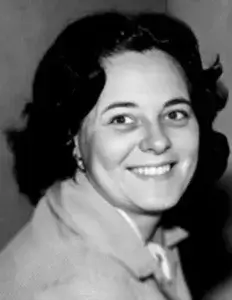
The English Department is pleased to announce that the annual Award for Academic Writing has been renamed the Virginia K. Samaras Memorial Award for Academic Writing, in honor of “Ginny” Samaras, a valued adjunct faculty member who taught at Monmouth University from 1997 to 2011. Professor Samaras earned her M.A. in Liberal Studies from Monmouth College in 1997, after having taught for nineteen years at St. James School in Red Bank and having raised five children. A highly respected instructor and dedicated member of the First-Year Composition Committee, she capably taught multiple sections of EN-101 and EN-102 each semester and helped to develop the master syllabi for these formative general education courses. Additionally, she played a key role in establishing important policies pertaining to the placement, tracking, and mainstreaming of students as well as the procedures used to ensure fairness when evaluating student submissions for the First-Year Composition Writing Awards. An avid bridge player, she earned several master points over the years.
Professor Samaras’s students described her as a “wonderful teacher” who was not only “fair and treated us with respect” but also “very patient and encouraging.” According to Dr. Stanley Blair, who worked closely with Professor Samaras in his role as Director of First-Year Composition, she “balanced her high academic standards and her optimistic expectations of students with immense patience and practical compassion for them. As a colleague, she had a generous heart, a delightful sense of humor, and a strong commitment to our department and its ideals, even when she could have done more relaxing things with her time and even when her circumstances were difficult.” The renamed award, which was made possible through the generosity of the Samaras family and honors Professor Samaras’s enduring legacy and dedication to high standards and excellence in writing, continues to recognize the best scholarly essay submitted in an undergraduate English course.
The English Department Welcomes Piper Kendrix Williams for it’s 7th Annual Toni Morrison Day Celebration
Students and faculty gathered in Pozycki 115 at 10:05 a.m. to kick off the 7th Annual Toni Morrison Day on Feb. 20, hosted by the English Department. This year’s theme was “A Legacy Across Generations.”
Toni Morrison was an American novelist and editor who was awarded the Nobel Prize in Literature in 1993. Morrison became the first Black American to win the Nobel Prize in Literature.
The day-long event consisted of panels, discussions, contests, and ended with an open mic session from 3:15-4:00 p.m.
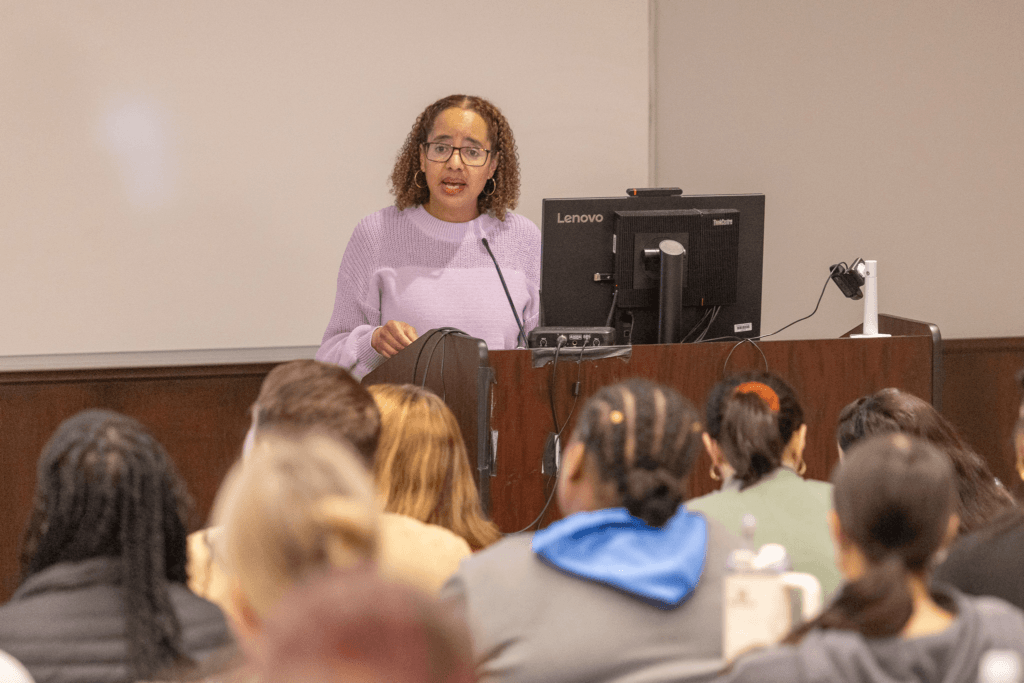
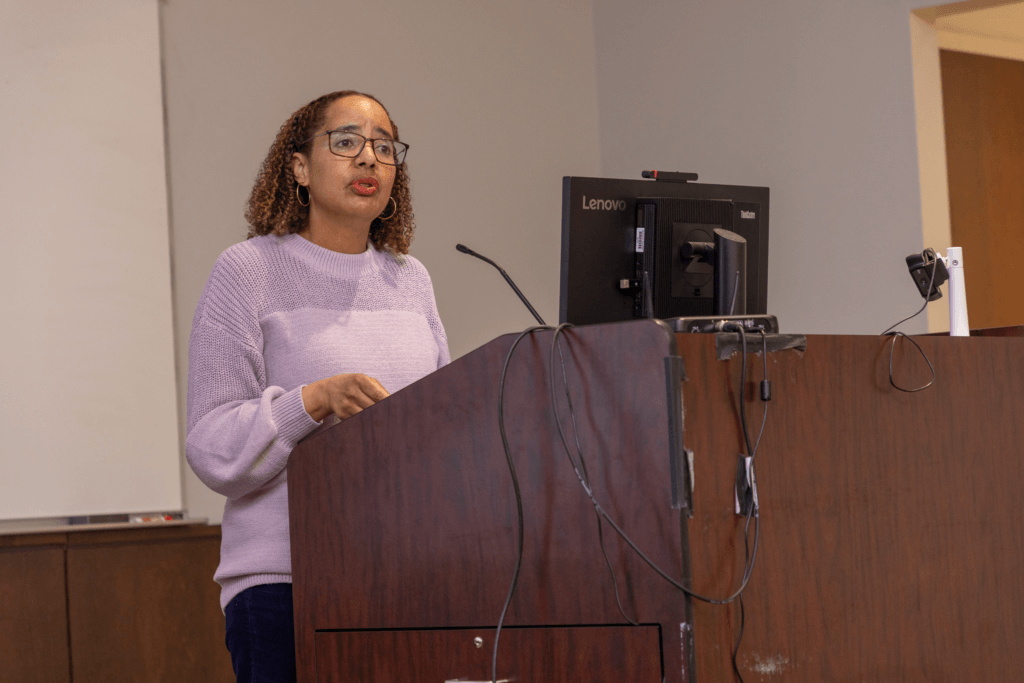
The English department welcomed Piper Kendrix Williams, Ph.D., to deliver the keynote address. Williams is a professor of English and African-American Studies at The College of New Jersey, as well as the Chair of the Department of African-American Studies and co-author of the Toni Morrison Book Club.
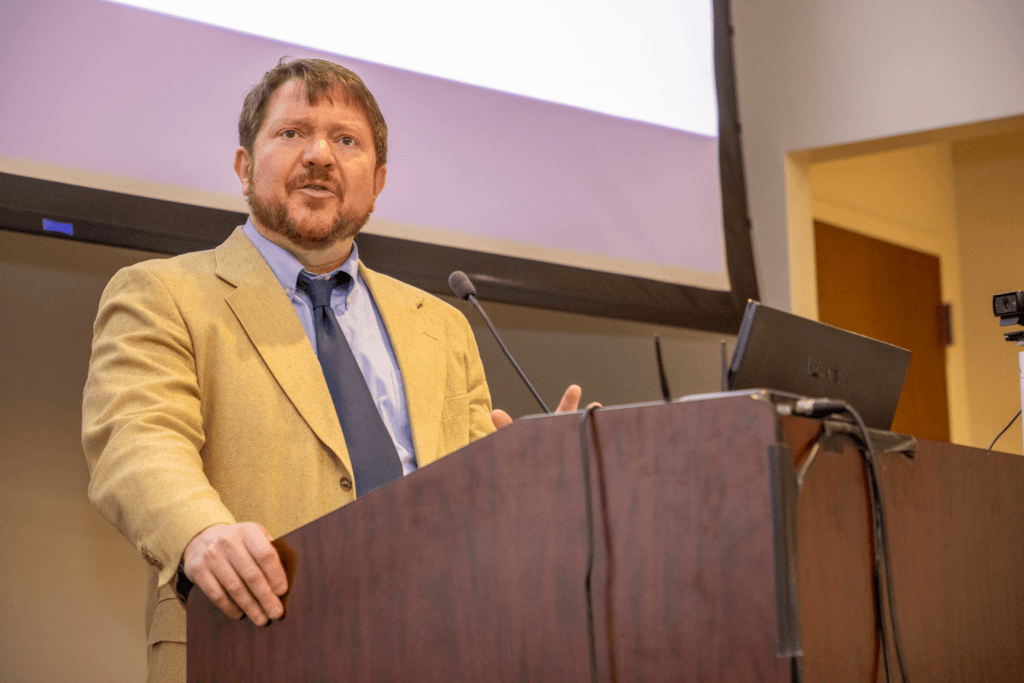
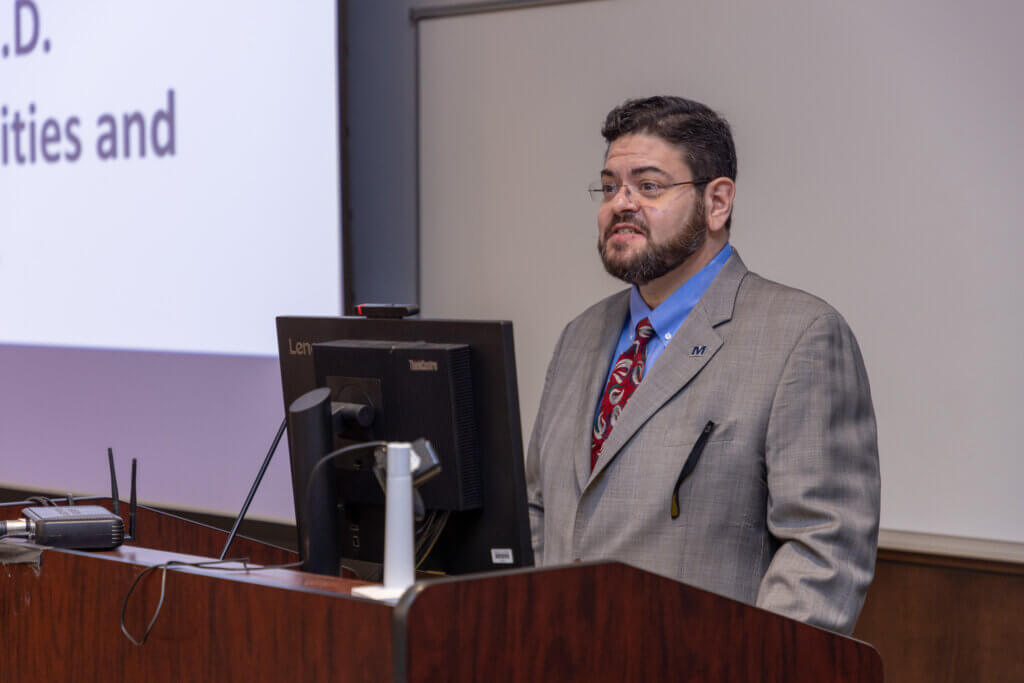
David Golland, Ph.D., Dean of the School of Humanities and Social Sciences, gave the opening remarks, followed by the chair’s address by Associate Professor and Department Chair J.P. Hanly, Ph.D. Golland said this year’s theme, “Invites us to ask what does it mean for a writer’s legacy to stretch across generations?”
Dean Golland explained that Morrison’s novels are not relics of the past but part of our present, that students who read them today can relate while faculty discover new aspects each time.
Aidan Cole, a senior music industry major, who attended the keynote address said after reading Morrison’s novel “Beloved” last semester for a class, he related to the trauma discussed in the book. He was intrigued by Morrison’s writing and style, which ultimately led him to attend Toni Morrison Day.
Dr. Hanly explained how Toni Morrison Day came to be at Monmouth and why, thanking the English department’s previous chair, Dr. Susan Goulding for the foresight to purpose an annual Toni Morrison Day.
Dr. Goulding felt led to organize something in Morrison’s memory after her passing in August 2019. Hanly added he has come to recognize that Goulding as well as the department felt led to establish this day because Morrison’s work, thought, writing, and legacy are uniquely generative. “Morrison’s work challenges us to examine our assumptions, to think about the social, ethical and historical implications of how we use language,” he said.
Dr. Goulding shared her experience with Morrison’s work, explaining that as an undergraduate and graduate student she never had coursework that engaged with Morrison’s work. She would read her work on her own with the influence of her mother, Lucille Goulding, who was an education advocate, avid reader, and founder of the Head-Start program in their district. “Her works have given me the privilege of a window into the experiences of American history through a lens not available to me from my own background. Reading them has allowed me to see inexplicable pain and suffering, as well as resilience and survival in its truest form, and to understand the importance of language as well. I hope the same holds true for our students as we try to share Morrison’s legacy not only through Toni Morrison Day but in our curriculum,” Goulding said.
In William’s address she said, “As we gather during black History Month, a time to honor the struggles, triumphs, and stories of Black Americans. It feels particularly meaningful to discuss the legacy of Toni Morrison.” She continued, “Her writing reminds us of the power of memory, identity, and the stories we tell about ourselves and each other. Being here with you, sharing ideas and reflections, is exactly the kind of reminder I need of hy this work matters.”
Williams said that before Morrison ever became the first Black woman to win the Nobel Prize, she had already reorganized the imaginitive center of American literature. “She placed black people at the center. Not as an allegory for national guilt. But as a fully realized, living human being,” Williams said. Williams dove into Morrison’s literature, discussing the characters, the meaning, the inheritance, and the power behind her language through seasons and cycles. “For me, Toni Morrison’s legacy across generations insists that we understand ourselves as living inside cycles of history, of memory, of harm, and repair.”
With power comes challenges. “Literacy was not neutral. It was insurgent,” Williams said. Williams explained in Morrison’s grandfather’s lifetime it was illegal for him to read. It was illegal for white people to teach Black people how to read.
Taught by her sister to read, Morrison was defying a system. Words to her as Williams explained were tools, they were sustenance, they were a defense.
“They [Morrison’s novels] refuse to deposit simplified narratives. They demand engagement. They require the reader to assemble meaning, to navigate shifting perspectives, to hold contradiction,” Williams said. When text like Morrison’s is brought into the classroom, Williams said it’s not just being analyzed as literature, but a way of thinking that resists simplification is being modeled. “To teach her is to ask students to slow down, to sit with ambiguity, to notice silence.”
Cole said when asked what he took away from the address, “I think there can be comfort in ambiguity, that there can be comfort in contradiction, you don’t need to shy away from it or simplify it.”
Morrison’s novels continue to get banned in districts and libraries. Williams explained that what she has learned through the banning of a book in her own area is that a lot of people hear what they think the book is about instead of reading it for themselves, and ban it based on what they hear.
Williams tells her students some of the things Morrison writes about might make them feel discomfort but to practice the pedagogy of discomfort because you’ve never grown without discomfort.
When asked what Williams hopes the students take away from the address she said, “When they read, don’t treat the language like it’s dead. And then, when they read, see themselves in the book.” With that, Williams opened the floor to questions and proceeded to sign copies of the “Tony Morrison Book Club” outside of Pozycki 115.
Branden Van Allen, the event’s student worker said, “Seeing our Professors and administrators behind the scenes and seeing how much pride and genuine excitement they have behind it means a lot.”
Dean Golland said it perfectly, “Legacy is not passive, it requires cultivation. To honor Toni Morrison across generations, we must do more than assign her texts. We must create space for dialogue, we must protect intellectual freedom, we must encourage difficult conversations rather than retreat from them. We must invest in young readers and writers just as she did.”
Reprinted with permission from Meiread Spellacy, The Outlook, March 4, 2026
Zafira Demiri Receives Fulbright U.S. Student Award for 2026-2027
Zafira Demiri ‘24, an English graduate student, has received a Fulbright U.S. Student Program award to serve as a Fulbright English Teaching Assistant in the Czech Republic for the 2026-2027 academic year. She is receiving her M.A. in English with a concentration in Rhetoric and Writing this spring.
As an English Teaching Assistant, Demiri plans to begin a community engagement project in the form of a student-run art and literature magazine. The primary goal of the magazine is to feature bilingual poetry and art made by the students at her placement school and to provide students with an editorial and publishing opportunity. She is excited to host open-mics where students can share their work in either English, Czech, or a mix of both with the members of their community. This experience will help her develop her pedagogical philosophies in supporting and building classroom spaces that allow bilingual speakers
to flourish and fulfill their potential, something she considers essential in moving forward with her academic career.
Demiri, who is a child of Eastern European immigrants but grew up in the Western world, was drawn to Central Europe as a place where those two cultures meet. “I have always been interested in the literature coming out of the Czech Republic, and so I am excited to explore the cities that helped bring those stories to life,” she shared. “Although, I am most excited to immerse myself in the language and culture, helping to support the bilingual competencies of my students and to promote a love of literature!”
Fulbright U.S. Students are graduating seniors, alumni, or graduate students and are coordinated through the Fulbright Program Adviser (FPA). The FPA at Monmouth is Associate Professor Meg Forney in the Department of Criminal Justice. Learn more about Monmouth’s Fulbright program.
Fulbright provides opportunities for exceptional Americans and participants from 160 countries and locations to study, teach, and conduct research abroad. For eight decades, Fulbrighters have been leaders at the forefront of discovery and innovation, conducting cutting edge research, advancing critical industries, and preparing future generations with new skills and perspectives. Fulbrighters have included 46 heads of state or government, 63 Nobel Laureates, 93 Pulitzer Prize winners, 83 MacArthur Fellows, and countless leaders in all sectors and industries across the United States and around the world.
Fulbright is a program of the U.S. Department of State, with funding provided by the U.S. Government. Participating governments and host institutions, orporations, and foundations around the world also provide direct and indirect support to the Program. In the United States, the Institute of International Education implements the Fulbright U.S. Student and U.S. Scholar Programs on behalf of the U.S. Department of State.
The award competition for 2027-2028 Fulbright U.S. Student Awards opened on March 31, 2026. Learn more about Fulbright U.S. Student awards and eligibility.
Reprinted with permission, Monmouth Now, April 29, 2026
A Weekend Dedicated to Poetry and Prose
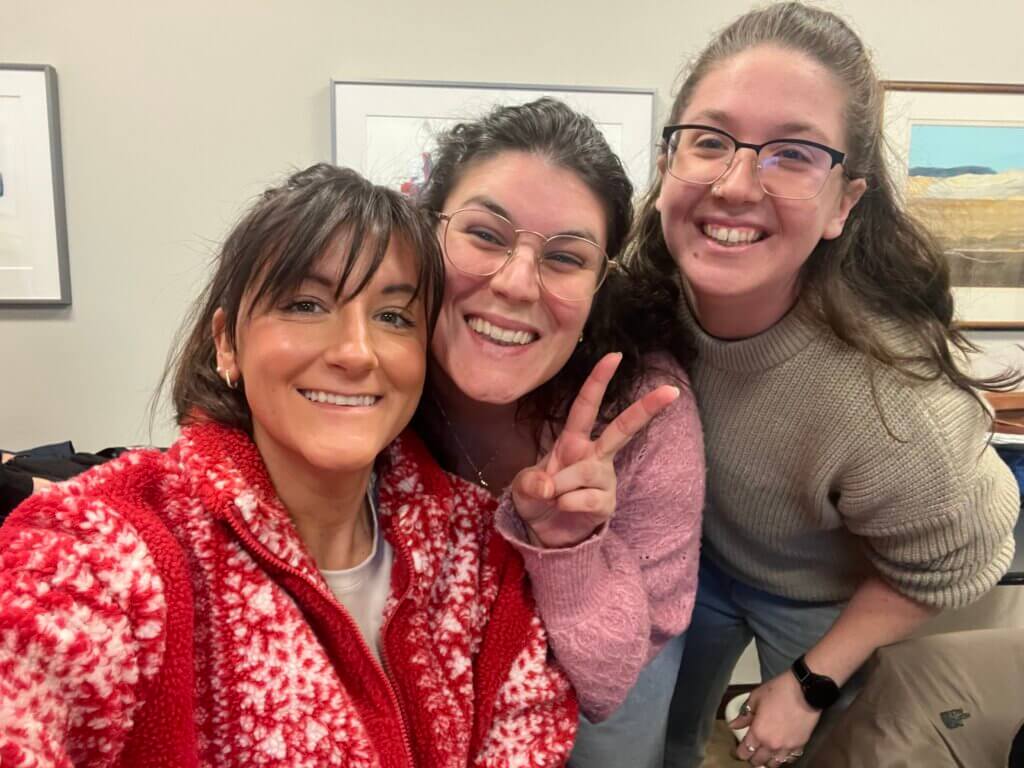
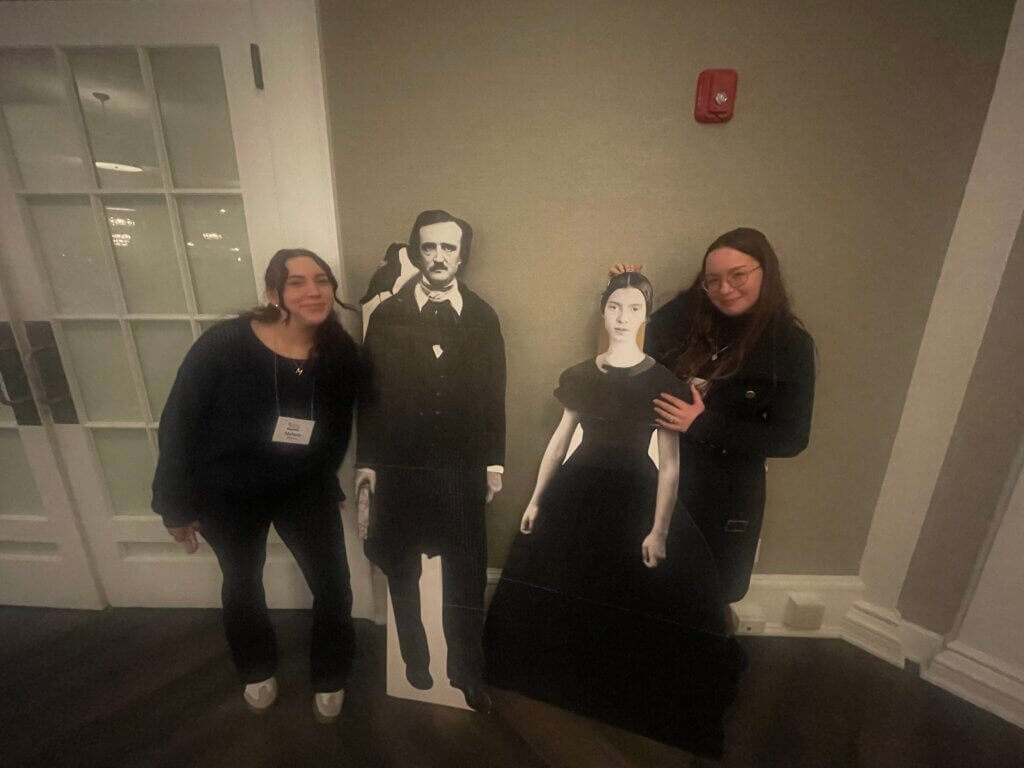
During winter break 2026, undergraduate and graduate students attended the Murphy Writing Winter Poetry and Prose Getaway, made possible in part by a generous anonymous gift to the creative writing program. M.F.A. student, Kaitlin McGuire, shares a recap of the weekend.
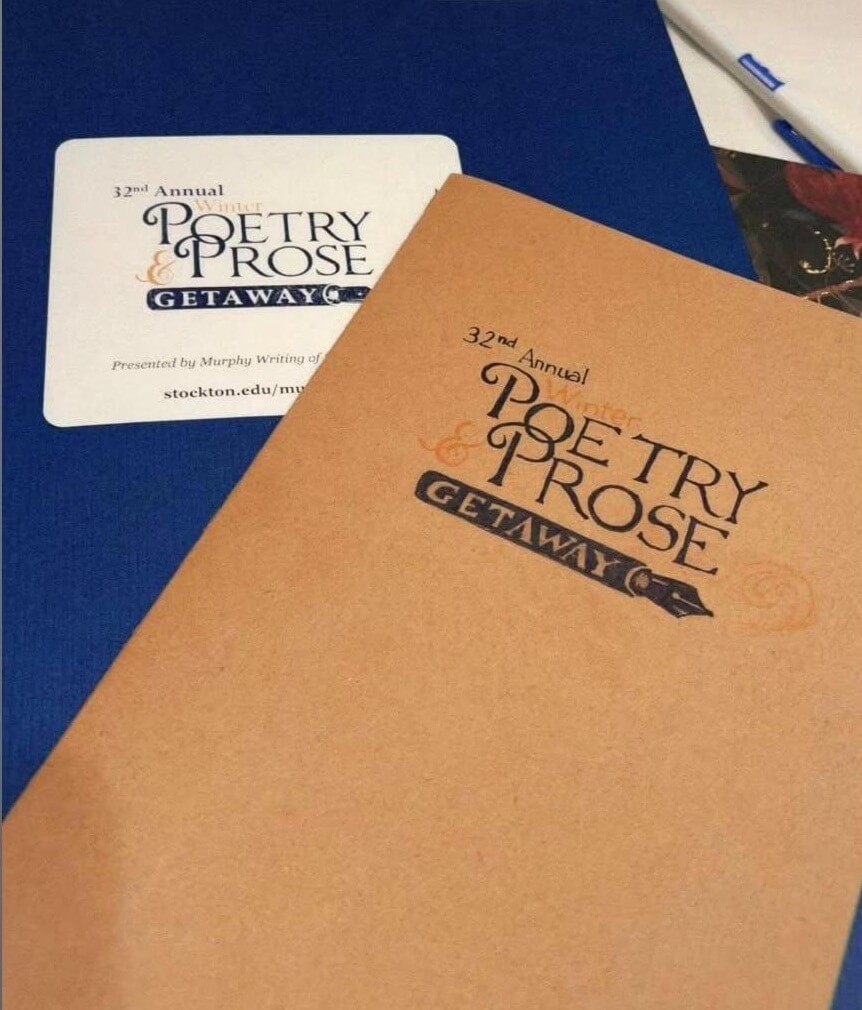
From January 16-19, two undergraduate, and four graduate students attended the 32nd Annual Murphy Writing Winter Poetry and Prose Getaway, hosted by Stockton University, and held at the Seaview Hotel in Galloway, NJ. The weekend kicked off with a welcome dinner on Friday night and ended with a writing prompt about hugging and the importance of the human embrace. There, the students were introduced to a 31-time Murphy Writing Getaway veteran, Rocky Wilson, who exclaimed ”Doctors say three hugs a day is the bare minimum!”
Prior to meeting at the Seaview, participants of the Getaway had an array of workshops to choose from for the weekend with the poetry, prose, nonfiction and songwriting genres. Some options included the Poetry Incubator: A Generative Writing Workshop, Bridges Between: A Poetry Workshop, The Poet’s Myth: A Workshop, The Craft of Flash Fiction, Staying in the Now: A novel Writing Workshop, Stay the Course: A Novel Writing Workshop, The Poetry of Memoir, Outward Gaze: A Creative Nonfiction Workshop, and Out Loud: Storytelling for the Page and Stage. There was truly a workshop for everyone!
Workshops ran twice a day from 8:30a.m.-12:00p.m. with the second round running from 1:15-4:30p.m. on Saturday and Sunday. Graduate students Veronique Manfredini, Austin Morreale, and I were enrolled in the Poetry Incubator Workshop. At the beginning of the workshop, we read a packet of handpicked poems by Ross Gay, Leila Chatti, and so many others. We discussed and analyzed the themes, images, craft, diction choice, line breaks, and figurative language throughout the pieces in our group(s). We were given a writing prompt each day. Some examples are: a superhero that is either real or imaginary, write a postcard sized poem that uses dancing, and tell two truths and one lie. We then split from our group and had two hours to write a rough draft of our poems.
When we met again for the afternoon session, we shared our poems with our workshop group, which consisted of about ten people, and we workshopped our poems. Each workshop was led by faculty such as Jan Beatty, Jiordan Castle, Roberto Carlos Garcia, and many more outstanding poets. Veronique stated that, “The weekend was an amazing experience. I learned so much, created new connections, and found a routine in my writing that I’ve been able to bring home with me.”
Graduate student, Morgan Kelly, and undergraduate English major, Eleanor Curatolo, attended The Poet’s Myth: A Workshop, with faculty Jason Mitchell. The workshop was specifically focused on the myth of Orpheus and Eurydice, and they read poems that were rooted in myth by an assortment of poets like Jack Spicer, Hilda Doolitte (H.D.), and Rainer Maria Rilke. Eleanor’s experience led her down a philosophical rabbit hole. She said, “I wrote about topics such as the afterlife, religion, feminism, and motherhood. Writing alongside and receiving feedback from so many accomplished poets was surreal. The writing community at the Murphy Writing Winter Getaway was extremely welcoming and supportive. I returned home with many new poems and ideas.”
After dinner, there were schedule events such as story slams, book swaps, writing time, writer’s happy hour, disco, karaoke, open mic, and so much more! The weekend concluded on Monday, January 19th at noon. Before departure, 52 randomly selected (by way of Peanuts playing cards) writers were asked to read their favorite line from their work curated during their time at the Getaway at the closing ceremony. There was also a beautful tribute for Martin Luther King, Jr.
It was a great weekend to unwind and write! Morgan said, “If I could turn back time and relive those 3 days, I would. The Murphy Getaway was absolutely amazing–I am so glad to have learned so much, create work I am proud of, and make new friends. Just a wonderful group of people and experience!”. And I couldn’t agree more, it truly was absolutely amazing.
Student Spotlight: Eleanor Curatolo
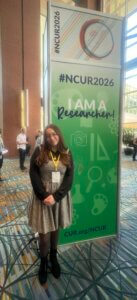
We’re highlighting one of our outstanding undergraduate English majors, Eleanor Curatolo, whose academic work is making an impact beyond the classroom. She has been selected to present her research at multiple conferences which is an impressive achievement at the undergraduate level. We asked her about her research and her experience preparing for these presentations, and advice for other undergraduates looking to pursue a similar path.
You’ve had an exciting year with four conference acceptances and acceptance into the Summer Scholars program at Monmouth University. Can you tell us about the project you’ll be presenting and how it developed?
My honors thesis explores six of Sir Arthur Conan Doyle’s short stories from different parts of his spiritual progression. Though Doyle was born Roman Catholic, he dabbled in Unitarianism, materialism, and Theosophy before devoting his life to Spiritualism. I argue that Doyle’s religious introspection is present in each narrative I examine.
What initially sparked your interest in this research topic, and how has it evolved as you’ve worked on it? Was there a particular class, professor, or moment in the department that encouraged you to pursue research or apply for these opportunities?
My original focus was on the Sherlock Holmes short stories and novels, which have a special place in my heart. Upon reading Doyle’s autobiography, I found his obsession with Spiritualism to be even more fascinating. My thesis director, Professor Jeffrey Jackson, helped me develop this project over the past three semesters, offering me his advice and expertise. My academic advisor, Professor Stanley Blair inspired me to start attending conferences, helping me create proposals and develop papers. I am grateful to both professors and their care for my success.
What has the experience of preparing for and presenting at academic conferences been like as an undergraduate?
Though preparing for a conference involves the continuousdrafting of proposals and revision of academic papers, it is certainly worth the hard work. Yes, presenting is daunting, but it is also incredibly rewarding sharing work with like minded individuals. Discussion with students and professors across the country offers me many new perspectives on my project.
What are you most looking forward to in your summer research, and what do you hope to discover or accomplish?
I will be participating in the 2026 Summer Scholars program with Dr. Blair as my faculty advisor. I plan to revise a portion of my thesis with the goal of publication. An integral part of this process will be accessing scanned documents of Doyle’s through the Harry Ransom Center at the University of Texas at Austin and using them to further support my research.
What advice would you give to other undergraduate students who are interested in pursuing research or presenting their work?
My hope for my classmates interested in pursuing research is that they discover a topic that both excites and challenges them. An excellent way to begin a project is by completing an honors school or English departmental honors thesis.
For the Love of the Semicolon: Visiting Writer, Joseph Earl Thomas
Veronique Manfredini
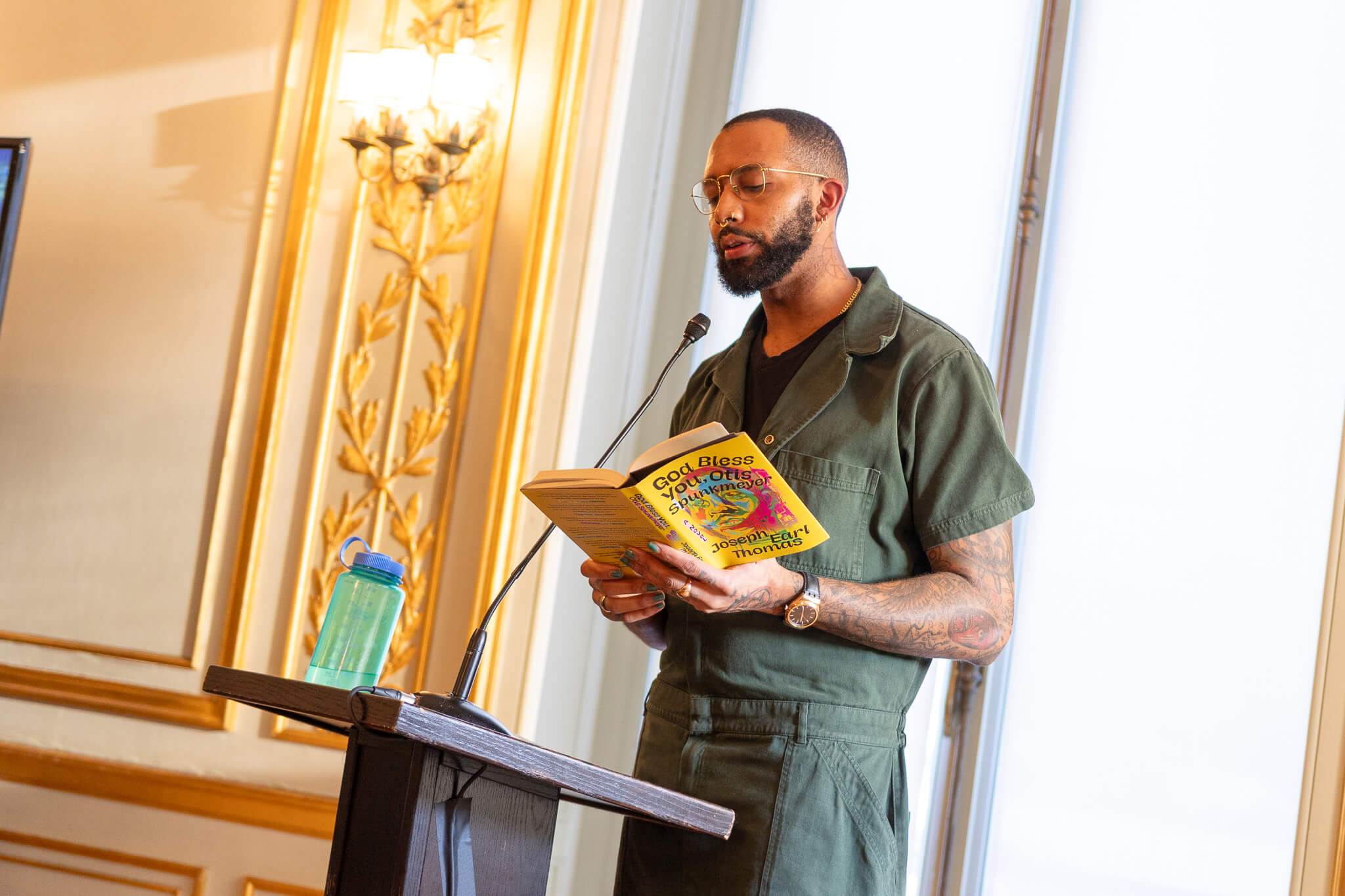
On Wednesday, February 25th 2026, the Monmouth Visiting Writers Series hosted Dr. Joseph Earl Thomas, author of God Bless You, Otis Spunkmeyer and Sink.
The author gave a craft talk open to all students that focused on the topic of Shame. He believes that it is a “necessary way to think about art,” because we only feel shame when something really matters to us, thus he questioned where those feelings came from and who was in the position of power during the moment. His argument focused on being “honest about place, timing, and actors,” and “how much responsibility you have in the situation” because by doing so, you—as a writer—can “state [the] duality clearly, and let the reader enter that in-between gray area” themselves so they can make their own inferences. At the end, as a strong supporter of semicolons, a friendly debate ensued between professor John Vercher and himself, on the importance of the punctuation mark.
Later in the afternoon, a Q&A with the author led by Professor Vercher followed the beautifully delivered readings of Thomas’s “Girlhood, or, So What if Diamond is a Stripper Name” and the opening chapter of God Bless You, Otis Spunkmeyer. His writing is influenced by his love for videogames. His goal with the epigraph of the novel was to “unravel the trope of the hero’s quest” while also acting as a critique about writing about violence. “Everyone is suffering, we need to write to speak to them rather than down at them.”
Audience members also participated with thoughtful questions which allowed the author to give thoughtful insights on his works. His writing process puts a lot of faith in the reader, he’s “addicted to first lines to teach the reader how to read the book,” and while many people might label it as such, he doesn’t believe his writing is stream of consciousness as he believes it means it’s “meandering.” Questions also surrounded parenthood being “psychologically [the] most difficult thing you can do” because it required him to reprioritize writing after having children. He also made it a point to specify that he would never write about things that could humiliate his children.
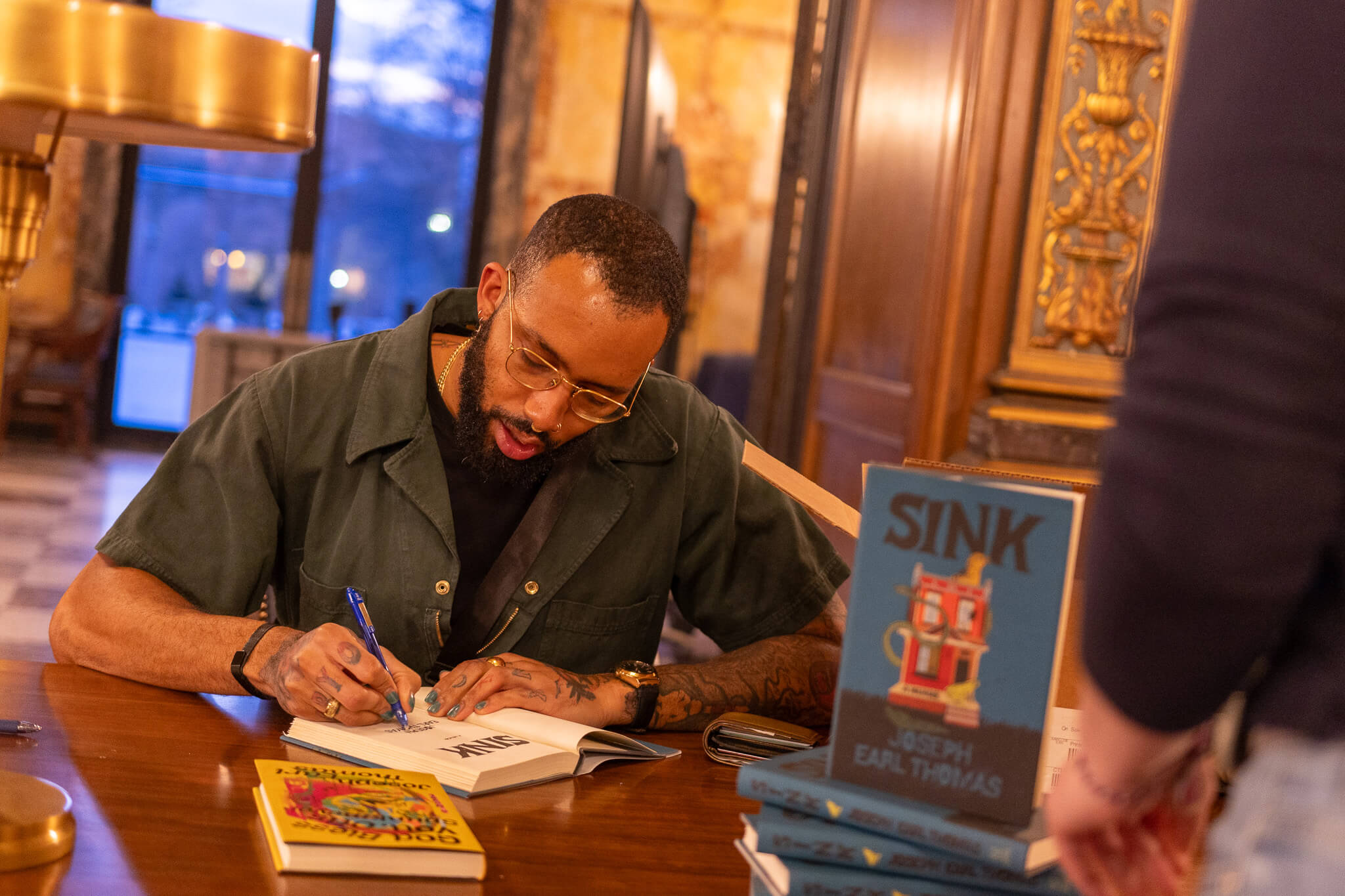
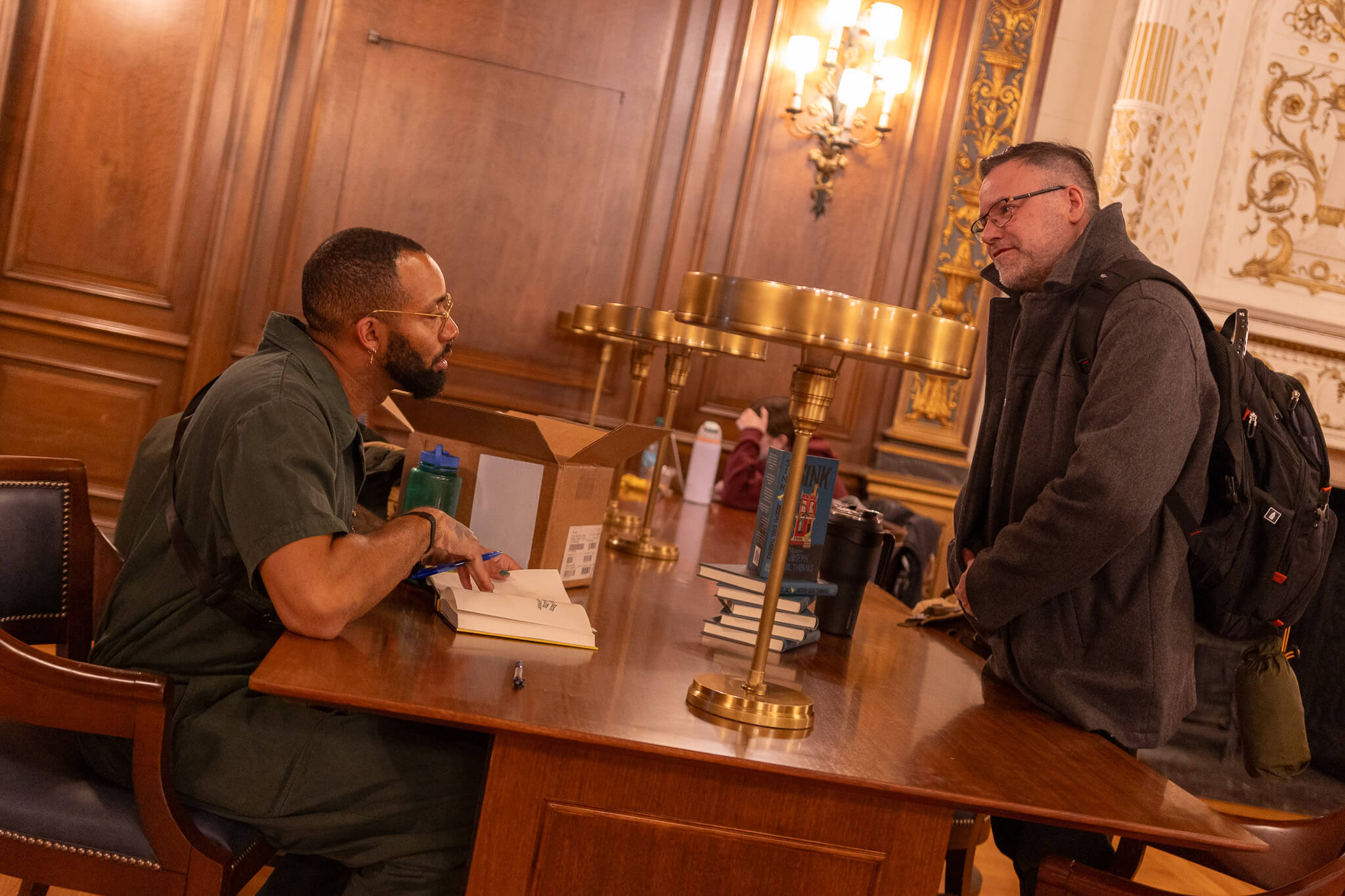
A book signing of Joseph Earl Thomas’s works concluded the event.
After the Last Page: English Faculty on What Comes Next
“Dear Graduates: Congratulations on your achievements, but don’t rest on your laurels. The time is nigh, your time is nigh. Create a personal strategic plan about how you plan to engage with the world and execute it!”– Ken Womack, Ph.D., Professor of English and Popular Music
“My request to graduating senior is “stay in touch!” Take yourselves seriously, pursue what matters to you, keep purpose, and (general advice to anyone) be kind.”– Susan Goulding, Ph.D., Associate Professor of English
“The time immediately after graduation can feel excitingly transitional — but at times it can feel lonely and isolating. Take some time to think about what you really enjoyed about your school community and think about how you might be able to find it after graduation. For example, you might check your local library for community book clubs, tutoring opportunities, or writing groups. And if you don’t see any? Reach out to a fellow-graduate and create one!”– Jeffrey Jackson, Ph.D., Associate Professor of English
“As you head out into the “real world” and begin applying for jobs (or for admission to graduate programs), remember that there is no better way to clearly demonstrate the critical reading and writing skills that you built as an English major than to ensure that every application that you submit includes a carefully crafted cover letter that is specifically tailored to the particular position or program you are applying for. Don’t just tell prospective employers that you have the skills to do the job; show them!”– J.P. Hanly, Ph.D., Department Chair, Associate Professor of English
“Follow your interests, and don’t be afraid to change paths–one internship or job might lead to a new career you weren’t expecting! Take every opportunity that comes your way because you never know which ones will pay off, even small opportunities like writing an editorial for a local news outlet or having a conversation with the cashier at Barnes and Noble. Open a high-yield savings account and a Roth IRA. Today. Now. Go into post-college life with a budget (it isn’t fun, but it sure is important!).”– Courtney Wright-Werner, Ph.D., Associate Professor of English
“We don’t all have the luxury of sitting down at the keyboard for hours at a time every day. Thinking about your writing project is writing. Talking about your writing project is writing. Maybe most importantly, reading is writing. Don’t let anyone dictate to you what your writing practice should be. As long as you write, your practice is just that–yours.”– John Vercher, M.F.A., Assistant Professor of English
“My advice is, if you were working on a thesis for your MA/MFA is to give it some time before coming back to it. I think it gives us a chance to look at it fresh and see some of the stuff that we may have missed in the rush (and panic!) of finishing our degrees.”– John Vurro, M.F.A., Adjunct Professor
Congratulations to the Winners of the Spring 2026 Graduate Creative Writing Awards for Prose and Poetry
Poetry: Austin Morreale for “Song That Don’t Rhyme,” Judged by Tyler Mills who said the following of Morreale’s work: “The poems in this packet offer memorable language — similes that transform the world of the speaker before our very eyes–through a voice that is humorous, expansive, and fearless in seeking the interplay of shadows and light during the journey of finding one’s voice in the magic of the poem.” She noted, meanwhile, that you were selected from among a very impressive group of contributors.”
Prose: Kaitlin McGuire for, “The Dead Kid’s Girlfriend”, judged by Joseph Earl Thomas who wrote: “‘The Dead Kid’s Girlfriend’ synthesizes, with great fury and humor, the series of compressions and flattenings in the wake of suicide. Not unlike Yiyun Li’s ‘Things in Nature Merely Grow,’ this essay takes seriously, even in the subjunctive, that no ‘webs around my boyfriend’s mind’ would be strong enough to transform circumstance, no matter the intimacies in question. At the nexus between person and act, social form and fact, this essay also revitalizes essential questions about the normal, and what forms of inquiry we should even be using to engage the world around us. It was a pleasure to read!’
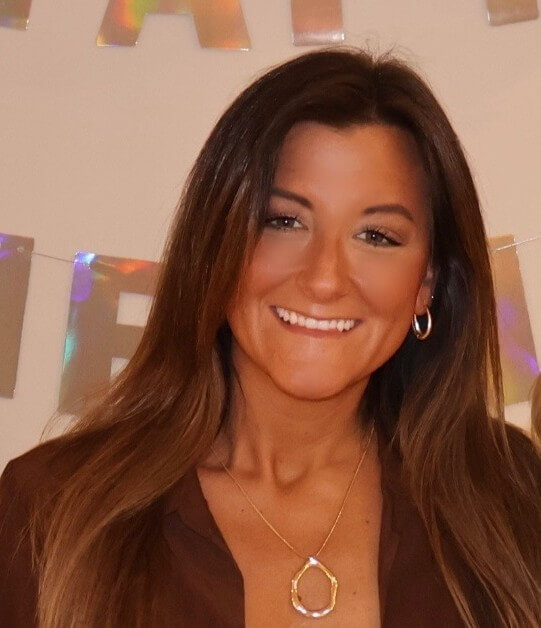
Congratulations to the inaugural winners of the new Graduate Creative Thesis Award!
The Creative Thesis Award recognizes creative excellence and is given to two students pursuing either their MA in Creative Writing or their MFA in the semester in which they are beginning or completing their thesis. Two awards will be offered each semester. Submissions are judged by Graduate Creative Writing faculty.
Winner: Kerry Bogert for, The Book of Bitchcraft.
Professor John Vercher said the following of her entry: Kerry Bogert’s thesis The Book of Bitchcraft takes our thoughts and notions of grief and turns them inside out by filtering them through the lens of uproariously dark comedy and literary horror. Bogert’s keen ear for dialogue and characterization make the cast of her novel-in-progress leap off the page and into our hearts. With an utterly unique and compelling voice, Bogert excavates not only the sadness that accompanies loss, but the anger, and even the humor. I can’t wait to see her work on the shelves. Congratulations, Kerry!
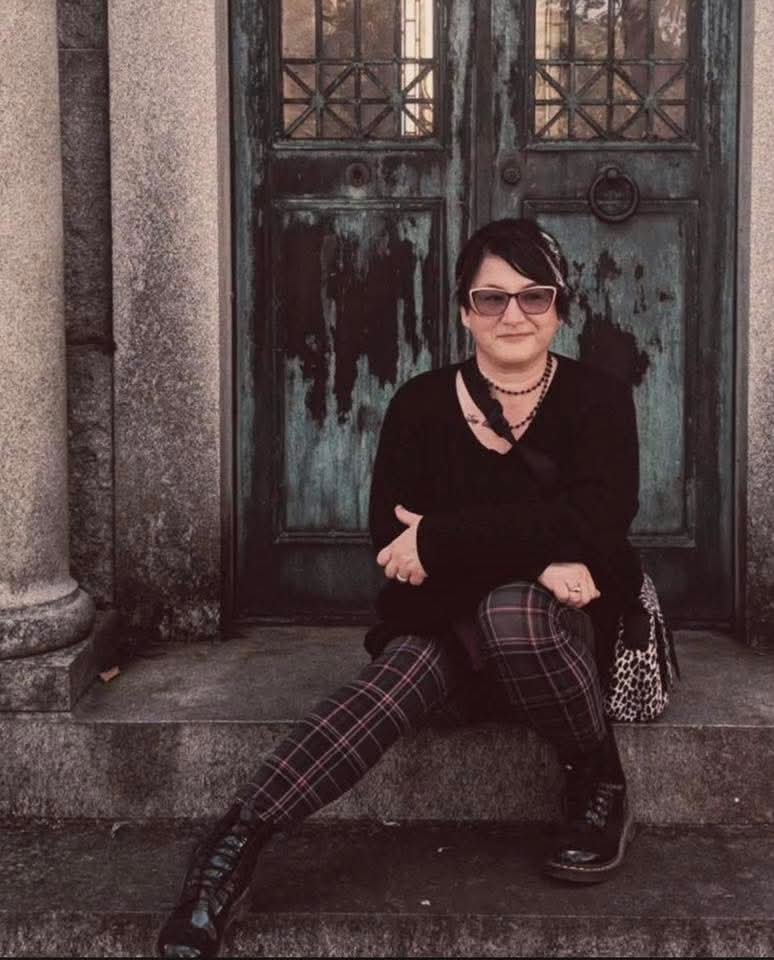
Winner: Alicia Notorio for, Fugazi and Ghosts From the Old Neighborhood.
Professor Ken Womack said the following of her entry: Alicia Notorio’s thesis project offers an intriguing intersection between literary fiction and personal memoir. For the former, she has completed Fugazi, a full-length novel. The latter book, entitled Ghosts from the Old Neighborhood, is the thrust of her thesis project. A work of memoir, Ghosts from the Old Neighborhood offers a powerful juxtaposition between her childhood quest for a rare Beanie Baby and her later, adult struggles with addiction. Congratulations, Alicia!
Department Student Achievements
Junior Eleanor Curatolo was accepted to present her work at 3 conferences this spring including, The National Conference for Undergraduate Research in Richmond, VA, The Seton Hall Undergraduate Literature Conference in South Orange NJ, and The Conference on Christianity and Literature in Riverside, CA. She has also been chosen to participate in the Summer Scholars program at Monmouth University.
Senior Ana Carvalho presented her work at the Seton Hall Undergraduate Literature Conference in South Orange, NJ.
Department Alumni/Adjunct Achievements
Professor Valerie Aristy-Reyes ’25M was accepted into the Composition and Cultural Rhetoric Ph.D. program at Syracuse University.
Professor Faith Bates ’24 MFA has accepted a full-time position at Bucknell University as a Writing and Teaching Consultant.
Professor Ariana Tepedino ‘16M accepted a full-time teaching position at Middlesex College.
Professor Emma Varga ‘25M was accepted University of Massachusetts Amherst’s Ph.D. in English program with a concentration in Composition and Rhetoric.
Professor Jeremy Marousis-Bush accepted a full-time teaching position at Fairleigh Dickinson University.
Faculty News
Associate Professor Stanley S. Blair presented his research on local writer and entertainer Dan Rice for the Mid-Atlantic Popular and American Culture Association in November, the New Jersey College English Association in March, and locally for the Township of Ocean Historical Museum in April. On the executive board of that museum as Monmouth University Liaison, he created a museum internship program for MU students that was piloted in the summer and fall by Museum Exhibit intern Justine Bouton and continued in the spring by Editorial intern Jack Dawson.
Congratulations to Frank Fury, Ph.D. on his promotion. Professor Fury will convert from Senior Lecturer to Assistant Professor at the start of the 2026-2027 academic year.
Professor Jennifer Harpootlian presented her work, “A Declaration for Faculty Wellbeing: (Re)Establishing Balance and Boundaries in Academia” at the Northeast Modern Language Association’s virtual conference in May. She also presented, “Connection in an Age of Anxiety: Student Support and Faculty Sustainability” at the College English Association Conference in Charlotte, NC
Congratulations to Jeffrey Jackson, Ph.D., who received a Judith Stanley Fellowship for his project “‘There’ll Always Be an England’?: Adaptation, Heritage, Tourism, and the Uses of Nineteenth-Century Literature.” He will travel to museums and literary heritage sites in Scotland and England with the aim of integrating new knowledge into his undergraduate and graduate classes in British literature and film and media adaptation.
Professor Mihaela Moscaliuc, participated in the Gala Poetica, University Autonoma Nuevo Leon, Monterrey, Mexico in March. She was also chosen for two residencies this spring, Yaddo, located in Saratoga Springs, NY and MacDowell, located in Petersborough, NH. She will be returning in the fall after spending the year traveling and writing as the recipient of a Guggenheim Fellowship.
Professor Joe Torchia presented his paper, “What’s the Rush? Pointing Students Away from the Finish Line in FYC.” at the College English Association Conference in Charlotte, NC. The paper was chosen as ‘best of section.’
Congratulations Graduates and New Sigma Tau Delta Members
May 2026 Graduates
Spring Inductees
Kerry Bogert
Dana Brahamsha
Jacqueline Collo
Michael Corbett
Jacob Dates
Jack Dawson
Zafira Demiri
Jamie Fardella
Gwyneth Finn
Tara Hurley
Claudia Huzar
Morgan Kelly
Amanda Ljajka
Jenna Lozzi
Christina Lynam
Veronique Manfredini
Erin McGuire
Kaitlin McGuire
Valentine Miller
Anna Rocha
Isabella Spurlin
Julie Temple
Michael Tesser
Branden Van Allen
Gianna Zanoni
Melanie Ariza
Julia Dziewa
Kimberly Firrello
Alexandra Harris
Jenna Lozzi
Dorothee Marcelin
Austin Morreale