
The Distinguished Teaching Award Presented to Kathryn Lionetti
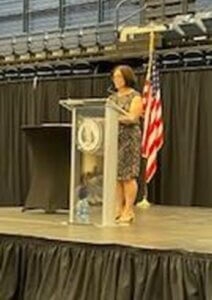
Teaching Award, Kathryn Lionetti
The Department of Biology was thrilled to have Kathryn Lionetti, Ph.D., honored as the recipient of the 2023 Distinguished Teaching Award. This award recognizes sustained excellence in teaching and a commitment to engaging and transforming educational experiences for students. Lionetti regularly teaches general microbiology, the introduction to cellular and molecular biology, and the introductory first-year seminar for biology majors. She was instrumental in the department for the creation of the writing-intensive capstone laboratory in molecular and cellular biology and has also developed a non-majors microbiology course as well. During the Covid pandemic, Lionetti made an impossible situation become possible–the microbiology course was taught remotely, with laboratory materials and microscopes coordinated and provided for students under her direction so that they could work from home. For over 30 years at Monmouth University, she has supported students through her teaching and advising. Upon receiving the award, Lionetti offered these remarks:
“Thanks go to my students whom I learn from everyday. They challenge me and make me strive to be my best.I love teaching. When students enter my class, I tell them we will learn a lot and we will have fun together. My philosophy about teaching is embodied by the William Butler Yeats quote that says ‘Teaching is not the filling of a pail, but the lighting of a fire.’ To me, teaching is about getting students excited to learn. It’s about getting them to think and think critically. It’s about getting them to believe in themselves, to be true to themselves, to find themselves and to love themselves.”
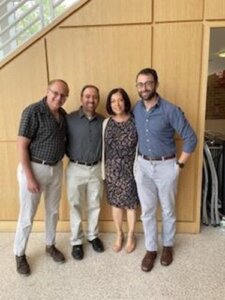
Jeffrey Goldfarb,
and her two sons, Matthew
and Jonathan.
“I’m here teaching because I truly care about my students. I strive to create a safe space for them where they can reach their full potential. Expectations for the courses I teach are high and to help students reach them, much support is provided. In addition to my help in and out of the classroom, and the support materials I provide for them, I make sure Peer Assisted Learning Leaders and tutors are available for students. I encourage them to utilize these resources as well as their advisor, master tutors, peer mentors and Counseling and Prevention Services. It is not easy to be a student. Often demanding work schedules, sometimes with 30+ hours a week, demanding athletic schedules along with family and other pressures make it difficult for students to have the proper balance for a healthy, happy college experience. The COVID pandemic brought its own set of challenges.”
“It is even more important now for students to feel cared for and connected to one another, to faculty, and to all Monmouth University personnel. When they feel cared for, they can, in turn, care for others. When they learn to be connected, they will reach out and connect to others in their lives beyond Monmouth. If we didn’t already see how important being connected to others and feeling cared for was for our success and happiness in the world before the pandemic, it is certainly evident now. Making students and each other feel cared for and connected doesn’t have to involve enormous or grandiose efforts. Simply asking ‘How are you doing today?’ goes a long way.”
“Microbiology is about small things that can have big effects. Each one of us can be that to a student and to each other. Together we can catch them when they fall and lift them up so they can soar.”
James Mack Honored for More Than 50 Years of Service to Monmouth University
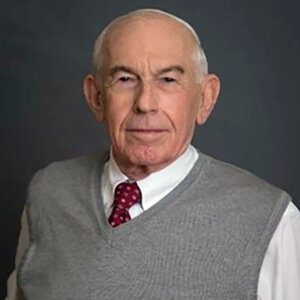
In 1962, John Glenn became the first American to orbit the Earth, the Cuban Missile Crisis took place, and the average price of gasoline was 31 cents per gallon. 1962 was also the year that James Mack, Ed.D., began instructing students at Monmouth University, and he is now in his 53rd year of service. A 1962 graduate of Monmouth University, Mack went on to receive his Master’s degree Biology from William Paterson University and a doctoral degree in cell biology from Columbia University. He also worked as a licensed high school teacher at Shore Regional High School and Lakewood High School, and in adjunct positions at Brookdale Community College and Ocean County College and was honored for 40 years of service to OCC in 2013. He has witnessed the rise of Monmouth University in the community, watching it grown into a four-year college and then a University.
Mack has memories of the swimming pool outside of the Great Hall (and the inside one), the filming of the movie “Annie”, and the transition into a University. An integral part of the Monmouth community, Mack spearheaded the creation of the Monmouth Early Warning (MEWS) system and founded the pre-professional health advisory committee in 1984, serving as the Director of Pre-health advising for 38 years. He has served on numerous committees and task forces over the years (if there has been a committee on an issue, he has been a part of it during his years here). This service has included (but is not limited to) 7 years as Chair of Faculty Council, search committees for multiple administrators (including the committee for hiring of President Gaffney), and coordinating the Anatomy and Physiology courses. He has over 55 publications and presentations from his research program with undergraduate students. Most recently, he has been studying the antibacterial effects of essential oils and has collaborated with Lobo on studying the effects of essential oils on stress signaling in cancer cells. The 2014 winner of the Distinguished Teaching Award, Mack’s passion is the teaching of anatomy and physiology, which he typically has multiple sections of lecture and laboratory for these courses during the academic year and in the summer.
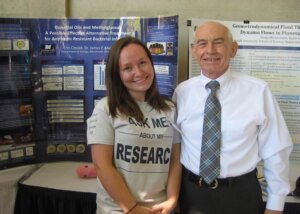
Here is a snapshot of some of Mack’s achievements:
- Recipient of the Gene Simko Award: 2020
- Recipient of Distinguished Teacher Award: 2014.
- Recipient of the Senate and General Assembly Joint Resolution sponsored by Senator Beck and Assemblywomen Angelini and Casagrande in recognition of my Distinguished Teaching Career and Service: Aug. 6, 2014.
- Faculty Merit Awards: 1987, 1988, 1989, 1992
- Nominated for Distinguished Teacher Award: 1987, 1989, 1990, 1991, 1994, 1996, 2007, 2008, 2014
- Student Choice Awards: 1988, 1990, 1998
- Alumni Association Service Award: 1998
- Donald Warncke Award: 1999
- Monmouth University Alumni Association Certificate of Appreciation: 1996, 1997, 1998, 1999, 2000, 2001-2008, 2009-2012
- Virgil F. Payne Award-Monmouth County Section of the American Chemical Society: 1981
Equipment Grant provides New Spectrophotometers for the Biology Department
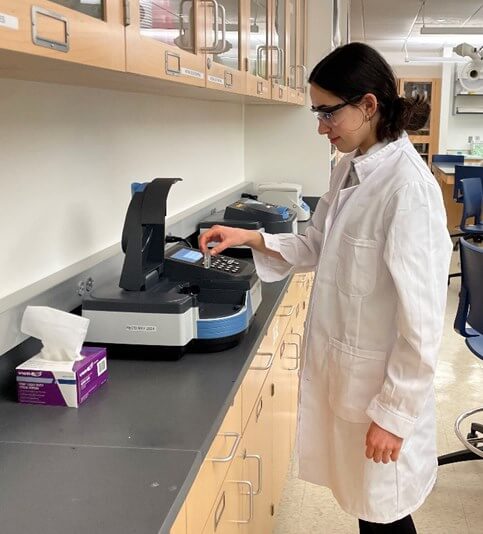
Dottie Lobo, Ph.D., received a $5,000 equipment grant from the Spectroscopy Society of Pittsburg (SSP) to purchase two spectrophotometers for the use of the BY 110 Introduction to Cellular and Molecular Biology, BY 310 Biochemistry, and BY 450 Research courses. The Genesys 30Vis spectrophotometers will service the approximate 160 students in BY 110 and biochemistry, and several students doing independent research.
Pictured: Lana Hurwitz using a new spectrophotometer to measure protein concentration in the BY 110 lab.
Biology Students Receive Research Award to Study Endophytic Fungi
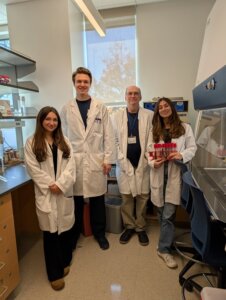
Sophia Guagliano ’25, Alex Kalina ’25, and Nicole Secondino ’25, all seniors in Biology/Molecular Cell Physiology major, were awarded a $1,000 research grant to evaluate the antimicrobial activity of endophytic fungi isolated from the skins of Avocado (Persea americana) fruits collected from different geographical locations. In addition to learning laboratory research techniques, it maybe possible to ultimately discover new antimicrobial compounds.
The global health issue of antimicrobial resistance to currently approved antibiotics is an ever increasing threat to humans and animals. This necessitates the research of and discovery and development of novel antibacterial and antifungal compounds.
This work is being completed in the research laboratory of Jon Polishook, M.S., an adjunct professor who has been teaching a variety of courses for the Molecular Cell Physiology program (including general biology, developmental biology, and biotechnology)and working with undergraduates to conduct independent research since 2020.
Pictured: Jon Polishook, M.S., with his research students Sophia Guagliano ’25, Alex Kalina ’25, and Nicole Secondino ’25.
Meet Our New Faculty Member Saheli Sengupta, Ph.D.
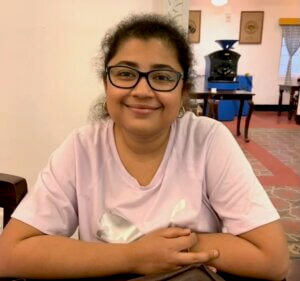
I am excited to join Monmouth University as a tenure-track professor in the Department of Biology starting Spring 2025. My academic journey has been interdisciplinary, spanning molecular biology and genetics during my master’s, biochemistry in my Ph.D., and neurobiology during my postdoctoral research. I have always been captivated by the power of biology to answer fundamental questions about life, but my journey truly began during an undergraduate internship. I vividly remember peering through a microscope and for the first time seeing GFP-expressing cells glowing. In that precise moment, in that lab, my path in biology truly began. It sparked a passion for asking meaningful questions and uncovering answers that deepen our understanding of life.
My passion for teaching took root during my time as a TA for an undergraduate biochemistry course. I found immense joy in the creativity required to explain complex concepts in ways that resonate with students. Teaching, to me, is not just about delivering information, it is about sparking curiosity, fostering understanding, and creating an environment where both the teacher and students grow together. This process deepened my own understanding of the subject and reinforced my belief in the transformative power of education. I believe teaching and research go hand in hand, and I am deeply committed to offering students opportunities to think critically and engage in hands-on work that connects theory to solving real-world problems.
At Monmouth University, I am eager to launch a research program exploring the neurobiological basis of aggression using fruit flies as a model organism. Fruit flies may have tiny brains, but their behaviors provide profound insights into human biology and behavior. For example, watching videos of fruit flies engaging in intense “fly-fights” is both humorous and scientifically fascinating. It is a great way to spark curiosity in students. I hope to involve students in these projects, giving them the opportunity to explore questions about aggression, a fundamental yet enigmatic human behavior.
Outside of the lab and classroom, I enjoy watching great movies, reading books, and fully embracing the restorative power of sleep. A well-timed nap, I believe, is often the secret to scientific breakthroughs—or at least to staying cheerful during experiments that refuse to cooperate! I look forward to building connections at Monmouth University and being part of its vibrant academic community.
Molecular Cell Physiology Graduates Featured in Molecules
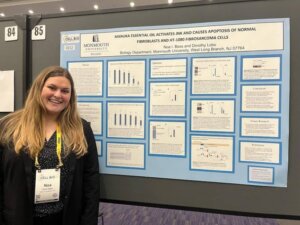
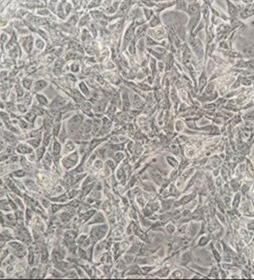
Four Monmouth alumni and two faculty members recently published the article, “Manuka Essential Oil Triggers Apoptosis and Activation of c-Jun N-Terminal Kinase in Fibroblasts and Fibrosarcoma Cells” in MDPI’s Molecules Journal (Vol. 29, Issue 21, Oct. 2024).
Noa Bass ’24, Mruga Parekh ’21, Subah Soni ’21, and Jive Jacob ’20, who graduated from the Biology/Molecular Cell Physiology program, had their independent research, conducted under the direction of Dottie Lobo, Ph.D., published in the journal Molecules. The research was performed in collaboration with James Mack, Ed.D., Professor of Biology, and with assistance from Prabodh Satyal, Ph.D., from the Aromatic Pant Research Center in Utah. The goal of this project was to treat cancer cell lines with manuka essential oil at different concentrations and to ascertain the effects on the cell proliferation of normal fibroblast (CUA-4) and on fibrosarcoma (HT-1080) cells.
This is a second publication from Monmouth for Soni, Parekh, and Jacob, who previously were authors on a paper about the effects of kumquat essential oil on stress signaling which was published in Molecular and Cellular Biochemistry in 2022. Additionally, Bass and Parekh worked on the paper as students of the Honors School. Bass is currently working as a technician at the Waksman Institute of Microbiology at Rutgers University; Parekh is in dental school at Rutgers; Soni is in a Ph.D. program at UC-Davis; and Jacob is pursing medical school.
Four additional students were acknowledged for technical assistance in maintaining and treating cells: Nick Tamburro, Michael Catalfumo, Dianelys Garcia, and Angelo Prado. The project was conceived by Jim Mack, Ed.D., who was studying the effects of oils on bacterial growth and sought to determine if cancer cells would also be susceptible to the effects. The project was supported in the summer by the School of Science Summer Research Program and by Kevin Young ’89, who provided support to obtain the essential oils.
Navigating the Future: The Inspiring Success of a University Graduate
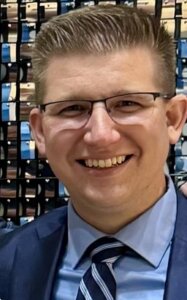
After graduating from Monmouth University, I attended medical school and earned my medical degree at the New York College of Osteopathic Medicine. I then completed my residency in Emergency Medicine at Good Samaritan Hospital Medical Center in West Islip, New York. In my final year of residency, I served as chief resident. I later also earned my MBA from the University of Tennessee in Knoxville, Tennessee.
I currently serve in my role as vice president of clinical affairs at Novant Health for the Greater Charlotte Market. Prior to this role, I was an attending emergency medicine physician and also served in roles such as assistant medical director, medical director, and department chair of emergency medicine.
Emergency medicine was a calling for me. Since my first rotations in medical school, I have always loved working in the emergency department. I like the acute, critical nature of the job and being there for my patients at their worst time. The variability of each shift kept it interesting and no shift was the same. You could care for traumas, strokes, heart attacks, and severe sepsis in one shift, among many other conditions. The job is truly lifesaving and you have to be prepared to treat many conditions, across many specialties.
In my current role as vice president of clinical affairs, I support and lead all physicians in my facilities. My primary responsibilities include overall patient safety and quality of care for my facilities, acting as a liaison for the medical staff, improving clinical pathways, assisting with facility performance improvement, reviewing/setting contracts, expanding our medical staff, and as a member of our senior leadership team at each facility.
I can definitely link my roots and success to my time at Monmouth University. I was able to learn a strong core foundation in the sciences required for Medical School. Furthermore, I had strong advising from Dottie Lobo, Ph.D., on our pre-health professional advising committee. While at Monmouth, I also participated in research in Lobo’s lab that furthered my understanding of laboratory techniques/research, which was used in medical school, and continues to assist with my current practice. I was able to perform this research along with an amazing team of student researchers, who also are all physicians today. This opportunity also afforded me the ability to attend several conferences to present our research and to earn the Tri-Beta student research excellence award, among others.
Monmouth offered many close interactions and 1:1 support with the faculty. This enabled us to become more hands on and truly grasp the material and afforded more opportunities for students at the University. Overall, my time at Monmouth University was great and set the foundation for a successful future career.
Experiential Education Spotlight: Akriti Tandon
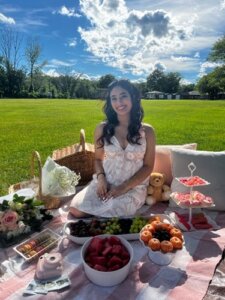
Hi! My major is Biology with a concentration in Molecular Cell Physiology and I plan on graduating in May of 2026. After graduating I plan on going to dental school to pursue pediatric dentistry. Kathryn Lionetti, Ph.D. informed me about the ExEd position, and I took the opportunity to partake in the experience. I shadowed a local family dentist in Freehold, New Jersey. The clinical experience I gained was sterilization methods, understanding the procedures of a root canal, implants, and reading an X-ray. Other than clinical learning, the main thing I learned during this experience was how important patient-centered care is. There were multiple dentists in the clinic I shadowed, and their techniques differed. What I learned was that being able to adjust to the patient’s needs or communicating well with them is very important. There was one case where we worked with an eight-year-old girl who needed fillings and an extraction. She was terrified of the needles and refused to get the procedure done. This reinforced my desire to pursue dentistry because I have also been in a similar situation; when I was a child I would go to the dentist, and they would extract teeth that had no issues. I wanted to become a dentist who does not abuse the innocence of a child and makes them feel respected, cared for, and heard.
TriBeta Honor Society

The National Biology Society, TriBeta, held its annual poinsettia sale on Dec. 4, and it was a tremendous success. All plants sold out on the first day, showcasing strong community support. This year’s selection featured classic red, white, and cinnamon poinsettias, along with special speckled blue and lilac varieties. The unique colors were a hit and added a festive flair to the holiday season. In total, 120+ plants were sold to support TriBeta’s activities and initiatives. Additionally, TriBeta organized a faculty research seminar where Keith Dunton, Ph.D.; Sean Sterrett, Ph.D.; Jeffrey Weisburg, Ph.D.; Aina Ananda, Ph.D.; Jason Adolf, Ph.D.; Pedram Daneshgar, Ph.D.; Kavin Dillon, Ph.D.; and Karen Pesce, Ph.D., spoke about their research to interested biology majors. The society thanks everyone who contributed to making these events such a success.
Beta Beta Beta Biology Honor Society Officers
- President: Julia Rice
- Vice President: Sarah Vladu
- Events Coordinator: Nicole Secondino
- Treasurer: Isabella Torres
- Secretary: Alexa Ford
Adjunct Spotlight: Professor Michelle Tortorelli
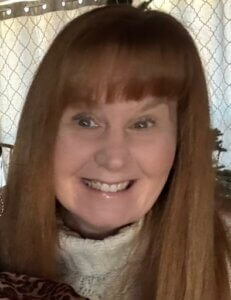
Why and When Did You Come to Monmouth?
I came to Monmouth in the fall of 2020, during a time when many things were changing with the pandemic. It was an exciting opportunity to join the university and be part of a community that values both education and adaptability. Despite the challenges of that year, I found Monmouth to be a place where I could grow professionally and contribute to shaping the next generation of thinkers and leaders.”
What Influenced Your Decision to Become a Teacher?
My decision to become a teacher came from a deep love for learning and a desire to inspire others. I’ve always been fascinated by the way we learn and how education can empower individuals. Teaching allows me to share my passion for knowledge and help others unlock their potential, which is incredibly fulfilling.
What is Your Favorite Topic to Teach at Monmouth and Why?
My favorite topic to teach is genetics. I find it fascinating because it helps explain how each of us has unique characteristics and how our biology plays such a significant role in shaping who we are. Students often get excited about genetics because it’s so relatable — everyone wants to know what makes them “them,” and it sparks curiosity about how traits are inherited and passed down through generations
What’s Splashing in MEBP
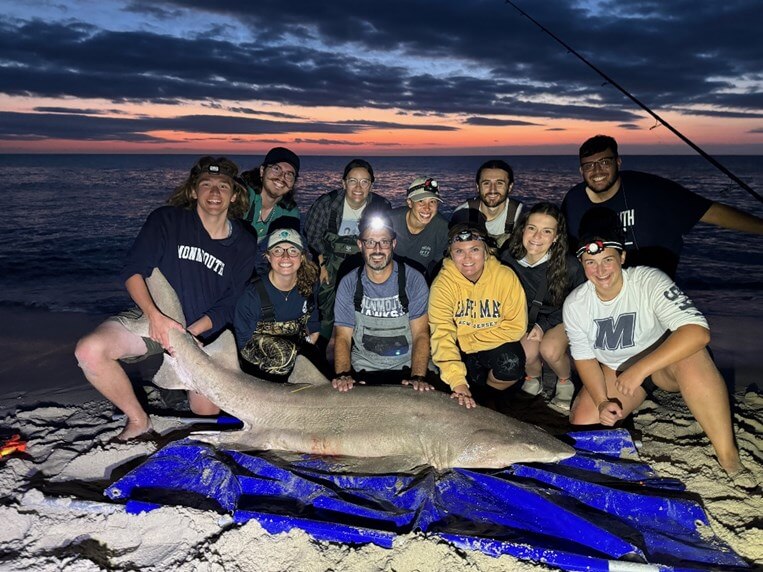
Dunton introduced a new field course, BY 398 – Applied Fisheries, to provide students with hands on experiences with fisheries research and data analysis. Students spent the majority of their time sampling sharks and fishes using a variety of techniques and largely focused on acoustic telemetry projects that assists Dr. Dunton’s research on offshore wind.
Associate Professor Sean Sterrett’s Publications on Salamanders
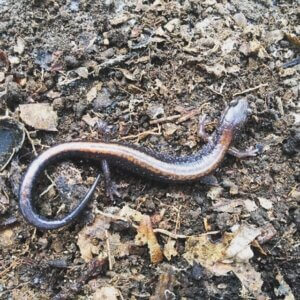
cinereus)
In 2024, Sean Sterrett, Ph.D., and the Salamander Population and Adaptation Research Collaboration Network (SPARCnet) published two impactful papers in the journals Biology Letters and Herpetological Monograph. The first, “Range-wide densities of red-backed salamanders reveal a key component of terrestrial vertebrate biomass in eastern North American forests” (Biology Letters) estimated the true mean density of red-backed salamander (Plethodon cinereus) in the Northeastern U.S. to be 11,580 salamanders per hectare. This work, which included data from 2013-2019 and across 18 sites using a common methodology of cover board plots and spatial capture recapture, greatly increased the estimates of known density and biomass for this species. The second paper, “A comprehensive review of an undervalued model in evolution, ecology, & behavior” (Herpetological Monographs), featuring two former Biology students, Angelina Ireland and Sara Grouleff, reviewed all literature and highlights gaps in knowledge on the ecology of P. cinereus since 1998 and evaluates the status of P. cinereus as a model organism in Evolution, Ecology and Behavior. The latter paper began during the Summer 2020, when the COVID-19 Pandemic shut down field sites for research purposes.
Grant, E.H.C., J.E. Fleming, D. Muñoz, C. Sutherland, T. Matlaga, S.C. Sterrett, K. Grayson, L. Thompson, C. Fisher-Reid, A. Hyde, C. Devlin, A. Warwick, L. Meade, K. Epp, K. Yureqicz, M. Losito, E. Bastiaans, W. Peterman, V. Puza, B. Gratwicke, M. Evans, D.J. Hocking, and D.A.W. Miller. 2024. Range-wide densities of red-backed salamanders reveal a key component of terrestrial vertebrate biomass in eastern North American forests. Biology Letters. 20(8):20240033. https://doi.org/10.1098/rsbl.2024.0033
Fisher-Reid, M.C., K.L. Grayson, S.R. Grouleff, M.A. Hair, T.J. Hawley Matlaga, A.K. Ireland, L.S. Mead, A. St John, M. Starr, S.C. Sterrett, and K. Streeter. 2024. Eastern red-backed salamanders: A comprehensive review of an undervalued model in evolution, ecology, & behavior. Herpetological Monographs 38(1):74-121. https://doi.org/10.1655/HERPMONOGRAPHS-D-21-00003.1
Brooke Van de Sande Showcases Her Research at Southeast & Mid-Atlantic
Marine Mammal Symposium
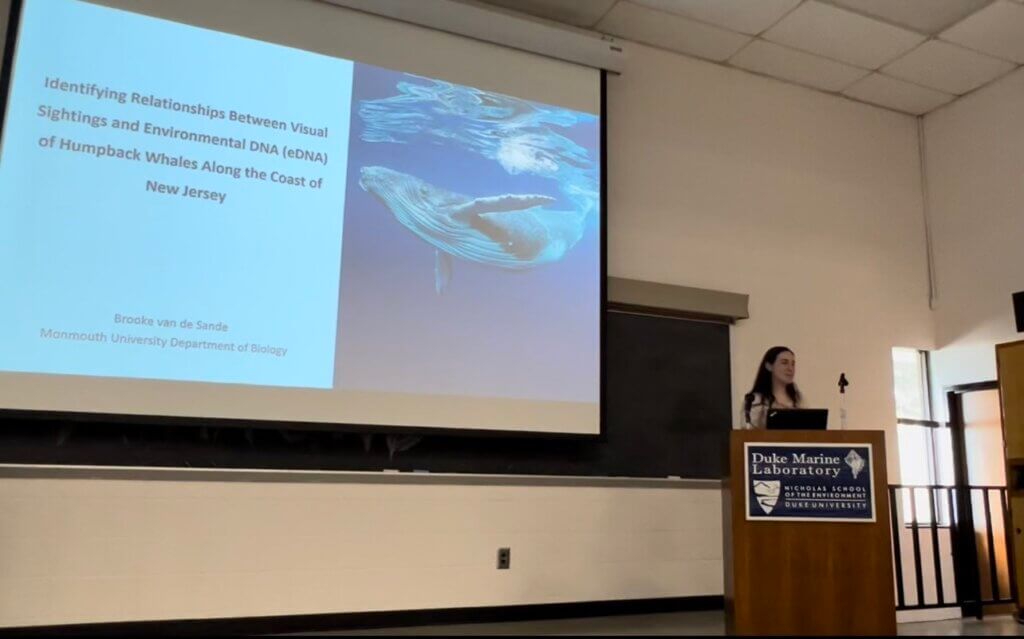
In April 2024, MEBP student Brooke van de Sande gave an oral presentation at the Southeast and Mid-Atlantic Marine Mammal Symposium (Duke University Marine Lab, Beaufort, NC) about using environmental DNA to detect humpback whales in coastal waters of New Jersey. This approach offers a supplement to commonly-used visual detections and improves our ability to track these important and endangered ocean creatures. Brooke received an award for Best Undergraduate Speed talk for this presentation!
Students Present at the 12th US Symposium on Harmful Algae
MEBP student Diederik Boonman Morales gave an oral presentation at the 12th U.S. Symposium on Harmful Algae (Portland, ME). This work was done in Professor Jason Adolf’s lab and centered around using DNA metabarcoding and qPCR data in conjunction with machine learning and geospatial techniques to understand how bacterial communities change as Monmouth County coastal lakes experience harmful algal blooms. This work was funded by NJDEP and focused on assessing the utility of using molecular tools in addition to traditional tools (e.g. microscopes) to track complex ecological indices like microbial community composition which may hold clues to why toxic blooms occur in the first place.
Former MEBP student and now Monmouth University employee, Erin Conlon ’20, presented a poster at the 12th U.S. Symposium on Harmful Algae. Erin presented an update on the Coastal Lakes Observing Network, a Monmouth University / NJDEP / community scientist network that monitors water quality and harmful algal blooms in Monmouth County coastal lakes since 2019. After graduating, Erin took on the role of community science coordinator for CLONet. Presently, she continue to lead that program but has also taken on responsibilities in coordinating community sampling of marine eDNA as well as laboratory analyses of marine and coastal lake eDNA samples.
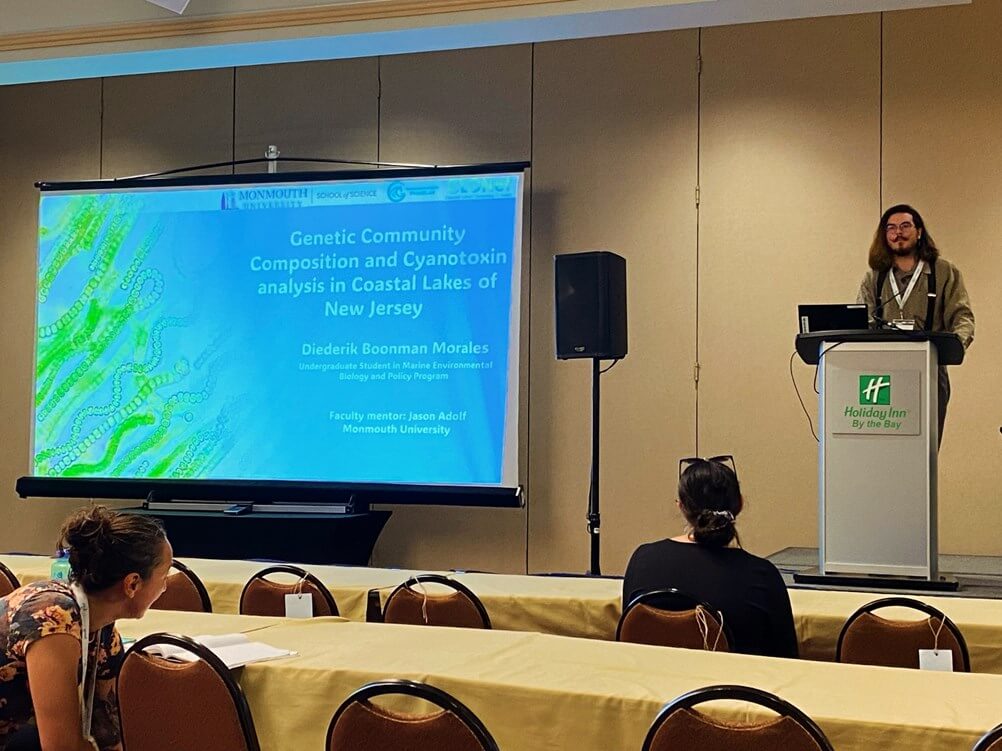
Image Gallery
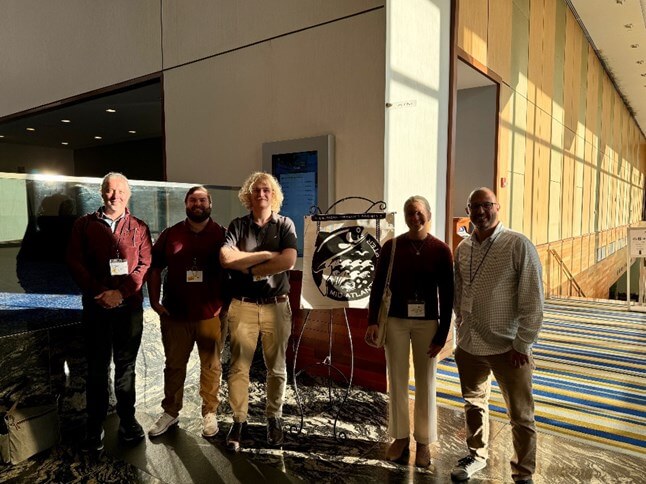
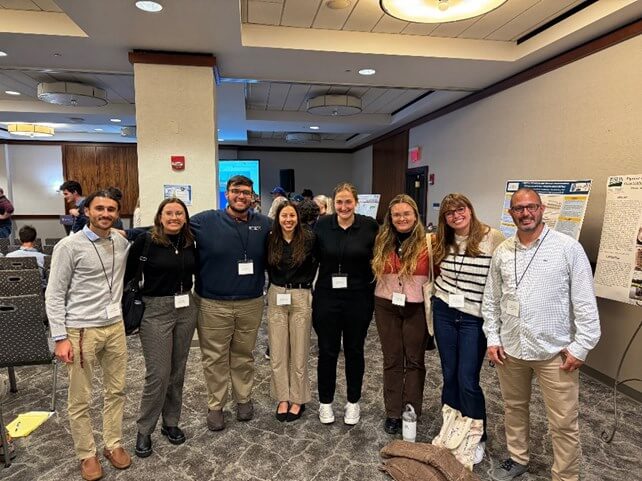
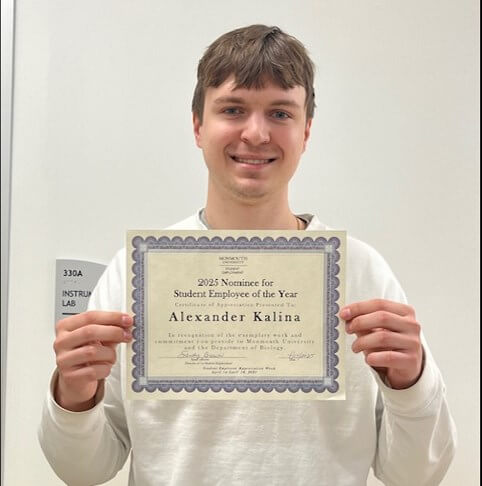
Photo Credit: Anne Marie Lavin