
In a recently published article in the Journal of Policy Practice and Research, Urban Coast Institute Community (UCI) Engagement and Outreach Specialist Rachel Forbes and Monmouth University doctor of social work student Falon Alo call for a transformation in the way social work is integrated in emergency management planning and disaster response.

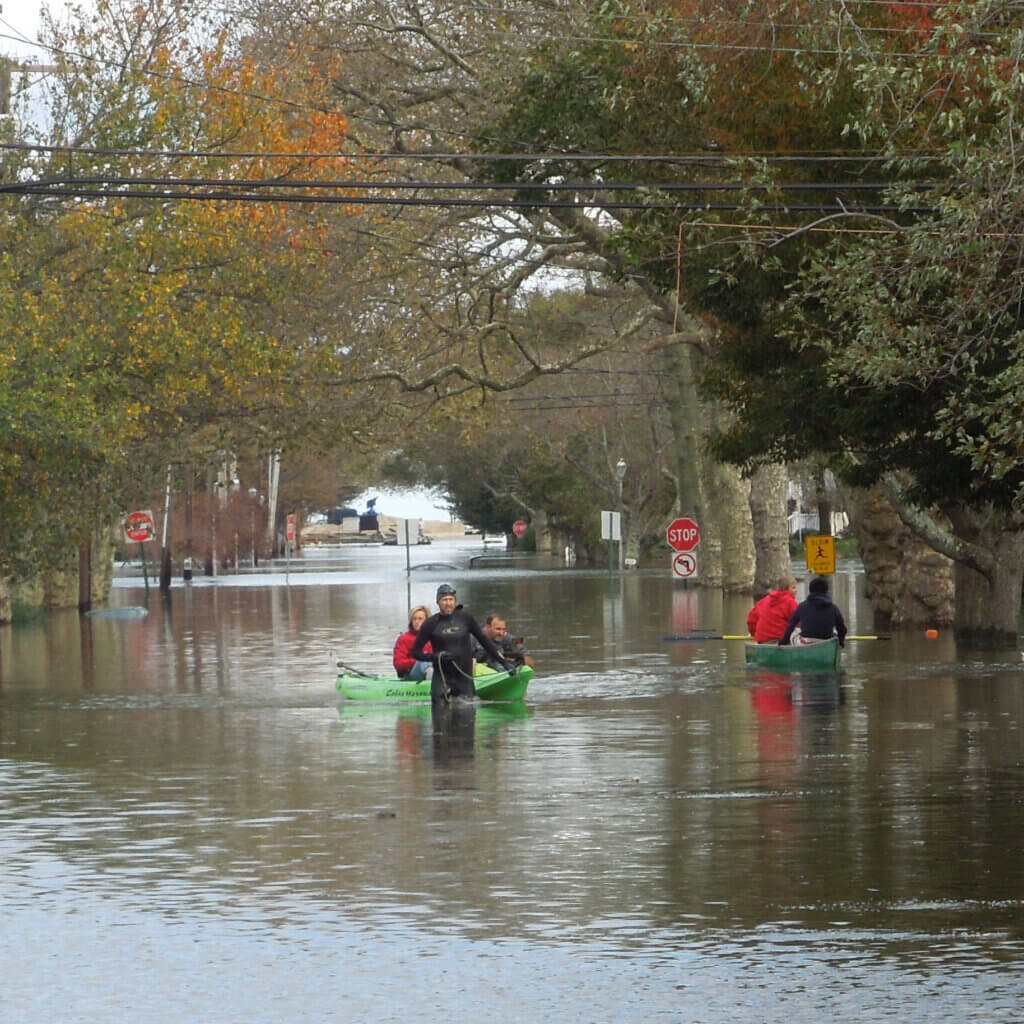
The escalating risks of climate change, including more intense coastal storms, flooding, droughts, and wildfires, have exacerbated the vulnerability of both physical infrastructure and people living in harm’s way. These risks have been found to disproportionately impact lower-income communities that are least-equipped to respond, making the climate crisis a social work crisis. The authors contend that social work must be positioned in a more proactive stance during disaster preparation and that training and educational programs for social workers need to better prepare them for emergency management situations.
The paper notes that while social workers play essential roles in the delivery of services, crisis intervention, and resource coordination during disasters, they are often left out of the early planning stages by emergency response teams. This places them in a reactive mode, deployed to disaster scenes and forced to learn about critical vulnerabilities and issues specific to impacted communities in real-time.
“Social workers have to claim their place at the decision-making table, engage in transdisciplinary teams, and ask awkward questions about power relations, structural inequalities and inequitable resource allocations that hinder the development of innovations that will unite people in coproducing a more inclusive, equitable and solidaristic world that is better able to stave off disasters,” the authors wrote. “This call to action for the profession must work to ensure social work curriculum, continuing education, and the countless successful contributions of the profession in addressing the polycrisis of our time is not only recognized, but accessible to future generations of professional social workers.”
The full article, titled “Ecosocial Work and Climate Justice as Guiding Frameworks for Transformative Emergency Management Social Work,” was published in a special issue of the journal dedicated to supporting the growth and professionalization of social workers in the disaster and emergency management disciplines during an era of climate change. (A subscription is required to access the full article.)
Forbes and Alo also recently contributed to a Specialized Practice Curricular Guide for Disaster Relief Social Work, published by the Council on Social Work Education (CSWE). The guide was created to support educators in aligning disaster relief practice competencies with Educational Policy and Accreditation Standards (EPAS) adopted by the CSWE in 2022.