
Monmouth University will serve as the newest partner in the Surfrider Foundation’s Blue Water Task Force (BWTF), a nationwide network dedicated to monitoring water quality at public beaches. Through the agreement, signed on June 5 in advance of today’s World Oceans Day celebration, Monmouth will fill an important gap in the BWTF’s East Coast coverage and augment New Jersey’s state ocean quality monitoring efforts, which are limited only to the summer season. This collaboration will help protect public health all year and provide vital data for state and local officials, scientists, policy advocates, and surfers and swimmers and will ensure timely access to information when water conditions pose health risks.
Formed over 30 years ago, Surfrider’s BWTF has over 60 chapter-run labs in its network and measures bacteria levels at more than 600 ocean, bay, estuary and freshwater sampling sites across the country. Volunteer members from Surfrider chapters use the water testing program to raise awareness of local pollution problems and to bring together communities to implement solutions.
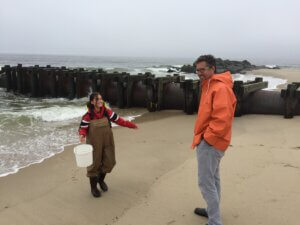
In New Jersey, Surfrider volunteers will collect samples from local beaches and supply them to Monmouth’s Phytoplankton and Harmful Algal Bloom Lab (PHAB Lab), led by Endowed Professor of Marine Science Jason Adolf. PHAB Lab staff and student researchers will analyze the enterococcus bacteria levels in the waters and post the results on Surfrider’s interactive BWTF web app. The sampling will initially take place at a half-dozen beaches in Monmouth County and be scaled up to cover additional areas throughout New Jersey.
In 2023, a Monmouth study on the influence of weather and ocean conditions on microbial pollution found that within 6-24 hours of moderate rainfall, enterococcus levels exceeded state health safety standards about half the time at the many local beaches where stormwater outfall pipes and coastal lakes drain into the ocean. The study noted that since the state’s beach sampling was typically conducted on Mondays, it would not always detect spikes that took place a few days later or on weekends.
“Understanding that more coverage is better, we plan to create a sampling design that complements the state’s by testing the waters later in the week,” Adolf said. “In effect, the Monmouth-Blue Water Task Force partnership will double the frequency of monitoring in some areas of the Jersey Shore.”
“Our coastline is one of New Jersey’s greatest public treasures. It supports marine ecosystems, drives our tourism economy, protects coastal communities, and provides millions of people with recreation, inspiration, and a connection to nature. But our waters face increasing challenges — from stormwater runoff and pollution to harmful bacteria and the growing impacts of climate change,” said Jeffrey Ross Williams, Surfrider’s Legislative and Policy Director, who is also a local surfer. “Protecting these waters requires more than concern, hope, and apathy. It requires action, science, transparency, and strong committed partnership. That is exactly what our collaboration with Monmouth University and its Urban Coast Institute represents,” Williams explained.
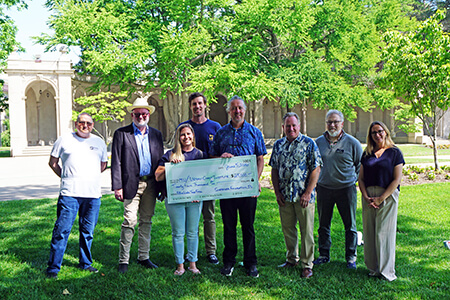
Surfrider will provide Monmouth with $25,000 in grant funding over two years to assist with lab equipment costs and student research positions. Adolf said the arrangement would provide students with valuable opportunities to gain experience conducting lab analysis and helping to co-manage a community science operation which can have critically needed public health benefits.
Those interested in volunteering as a member of the BWTF may contact the Surfrider Foundation Jersey Shore using the online form at jerseyshore.surfrider.org/volunteer.