
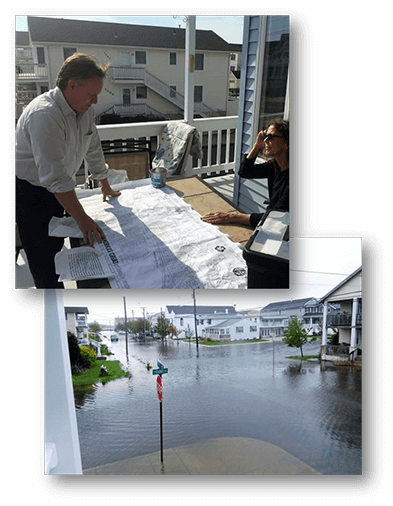
Urban Coast Institute Associate Director Thomas Herrington was honored with the Mid-Atlantic Sea Grant Region’s Outstanding Outreach Award for his work helping residents and government officials in Ocean City, New Jersey, find solutions for chronic nuisance flooding in the community.
 The award was presented during the Mid-Atlantic Sea Grant Region’s annual meeting, held virtually in October. Herrington serves as the New Jersey Sea Grant Consortium’s coastal community resilience specialist.
The project was carried out through the American Geophysical Union’s Thriving Earth Exchange (TEX) program, which pairs scientists with local communities to solve problems on a pro bono basis. The barrier island community has seen flooding increase in frequency and severity over the years, to a point where high tides can cause disruptions and damage without rain. Herrington, an Ocean City native, worked with members of a grassroots community flooding group to examine the source and causes of the flooding and identify long-term solutions that would remain effective in the face of sea level rise and the more intense storms wrought by climate change.
Herrington trained local residents to conduct citizen science work and pool their data using an app developed by iSeeChange. Through use of the app, Herrington was able to compare the information with federal data and investigate the source of flooding, its frequency, and location. Click here to read more about the group’s collaboration with iSeeChange.
In its nomination, New Jersey Sea Grant noted, “Through his efforts, the community and local government increased their knowledge on the complexity of the flooding events residents are currently experiencing.” The document added that Herrington’s work could serve as a model for researchers and extension agents at Sea Grant programs throughout the country.
“The data collected by the citizens is helping the community see that rainfall runoff combined with high tide levels is the major contributor to street flooding and has prompted a discussion of ways to reduce rainfall runoff into the storm sewer system,” Herrington said.
Visit the project page on the Thriving Earth Exchange website for more information, including a detailed overview, research documents, partner profiles and news coverage.
 Dr. Jason Scorse completed his Ph.D. in Agricultural and Natural Resource Economics at UC-Berkeley in 2005 with a focus on environmental economics and policy, international development, and behavioral economics. Upon graduation, he became a full-time faculty member of the Middlebury Institute of International Studies at Monterey. Professor Scorse teaches courses in environmental and natural resource economics, ocean and coastal economics, and behavioral economics. In 2009, he was promoted to the Chair of the International Environmental Policy Program, and in 2011, he became the Director of the Center for the Blue Economy, which provides “leadership in research, education, and analysis to promote a sustainable ocean and coastal economy.” Professor Scorse’s book, What Environmentalists Need to Know About Economics, was published by Palgrave Macmillan in 2010. In his spare time, Professor Scorse longboards, cooks gourmet vegan food, and writes fiction for when he starts his new career after we’ve solved all of the world’s great environmental challenges.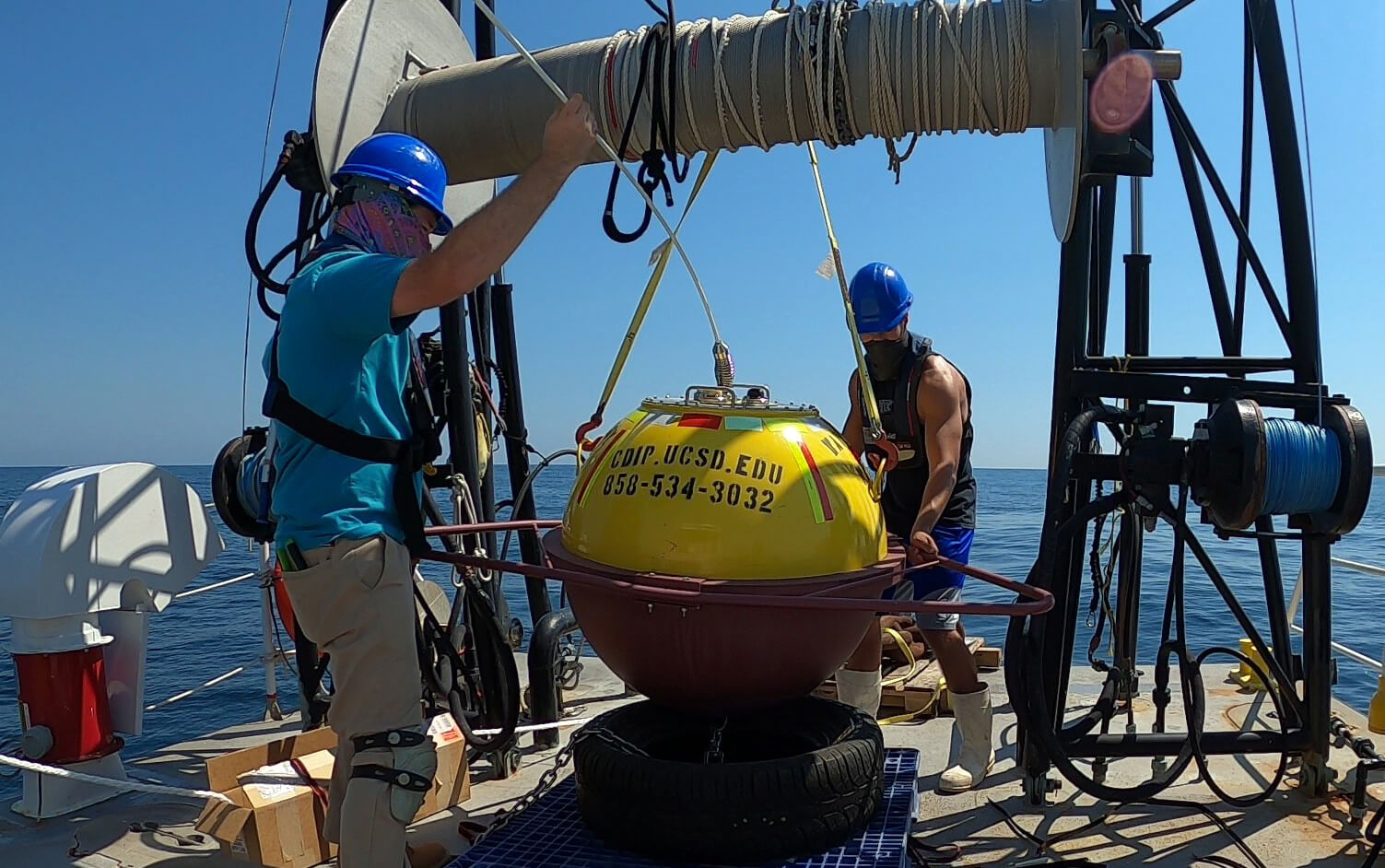
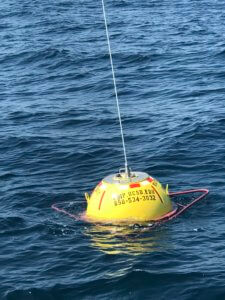 “The Jersey Shore sees very different wave fields than, say, North Carolina or even Delaware because Long Island Sound, Long Island itself and New England act as a natural breakwater for waves coming from the northeast,” Herrington said. “So the wave climate we have off New York Harbor is very different than the wave climate we have off Cape May. This buoy is really important to understanding what’s going on off our coast.”
 Dr. Wil Burns is a Professor of Research and Founding Co-Executive Director of the