
The English Department is pleased to announce the winners of its 2024-2025 awards. There were many eligible and competitive submissions for the writing prizes, and a strong field of candidates for all the awards. We congratulate this year’s winners and thank our donors for their generosity.
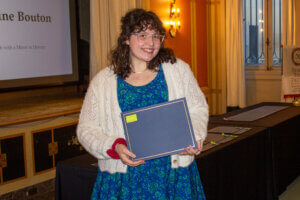
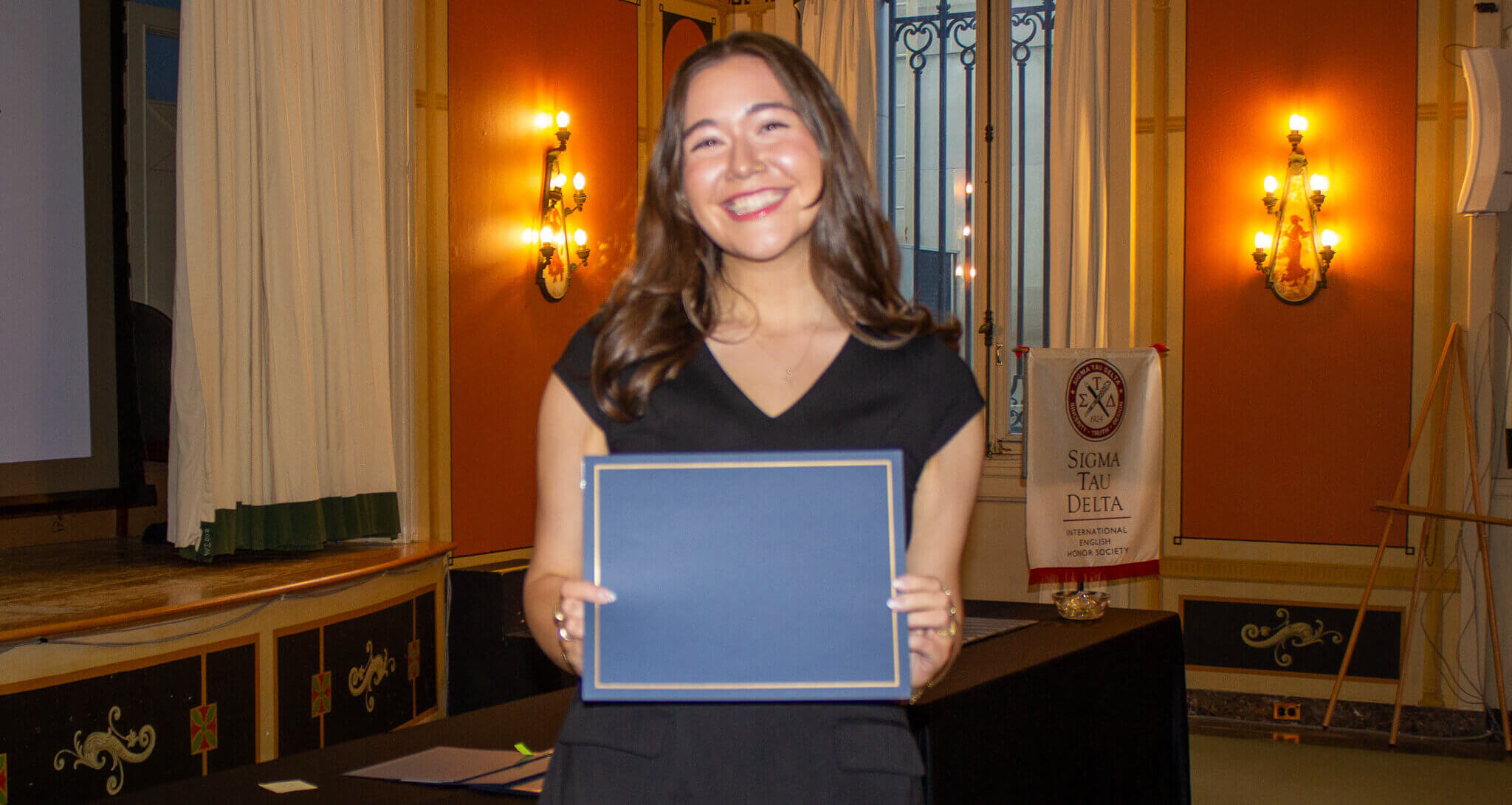
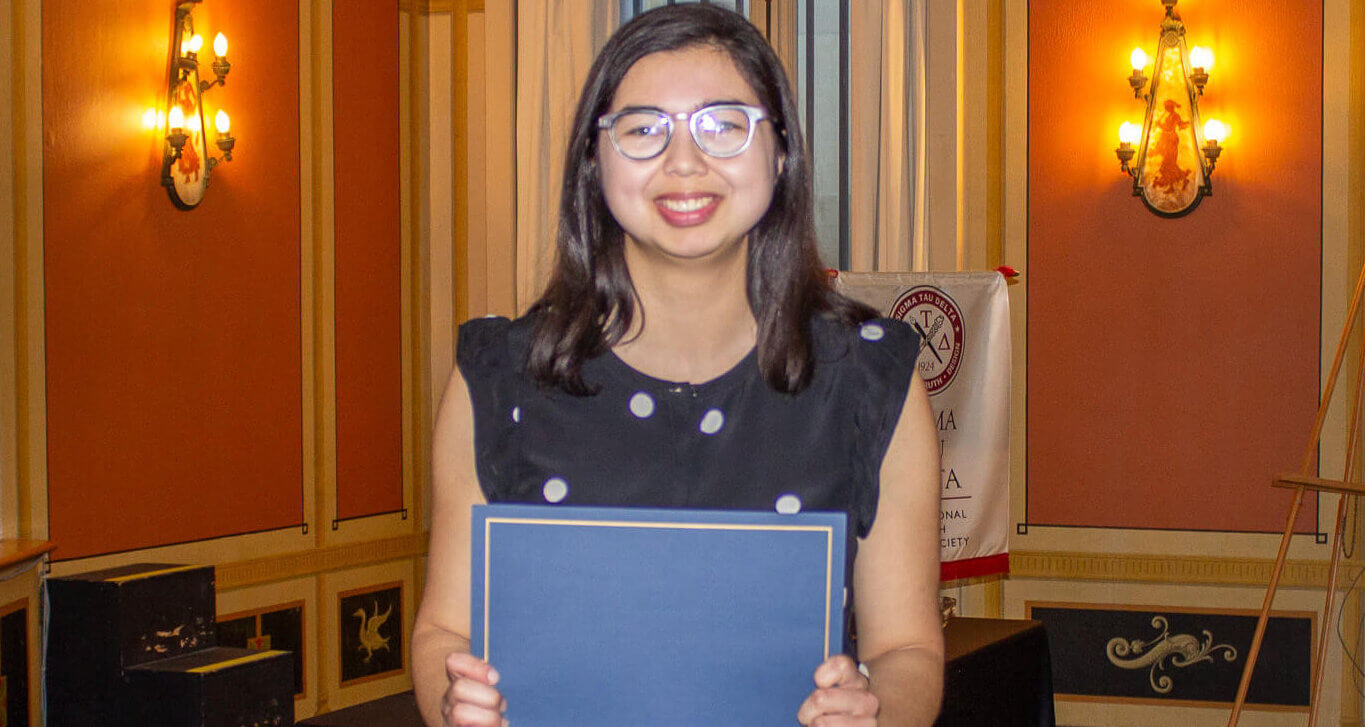
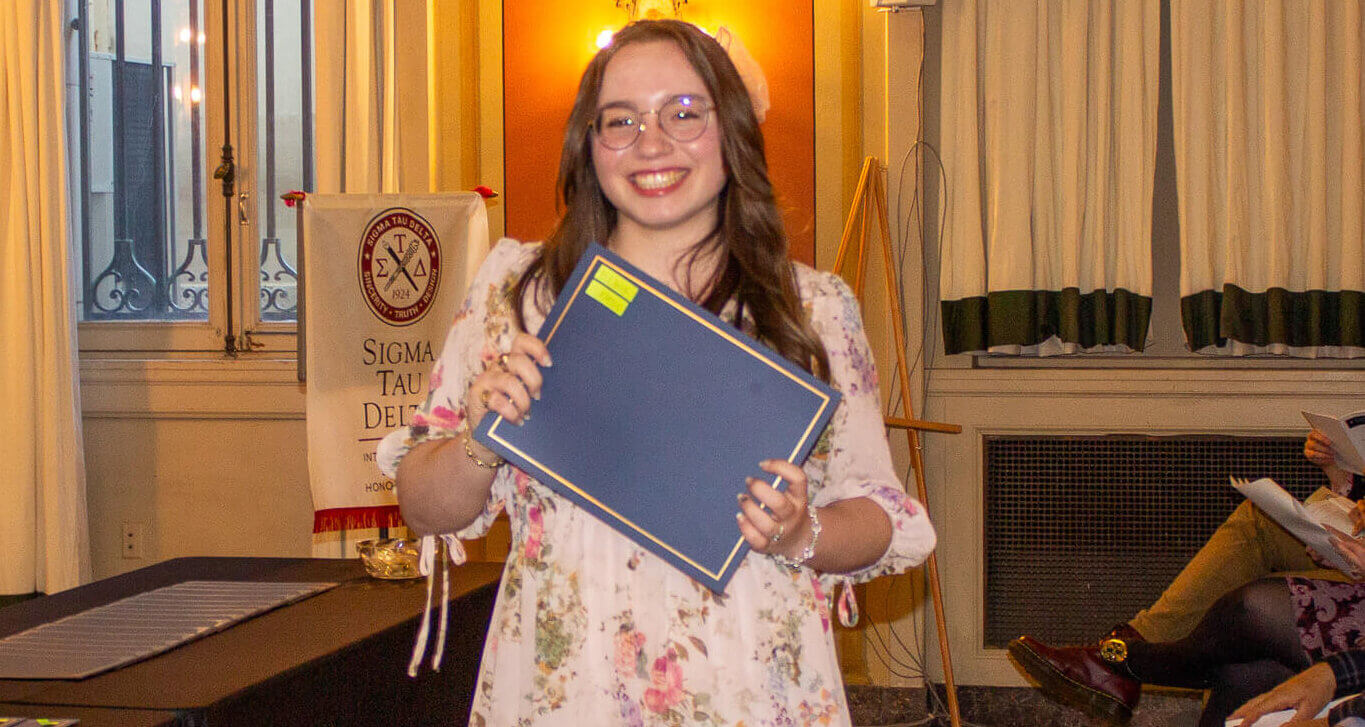
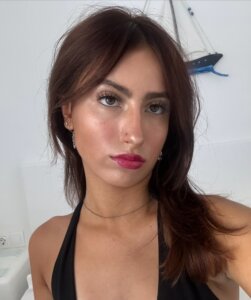
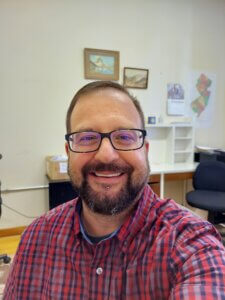
Justine Bouton – The English Merit Award
Justine is immensely grateful for this award and cannot thank her professors enough for recognizing how deep herpassion goes. Since transferring colleges more than once, Justine has found it difficult to ease into an academic environment, but Monmouth has been the gift that keeps on giving. The thought of graduating from a place that has become such a safe haven was unthinkable just a year ago. A special thanks to professors such as Dr. Jackson and Dr. Blair for helping Justine discover her fervor for literary theory and criticism, especially deconstruction and new historicism. Upon graduating in January 2026, Justine hopes to pursue a dual master’s degree in Irish literature and library and information science. Most importantly, Justine wants to thank her family for everything; from moving her into multiple different dorm rooms in different cities to always believing she was intelligent enough because without them, there would be no award. Academia is a journey that has no end destination in this case.
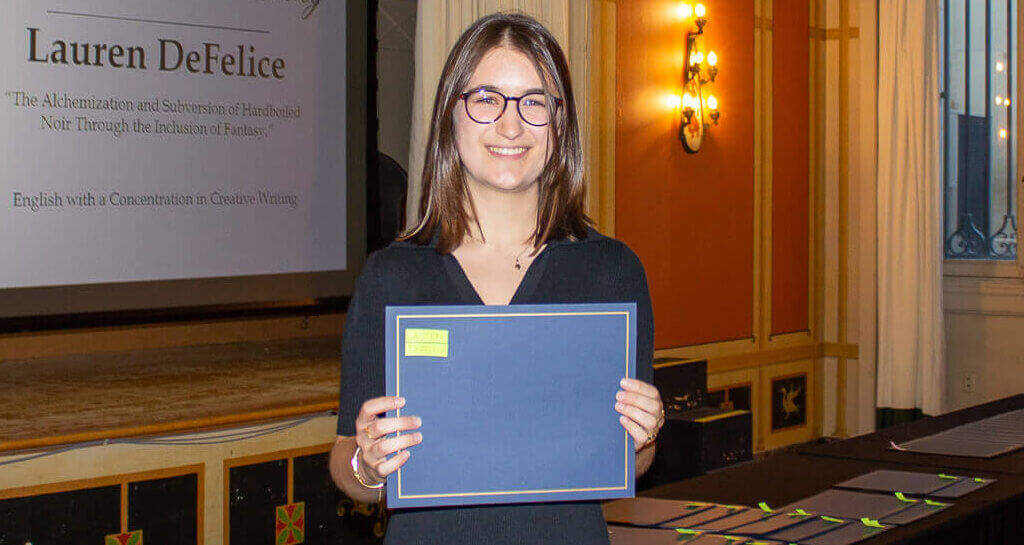
Lauren DeFelice – The English Award for Academic Writing
Lauren DeFelice is a graduating senior majoring in English with a concentration in Creative Writing. Inspired by her Independent Study in crime fiction, her paper “The Alchemization and Subversion of Hardboiled Noir Through the Inclusion of Fantasy” explores the validity of the feminine in matters of deduction. Alongside her degree at Monmouth University, she is pursuing an Editing certification at the University of Chicago with a specialization in Developmental Editing for Fiction. She hopes to utilize her English education to work in the publishing industry, however, novel writing will always be her first love. She is now writing a novel for her undergraduate thesis about detectives who solve mysteries by entering people’s dreams. Lauren would like to thank the entire English Department for their encouragement of her academic pursuits, but she’d like to specially thank Dr. Womack and Dr. Starke for their readership and advice throughout the writing process of this paper and thesis. She plans to publish her thesis post-graduation and pursue a long-time dream of becoming a published novelist.
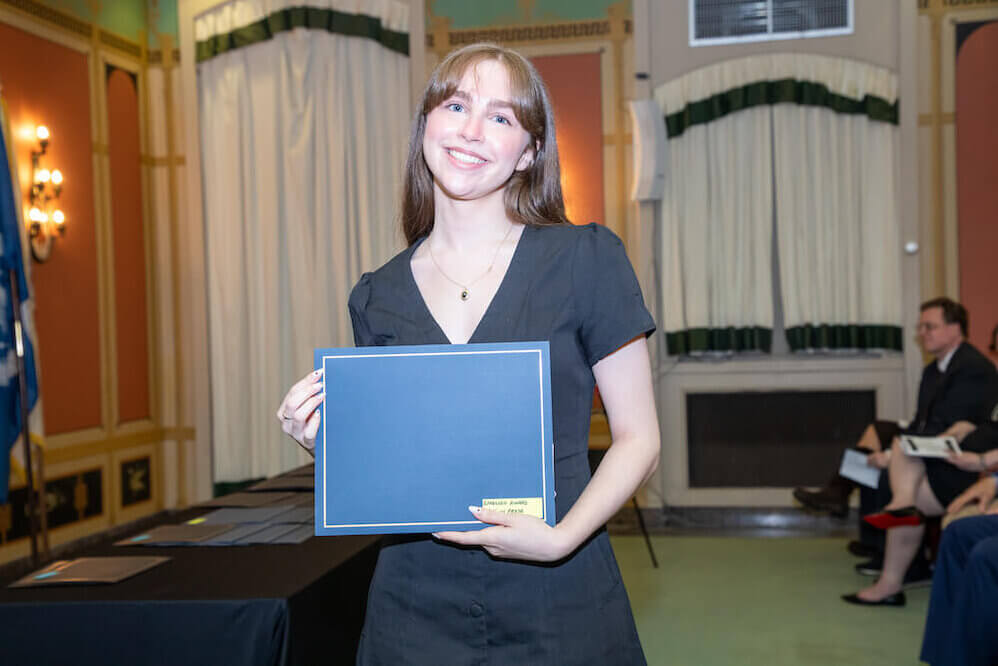
Breanna Guinta – Honorable Mention, The English Award for Academic Writing
The English Awards committee recognizes Breanna’s paper, “Traumatized Correspondent: Nathaniel Parker Willis’s Use of Writing Therapy during the 1832 Cholera Pandemic” as an honorable mention
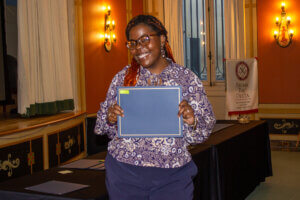
Melaina Carrara – The English Award for Creative Writing in Prose
The winner of this year’s Undergraduate Creative Writing Prose Award is Melaina Carrara for her deft, subtle, and moving short story “Benjamin Franklin Went to France.” It centers on a young woman waking up in a strange man’s bed after a forgettable night out at a club on the Lower East Side of Manhattan. She’s not from New York; she’s from Boston, and this isn’t a world she inhabits easily. She’s trying on a new persona in this new place: “Wallflower tuned wild child.” But she feels self-conscious about her new identity. It feels fake. Only when she leaves the man’s apartment building, as he continues to sleep on, and encounters a little girl jumping rope and playing hopscotch outside does she feel something like authenticity and freedom. As she joins the little girl’s games, she notices how unselfconscious the girl is, how easily she inhabits her body. She wants to teach this little girl, to encourage her to remain true to herself, but perhaps it’s the little girl who teaches her something. With lucid, precise prose and carefully rendered character interiority, Carrara has beautifully conjured a whole world in mere pages.
Sabrina Chung – Honorable Mention, The English Award for Creative Writing in Prose
The English Awards committee recognizes Sabrina’s work titled “To Be a Woman” as an honorable mention for the English Award for Creative Writing in Prose
Kia Womack – The English Award for Creative Writing in Poetry
The winner of this year’s Undergraduate Creative Writing Poetry Award is Kia Womack (pen name Kia Ambrose) for her poem “Home,” a tender exploration of what it means to return to a home where the scent of unconditional love both coexists with and counters the scent of mold, and where the “dimming bulbs” speak of the quiet sorrow that connects the lives of three generations of women. Delivered in the voice of the grandmother, the poem resonates deeply through its unadorned yet poignant diction, as well as through what remains unsaid.
Eleanor Curatolo – Honorable Mention, The English Award for Creative Writing in Poetry
The English Awards committee recognizes Eleanor’s poem titled “Cherry Cosmetics” as an honorable mention for the English Award for Creative Writing in Poetry
Meghan Reilly – Co-Winner of The English Award for Graduate Study
After graduation, Meghan will pursue an M.A. in English with the goal of continuing her education toward a Ph.D. and professorship. Meghan is deeply grateful for the guidance of her academic advisor, Dr. Stanley Blair, whom she says supported her at every stage – from graduate applications to thesis completion. Meghan also appreciates the entirety of Monmouth’s English Department for fostering the skills, research techniques, and writing abilities essential for graduate study, and feels well-prepared for her programs this coming fall. Meghan sincerely thanks her family and friends, who provided unwavering support throughout her four years at Monmouth. As she prepares for graduate school, Meghan is inspired by the words of Dr. Kristin Bluemel, whom she interviewed for an assignment earlier in the semester: “Courage and curiosity are what make a great student and a great teacher.”
Ashley Zingillioglu – Co-Winner of The English Award for Graduate Study
Ashley Kate Layog Zingillioglu is an English major in the Creative Writing concentration, with three minors in Computer Science, General Management, and Communication Sciences and Disorders. Her Honors School thesis, “Talking with My Classmates: An Interactive Social Story for Students with Autism,” teaches conversational skills to middle-and high-school students with autism. Her thesis was awarded the Mid-Atlantic Popular and American Culture Association’s Daniel Walden Prize in recognition of her as an emerging scholar in popular culture studies. She also presented her thesis at the National Conference for Undergraduate Research. So far, she has co-published one scholarly article, and another is forthcoming. In the fall, she will pursue a master’s degree in educational technology and will continue to develop publishable interactive social stories. Currently she is considering admission offers from Lehigh, NYU, Columbia, Penn, and Harvard. Ashley thanks the entire English Department for supporting her professional development, and especially Dr. Hanly for helping to fund her conference presentations; Ms Ayers for promoting her through departmental social media; Prof. Graedon for guidance in developing her meta-fiction; Drs. Fury and Goulding for encouragement; and Dr. Moscaliuc for being the most devoted fan of Azure Kai’s music. Lastly, she extends heartfelt gratitude to Dr. Stanley Blair for starting it all, for believing in her, and for seeing in her potential she did not see in herself.
Ana Carvalho – The Caryl and Charles Sills English Education Scholarship
When Ana was a little girl, her grandmother Fatima asked her what she wanted to be when she grew up. She answered, “I don’t know, I just want to help people”. Her dream school has always been Monmouth University, as she shared in her article “I Belong Here” for The Outlook. The strong English and Education programs drew her in, and the incredible faculty, their support, and the community at Monmouth made her stay. One of her favorite experiences has been completing Clinical Hours, where she worked firsthand with students at Long Branch Middle School—her alma mater. After seeing the difference books can make in a child’s upbringing and future, Ana is now organizing a Book Drive for those students. She credits her own teachers for shaping the person she is today—from her middle school English teacher, Ms. Campbell, to her English professors at Monmouth, including Professors Jackson, Hanly, and Goulding, as well as her Education professor, Professor Sorochka. Ana hopes to be the kind of teacher who understands there’s always more behind a “bad day,” and that every student just wants someone to believe in them and show up for them. Ana is grateful to Monmouth University for the hands-on experience and looks forward to continuing her journey toward becoming a passionate and inclusive educator.
Eleanor Curatolo – Co-Winner of The English Alumni Scholarship
Eleanor Curatolo is a rising junior majoring in English with a concentration in creative writing as well as Secondary Education. This semester, her poetry was selected for the Monmouth Review and will appear in its 68th volume. She began the thesis process for Monmouth University’s Honors School with the Sherlock Holmes short stories and novels as her area of research. This project will be presented prior to her graduation. Eleanor plans on continuing her education at Monmouth in hopes of entering the English: Concentration in Creative Writing (MA) program.
Julia Dziewa – Co-Winner of The English Alumni Scholarship
Julia is a double major in English and Secondary Education with a specialization in teaching students with disabilities. A passionate learner and dedicated helper, she is committed to making education more inclusive and accessible. Julia hopes to teach high school English in under-resourced communities and is actively learning ASL to better support deaf students in future special education classrooms. After earning her Bachelor of Arts, she plans to pursue her M.Ed. at Monmouth University.
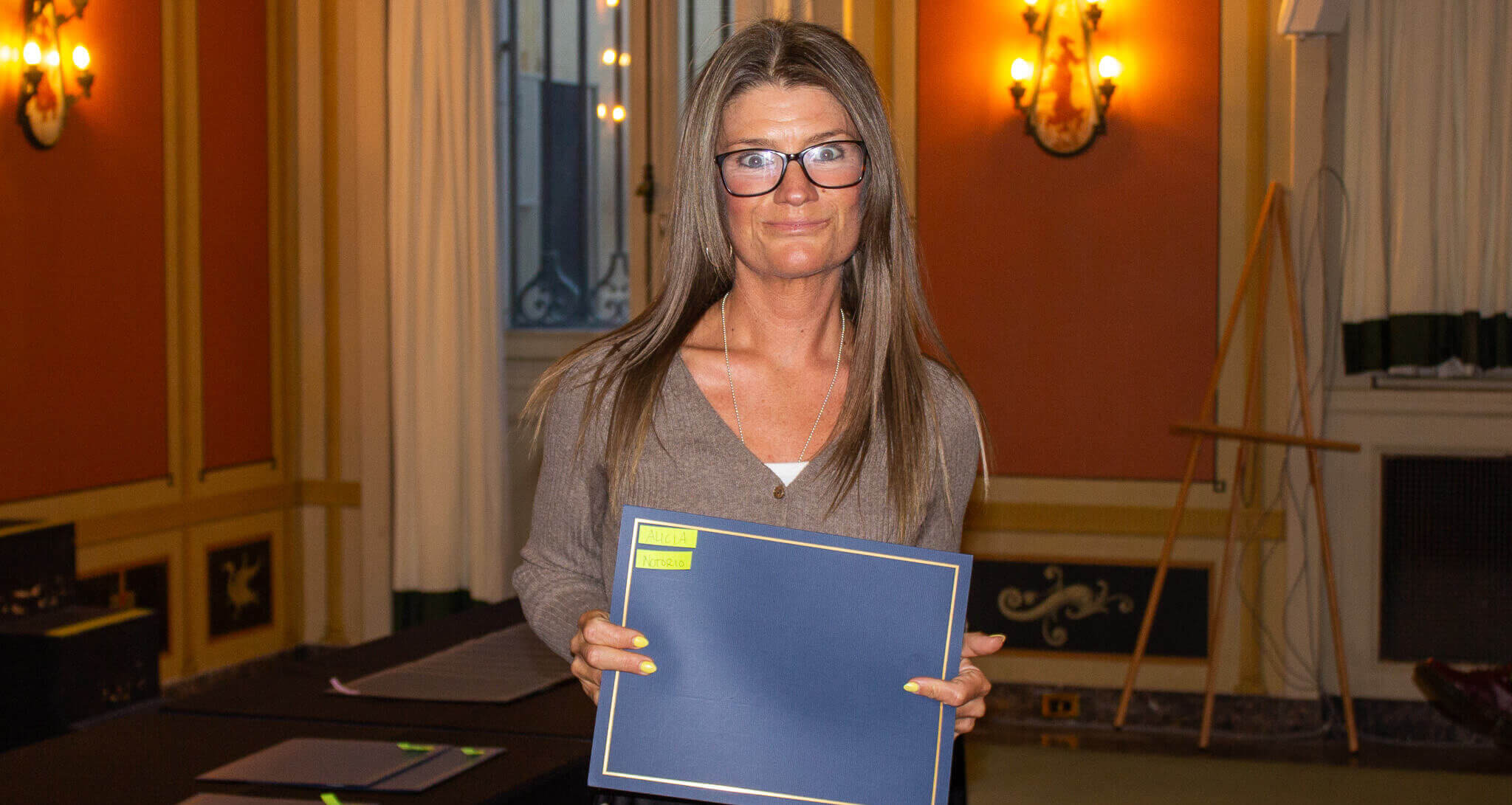
Alicia Notorio – The English Award for Graduate Creative Writing in Prose (Fall 2024)
The Fall 2024 English Award for Graduate Creative Writing in Prose goes to Alicia Notorio for “White Noise,” Judged by Hanna Pylväinen who said the following of Notorio’s work: “I chose ‘White Noise’ for its confident detailing of a grim reality—the story juxtaposes the supposed flash and bang of a brewery with the abuse percolating beneath. I was drawn especially to the writer’s skillful movement in time and how the story took place over several settings and periods. Most of all ‘White Noise’ displays the painful paralysis of disassociation with chilling detail; this is an affecting piece”.
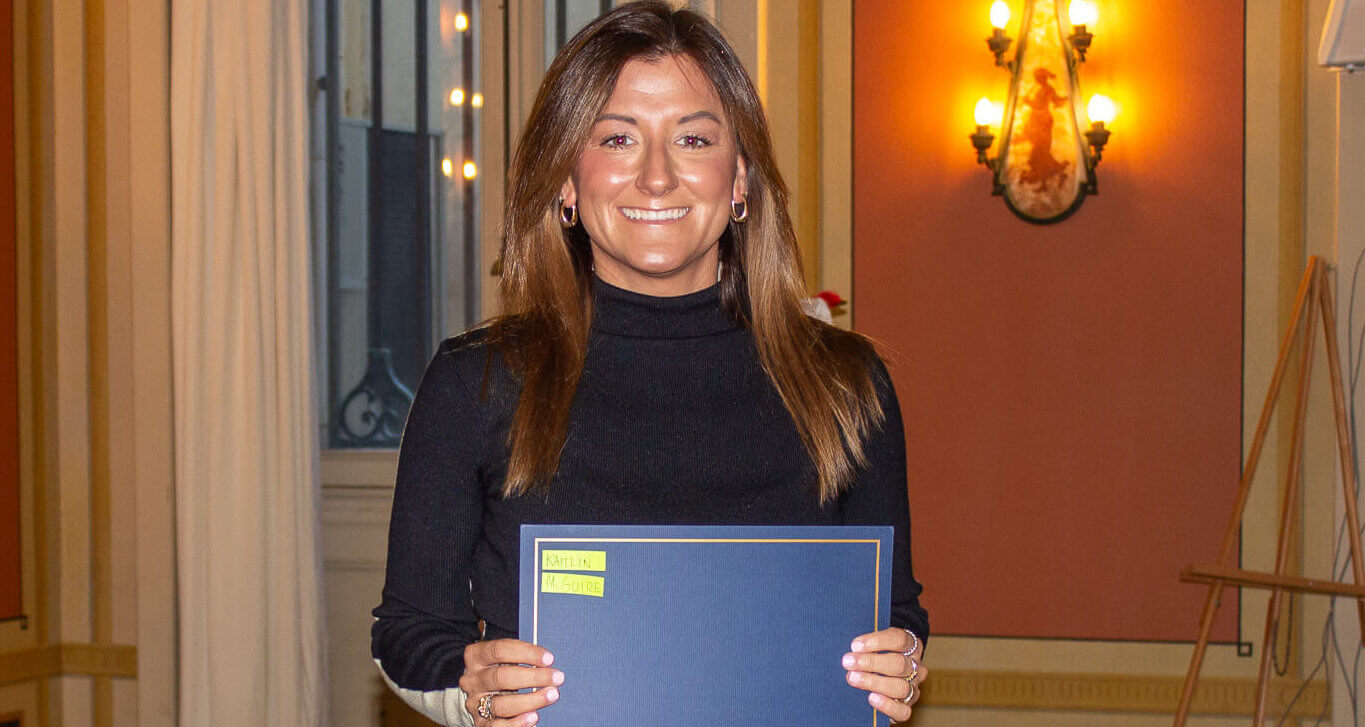
Kaitlin McGuire – The English Award for Graduate Creative Writing in Poetry (Fall 2024)
The Fall 2024 Award for Graduate Creative Writing in Poetry goes to Kaitlin L. McGuire for “RSVP NO and Other Poems,” Judged by Carey Salerno who said the following if McGuire’s work: “These tender and deeply personal lyrics are dedicated to growth, healing, and effecting a greater understanding of the self. They deftly traverse the territory of vulnerability, family, interpersonal relationships, love, personal growth, regret, grief, and loss. With lines brimming with Philia, they feel future-leaning and seek answers about the self through the lens of their speakers’ interactions and experiences with others. In ‘You’, the poet begins with defense mechanisms then tempers, and vulnerability comes shorn on the page: ‘I didn’t want anyone, /anything, / softening my edges.’ ‘Until,/ You.’ Where after the poem morphs into redolent expressions of joy and transformation: ‘In the sink, sea of feeling / sweet, savory, saucy, vulnerable.’ These poems carry worlds and there’s much beauty within them”.
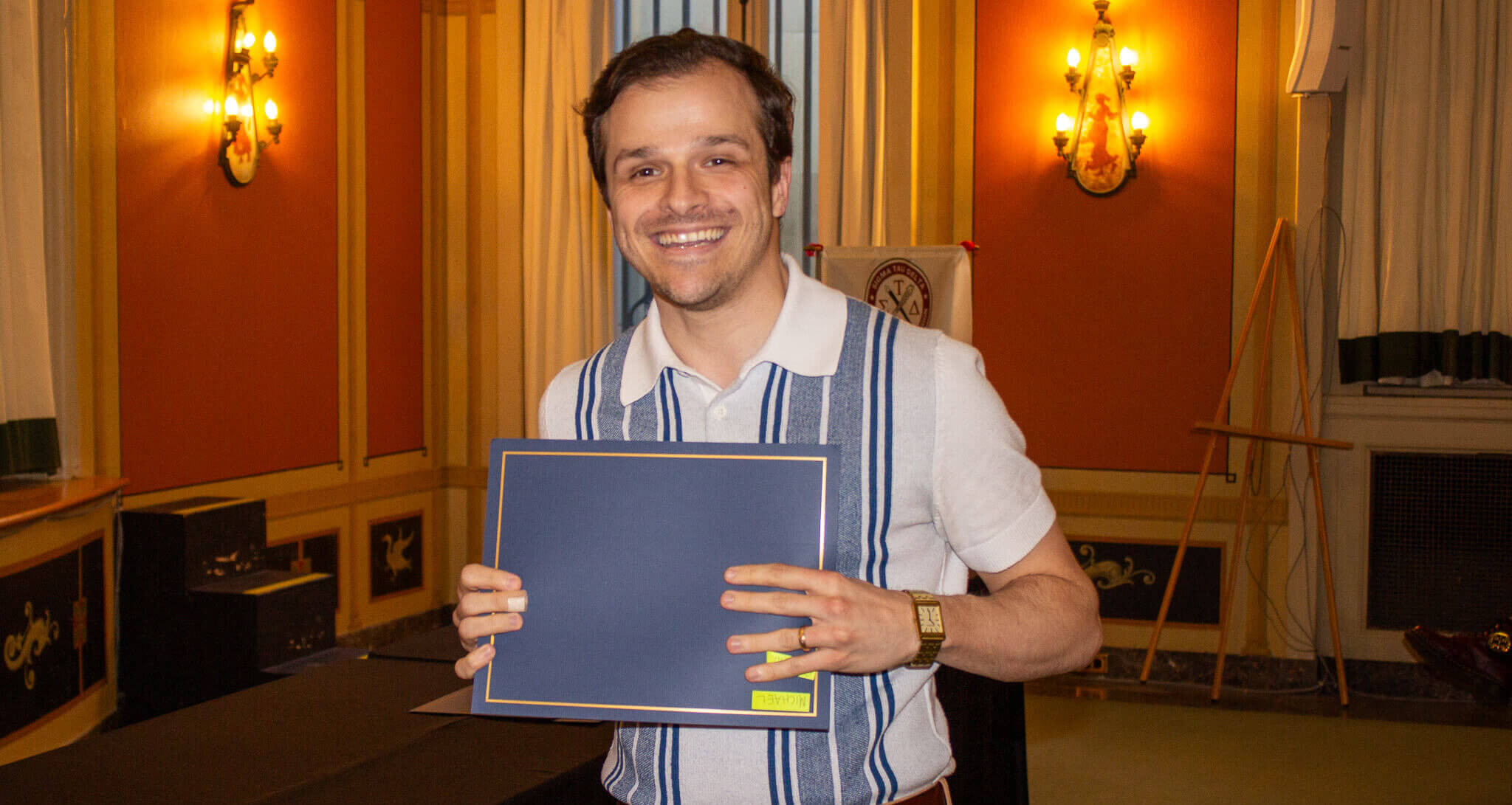
Michael Qualiano – The English Award for Graduate Creative Writing in Prose (Spring 2025)
The Spring 2025 Award for Graduate Creative Writing in Prose goes to Michael Qualiano for his Work entitled “’The Dive”. Submissions were adjudicated by an external judge, Andrew Martin. “The Dive’ is an excruciatingly funny story, one that taps into the anxieties and disappointments inherent in growing older and growing apart from old friends. Through the character of Joy, the author has created a caustic, memorable voice, one whose rage is directed outwards at her friend Kat and her new baby, even as the narrator struggles to come to terms with her own shortcomings. In its mix of poignancy and spite, this story reminded me of Lorrie Moore’s You’re Ugly, Too, another great party tale, and Dorothy Baker’s Cassandra at the Wedding. It’s a wonderful, gimlet-eyed piece of writing, rooted in a specific time and moment, and filled with perfectly chosen details”.
Austin Morreale – The English Award for Graduate Creative Writing in Poetry (Spring 2025)
The Spring 2025 Award for Graduate Creative Writing in Poetry goes to Austin Morreale for his poetry collection entitled “Snapshots”. As the submissions for this award were adjudicated by an external judge, Katie Ferris, we would like to include the description of the evaluation of Austin’s poems: “This poet’s playful eroticism is found in the beautiful clutter of a loving life—’cheeseball-dust fingerprints’, ‘cantaloupe cast away by our kids,’ ‘love letters stuck on the inside of cabinet doors’ –and in the gorgeous vivacity, difficulty, and sometimes tragedy of queer community. The eros is found in the poet’s beautiful ear as well, in moments ranging from the ironic– ‘Is all this bawking really the voice of God?’– to the tender: ‘I’d paint her just as she is—pajamas, dog, and all/ and make sure her month was always the month that’s hanging on my wall’. This collection is funny, warm, loving, sophisticated, and I couldn’t be more honored to be able to choose it as the winner of Spring 2025 Graduate Poetry Contest”.
Leah Coppola ’23M co-wrote the article, “Mission and COVID Statements: Writing Centers and Opportunities for Discussing Social Equity,” with Dr. Courtney Werner. The article was published in the fall issue of The Learning Assistance Review (Volume 28, #2 Fall 2023).
Andrea Sodhi ’13 ’17M has been named Ocean Township Elementary School’s (OTES) 2023-2024 Teacher of the Year.
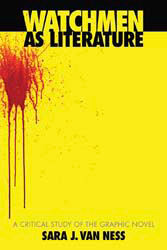
Sara Mazzone (née Van Ness) ’08 ’11M has written a book titled Watchmen as Literature: A Critical Study of the Graphic Novel, published by McFarland and Company in 2010.
The study began as a paper for an independent study and grew into her undergraduate thesis project, both under the direction of Dr. Stanley Blair of Monmouth University’s English Department. In addition, she completed some of her research and writing of the book during a graduate-level independent study with Dr. Blair in Spring 2009. The book explores the graphic novel’s reception in both popular and scholarly arenas, and how the conceptual relationship between images and words affects the reading experience. Other topics include heroism as a stereotype, the hero’s journey, the role of the narrator, and the way in which the graphic layout manipulates the reader’s perception of time and space.
Sara graduated summa cum laude in May 2008 from Monmouth University with a Bachelor of Arts degree in English and secondary education. Her thesis was awarded honors by both the Honors School and the English Department. As an undergraduate, she received the Wayne D. McMurray School of Humanities and Social Sciences Award for Student Excellence and the New Jersey Distinguished Student-Teacher Award. She completed her M.A. in English in Fall 2011. Dr. Mazzone was named Red Bank Regional High School’s 2023-2024 Teacher of the Year.
MASTER’S THESES
Theses in Progress
Christopher D. Hankenson, “Long-Eared Epic: Watership Down and Questions of Readership.”
Theses and Manuscripts Completed
Dorothy Teevan Doyle, Wellspring, Spring 2025
Morgan Kelly, The Night Everything Changed, Spring 2025
Jenna Lozzi, Blue Violets, Spring 2025
Anna Mancini, Gangs in the Neighborhood, Spring 2025
Veronique Manfredini, Halo of Fire, Spring 2025
Kaitlin McGuire, Sleight of Hand, Spring 2025
Michael Qualiano, Rubbernecker: Stories, Spring 2025
Valerie Aristy-Reyes, “ChatGPT and the Writing Process.” Fall 2024.
Liza Gordon, Out of Time. Fall 2024
Debora Graas, Odd Child. Fall 2024
Alicia Notorio, Fugazi. Fall 2024
Marci Rubin, The Next Shot. Fall 2024.
Emma Varga, “Professing Her Vows to Learning: Unveiling an Ironic Historiography in Sor Juana’s Response.” Fall 2024. Distinction
Carolyn Cid, A Mother’s Love. Spring 2024. Distinction.
Samirah Sartor, “Unseen Affections: The Caregiver Figure in the Novels of Jane Austen.” Spring 2024. Distinction.
Samantha Walton, “Cultural Literacy vs Cultural Attentiveness: Intertextuality and Interpretation in Hamlet.” Spring 2024.
Nicole Collins, “Genius in Madness: The Connection Between Mental Illness and The Poetry of Sylvia Plath and Anne Sexton.” Fall 2023.
Anthony Clark, Something to Remind Me. Spring 2023.
Barbara Coleman, Wake up and Smell the Coffee. Spring 2023.
Leah Coppola, “Gender-as-Rhetoric: The Rhetorical Complexity of Transgender Identity and the Challenge to Performativity in Redefining Realness and Tomorrow Will Be Different.” Spring 2023. Distinction.
Dorothy Doyle, Confessions of a Late Blooming Baby Boomer & Other Lies. Spring 2023.
Kevin Flook, Corpseman. Spring 2023.
Jora Lam, Where Did You Sleep Last Night? Spring 2023.
Damian Luboch, American Gambler. Spring 2023.
Malia Padalino, “Failing to Thrive: Coping with a Chronic Childhood Illness.” Spring 2023.
Jennifer Rivera, Salvation. Spring 2023.
Sarah Van Clef, Birdman: A Memoir in Memoriam. Spring 2023.
Corinne Cavallo, The Deer Catcher. Fall 2022.
Allison Long, Field Notes for Future Ghosts. Fall 2022.
Jenna Puglisi, Totally Fine. Fall 2022.
Marci Rubin, The Next Shot. Fall 2022.
John Vurro, Play, Rewind. Fall 2022.
Melissa Badamo, “The Lost Daughter of Grover.” Spring 2022.
Faith Bates, Terror, Avant-garde. Spring 2022.
Christopher Bogart, The Beast. Spring 2022
Jennifer Broman, “Here Be Monsters.” Spring 2022.
Anthony Clark, “The Wreckage of Spring.” Spring 2022.
Faith Earl, “Songs to Sick Blood.” Spring 2022.
Mallory Green, Nightshift. Spring 2022.
Stephanie “Jora” Lam, Hiraeth. Spring 2022.
James McConville, “My Fading Voice Sings of Love’: Romanticism, Silence and Myth in ‘The Dead’ and Grace.” Spring 2022. Distinction.
Nicholas Morris, “Existential Graffiti.” Spring 2022.
Malia Padalino, “Reflections from the Ballet Barre.” Spring 2022.
Nicole Picinic, “Bearing Witness and Early Social Protest Writing Through Modernist Reportage Poetry in Muriel Rukeyser’s “The Book of the Dead” (1938).” Spring 2022.
Timothy Spicer, “Southern Revisionist Nostalgia: A Contemporary Queer Reframing of Faulkner’s Narratives.” Spring 2022. Distinction.
Deanna Venezio, “The Rochester Mansion: An Insane Asylum for Victorian Women.” Spring 2022
Michelle Giles, “Yellow Wildflowers.” Fall 2021.
Michael Qualiano, The Guided and Other Trips. Fall 2021.
Sarah Van Clef, Birdman. Fall 2021.
Jason Aquino, You Could Have Hurt Me Better. Spring 2021.
Lisa Barthelme, O Father. Spring 2021.
Douglas Bornhoeft, No Scents of Magic. Spring 2021.
Chelsea Byrne, Killer Roadkill. Spring 2021.
Barbara Coleman, Wake up and Smell the Coffee. Spring 2021. Distinction.
Faith Earl, “Inventory of the Gone.” Spring 2021
Abigail Fenn, Red. Spring 2021.
Mallory Green, Keeping in Touch. Spring 2021.
Kaitlyn Lash, “No Sympathizing Movement to the Words: Wuthering Heights and the Problems of Adaptation.” Spring 2021.
Allison Long, “Superlative: Stories.” Spring 2021.
Damian Luboch, Tales of Jim Bum Bradley. Spring 2021.
Nicholas Morris, Telegony. Spring 2021. Distinction.
Jenna Puglisi, Totally Fine. Spring 2021.
Brittany Scardigno, “Intangible Violence: Manifestations of Silence in Kingston’s The Woman Warrior and Daoud’s The Meursault Investigation.” Spring 2021. Distinction.
Katelyn Snyder, “Intermodernism and British Identity in Voyage in the Dark (1934) and Farewell Leicester Square (1941).” Spring 2021. Distinction.
Connor Surmonte, Freewheelin’. Spring 2021.
MacKenzie Svarrer, Adolescence of Elektra. Spring 2021.
Amanda Wassel, “Waging War not with Weapons but with Needles: Studying Contemporary Needlework as a Form of Invitational Feminist Rhetoric.” Spring 2021.
Brittany Cote, “Isabel Allende’s The House of the Spirits: Magical Realism or Gothic Hybrid?” Fall 2020.
Charles Chipman, Turnbuckle: A Novel. Fall 2020.
C. John Schoonejongen, Take This Longing. Fall 2020.
Jason Aquino, Deified. Spring 2020.
Courtney Ball, “’Waiting for the World to be Made’ through Folklore, Food, and Feminism: An Analysis of Hurston’s Their Eyes Were Watching God.” Spring 2020.
Teresa Castellitto, “Morning Light.” Spring 2020. Distinction.
Madison Hlavach, “Emotions, Discomfort, & Ethical Responsivity: Taking the Risk to Care.” Spring 2020.
Jaimee D. Nadzan, “Haunting Space and Place in Shirley Jackson’s The Haunting of Hill House and Helen Oyeyemi’s White is for Witching.” Spring 2020.
Robert Zadotti, “Midnight.” Spring 2020.
Mary Rademacher, “A Rethinking of the Burkean Parlor in the Post-Truth Classroom.” Fall 2019.
Patrick O’Neill, Time As It Passed. Spring 2019.
Susan Schuld, “Dracula: An Intertextual, Byronic Romance.” Spring 2019. Distinction.
Nicholas Shirley, “Converting the Daily Bread: Finding Female Power Through Food Studies and Everyday Theory in Joyce’s ‘The Sisters’ and ‘The Dead.’” Spring 2019.
Mackenzie Svarrer, Cenchrus. Spring 2019.
Sally Taylor Tawil, “The Measure of a Moment.” Spring 2019. Distinction.
Kaitlyn Trebour, “Technology and Composition: How Digital Technology Affects Adolescents’ Writing Processes.” Spring 2019.
Kendall Turchyn, “’Belle of Monticello’: The Transgressive Rhetoric of Ellen Wayles Randolph Coolidge.” Spring 2019.
Matthew Yard, “The Contemporary American Wasteland in Infinite Jest.” Spring 2019.
Jeremy Mancino, “Terra Incognita.” Fall 2018.
Dawn McCloskey, “Conversing on Disability: Analyzing and Exploring How Scholars are Discussing Disability Studies, Discovering Disability in YA Literature, and Finding Disability Analyses in Composition Classrooms.” Fall 2018.
Daniel Murphy, Who is Daniel? Fall 2018. Distinction.
Michael Sefack, “What Do You Mean This Class Doesn’t Count? Negotiating the Challenges of Writing Placement in Two-Year Colleges.” Fall 2018. Distinction.
Connor White, “Waiting for the Sun.” Fall 2018.
Sara Basgaard, “Tentative Language Use in the Classroom: Who and Why, the Effects, the Influence of Gender, and Why Educators Need to Care.” Spring 2018.
Victoria DePaolo, “‘Thank You For Calling, How May I Help You?’ A Burkean Analysis of Agency as Established though Call Center Soft Skills Training Materials.” Spring 2018.
Christine DiBiase, “The Feminist Gothic: An Analysis of The Handmaid’s Tale. Preface: An Introduction to The Argument for Feminist Gothic.” Spring 2018.
John Francis, “The Queer Heroes of Horror: Gothic Entanglements with Queerness in Vampire Hunter D: Bloodlust, Let the Right One In, and Palimpsest.” Spring 2018.
Daphne Keller, “‘An Art of Humanity’: The Henry Street Narratives of Lillian D. Wald.” Spring 2018. Distinction.
Colleen King Oliver, “Unripe, Unsweet, Delicious.” Spring 2018.
Kimberly Morgan, “A Feminist Enquiry into Female Representations of the Sublime in Moby-Dick.” Spring 2018. Distinction.
Elizabeth White, “‘Jem told me I was being a girl, that girls always imagined things’: Female Narrative Voice and the Young Adult Literary Canon.” Spring 2018.
Jenna Risden, “Re-gendering the Monarchy as The Queen’s Three Bodies: Spenser’s Use of the Body Politic as a Metaphor For England’s Political State in
The Faerie Queene.” Fall 2017.
Brian Turczmanovicz, “‘Their ruin! Hence I will excite their minds:’ Mind Reading and Machiavellian Intelligence in Milton’s Satan and Shakespeare’s Cassius.” Fall 2017.
Kathryn Gehrsitz, “The Quest for the Female Hero and a Feminist Genre in Modern Young Adult Dystopian Literature.” Spring 2017. Distinction.
Ivy Hollander, “Incorporating Modernism into the Secondary Education Classroom through Studying The Sun Also Rises and Mrs. Dalloway.” Spring 2017. Distinction.
Kevin Holton,. Absolute Zero. Spring 2017.
Avi Lejbik,” Pride Prejudice and Zombies An Evaluation of Austen’s Vision of Socially Circulating Rhetoric.” Spring 2017.
Talon Ribsam, A Warm Chill Threatens. Spring 2017.
David Robbins, Cascadia. Spring 2017.
Nicholas Segreto, Monster City. Spring 2017.
Sara Haight, “Bipolar Chronicles.” Fall 2016.
Stefanie Kyak, “The Play’s the thing, Wherein I’ll Catch the Conscience of the King”: Mise en Abyme and Psychoanalysis in Christopher Nolan’s Inception and William Shakespeare’s Hamlet.” Fall 2016. Distinction.
Heather Altz, “J.M. Synge’s Subversive Archetypes.” Spring 2016. Distinction.
Philip Blizzard, “The Guarantee Group.” Spring 2016.
Courtney Castelli, “Every Colored Girl Had Been Born With One.” (Un)doing Race, Gender, and Sexuality in James Baldwin’s Another Country. Spring 2016.
Taylore Glynn, “Orchidelirium.” Spring 2016. Distinction.
Rebecca Gokberk, “Food for Thought: A New Approach to Analyzing Literary Cookbooks.” Spring 2016.
Faten Hafez, “Jane Austen: The Acts of Implication in Two Centuries of Criticism.” Spring 2016.
Abigail Maguire, “Doll Parts.” Spring 2016.
Christina Riso, “Welcoming Alternative Media into the Academy: Benefits of the Zine.” Spring 2016.
Kayla Sorbara, “The Poem and the Pomegranate: How Ancient Greek Myth Influences Feminist Theory in Evan Boland’s ‘The Pomegranate’ and Nuala Ni Dhomhnaill’s Persephone Suffering from SAD.’” Spring 2016.
Ariana Tepedino, “Gilded Trans-America: The California Gold Rush and Maupin’s Tales of the City.” Spring 2016. Distinction.
Erin Fu, “Looking Through the Kaleidoscope: Into the Genre(s) of Moll Flanders,” Fall 2015. Distinction.
Md. Shahriar Kabir, “Carol Kennicott’s Articulation of Voice in Main Street by Sinclair Lewis,” Fall 2015.
Emily Scarano, “The Rhetoric of Slam Poetry and its Potential in the College Writing Classroom.” Fall 2015.
Lisa Sofranko, “Taking Care.” Fall 2015.
Chris Bogart, “The Beast,” Spring 2015.
Eric Brown, “The Movement of Words: Misprision, Re(mis)interpretation, and Meaning in Russell Hoban’s Riddley Walker and Walter M. Miller’s A Canticle for Leibowitz,” Spring 2015.
Lauren Freda, “Alice Walker’s The Color Purple: Fourth Wave Feminism,” Spring 2015.
Amara Hand, “The Other Side of the Game: The Rhetorical Alterity of Contemporary Hip Hop,” Spring 2015.
Megan Miguelino, “Through the War-Drobe: The Restoration of National Identity and Hope in C.S. Lewis’s The Lion, the Witch, and the Wardrobe,” Spring 2015.
Danielle Pelose, “‘Fire Is Catching’: Rhetorically Igniting the Spark between Young Adult Literature and “L”iterature,” Spring 2015.
Amy Schulze, “‘Such Odious Subjects’ as Sex and Sapphism: The Obscene, Unseen, and Mundane in Virginia Woolf’s Orlando and Radclyffe Hall’s The Well of Loneliness,” Spring 2015.
Hannah Tichansky, “Paranoid Rhetoric and Spatial Obsession: Elizabeth Bowen, Kenneth Burke, and the Blitz,” Spring 2015.
William Anania, “Towards a Rhetoric of Multi-Perspectivism: An Analysis of Digital Technology’s Equalizing Effect on Professional and Amateur Criticism.” Fall 2014.
Stephen DiPalma, The Adventures of Gray Falcon: Shadows of the Indignant. Fall 2014.
Jennifer Filannino, Holy Heart. Fall 2014.
Jaclyn Nagle, “Dysfunctional Relationships, Performance and Performativity: A Comparison of Contemporary Dramas with Edward Albee’s Who’s Afraid of Virginia Wolf.” Fall 2014.
Robert Platt, “Materialism, Commercials and Rhetoric: The Production of Superficial Happiness.” Fall 2014.
Kerry Bogert, “Therapy for Muggles: Exploring Representations of Trauma and Mental Illness in Fantasy Fiction,” Spring 2014.
Corinne Cavallo, “Homeless Texts of Trauma: Elie Wiesel’s Night and the Argument of Omittance,” Spring 2014. Distinction.
Amanda Connelly, “Who the Fuck is Moi? The Effects of Consumer Culture on Identity and Reality in Brett Easton Ellis’s Glamorama,” Spring, 2014. Distinction.
Eric Farwell, “Minor Pisces,” Spring 2014.
Samantha Glassford, “‘Mysteries of Word and Glance’: Verbal and Nonverbal Traumatic Coping Mechanisms in DeLillo’s Falling Man,” Spring 2014.
Kayla Helfrich, “The Fire Starter,” Spring 2014.
Michael Mifka, “Chronicling Chinaski: Bukowski’s Ham on Rye and Lower-Class, Ethnic Male Adolescence,” Spring 2014.
Joshua Rademacher, “Were Here, We’re Queer, But Who Are We?,” Spring 2014.
Regina Betz, “Unbecoming and Be(e)coming: Eco-Feminism and the Bee Imagery of Ralph Waldo Emerson and Sylvia Plath.” Fall 2013.
Erin Fallon, “Is it Magic? The Use of Magical and Supernatural elements in Hawthorne’s The House of the Seven Gables.” Fall 2013.
Lauren Frazzano, “Living With Shadows: Poems.” Fall 2013.
Mike Gray, “The Rhetoric of Cable News: Its Function in the Cultural Hegemony, The Construction of Ethos Through Identification and Consubstantiality, As Representation of Capitalist Ideology, and The Rise of the ‘Meta-Power Structure.” Fall 2013.
Danielle Milon, “’If she’s drowned—and killed, you know—she’s innocent’: Maggie Tulliver’s Battle with ‘The Angel in the House.’” Fall 2013.
Rachael Rindner, “Reading Reality in House of Leaves.” Fall 2013.
Danielle Scipione, “Speak Up: Sexual Articulacy in The Bluest Eye and The Vagina Monologues.” Fall 2013.
Katherine Seay, “The Historical Foundations of the ‘Good’ Mother Versus the ‘Bad’ Mother in a Rhetorical Enthymematic Debate of What it Means to Have It All in the Twenty-First Century.” Fall 2013.
Kristina Tipps, Elizabeth. Fall 2013.
Sandra Weyant, Transformed. Fall 2013.
Candice Belluscio, “Bound to Marriage: A Critical Analysis of Marriage in Jane Austen’s Pride and Prejudice,” July 2013.
Alessandra Chai, “Writing the Self for Healing in Alison Bechdel’s Fun Home and Are You My Mother?,” Spring 2013
Martyna J. Dobkiewicz, “Bite,” Spring 2013. Distinction.
Matthew Hall, “Bear in the Basement,” Spring 2013. Distinction.
Anita Komareth, “Clarissa’s Exemplary Morality,” Spring 2013.
Jennifer Lyons, “Of Canons and Cauldrons: Harry Potter, National Culture, and Canon Exclusivity,” Spring 2013.
Amanda Bennett Morey, “No Child Left Behind as a Rhetorical Situation: ‘Accountability and Flexibility’ Will Leave Schools Behind,” Spring 2013.
Bernadette Sabatini, “The Wife of Bath’s Prologue: Domestic Violence and Sexual Abuse in the Middle Ages,” Spring 2013.
Lauren Schmidt, “(Ir)Responsible Rhetoric: Ron Unz and English for Children,” Spring 2013.
Patryk Zielonka, “The War to End All Boys,” Spring 2013.
Erin Carroll, “Oranges, Lemons, and the Decline of the Traditional Mother Figure in George Orwell’s Nineteen Eighty-Four,” Fall 2012.
Bruce MacBeth, “Making Me Sick: The Rhetoric of Pharmaceutical Marketing,” Fall 2012.
Christine Bryant, “Lost Daughter,” Spring 2012.
Nicholas Cariddo, “The Morro Castle” a full length play, Spring 2012.
Matthew Cinnirella, “Sleep With Me,” Spring 2012.
Nicole Evegan, “The Best American Short Stories: Illustrating the Tension in Race Politics,” Spring 2012.
Maria Geiger, “Chaucer’s Orthodoxy in the Age of Lollardy: Gentilesse in The Wife of Bath’s Tale, The Parson’s Tale, and “Gentilesse, Moral Balade of Chaucier,” Spring 2012.
Audrey Marcu-McGowan, “Small and Large Collaborative Group Work to Promote Learning In Freshman Composition Courses at Community Colleges,” July 2012
Amy B. Monahan, “How to Polish the “Perfectly Polished Floor” and Write About It, Too: Life, Death, and the Domestic Aesthetic, or Poemesticity, of Linda Pastan,” Spring 2012.
Kimberly Morté, “Jumping the Great White: Kiana Davenport’s Shark Dialogues as American Literature,” Spring 2012. Distinction.
Linda Johnston Muhlhausen, “MY OUT- CAST STATE, An Elizabethan Tragedy. A play in III acts,” Spring 2012.
Elizabeth Myers, “Negotiating Between Adult Author and Young Adult Audience: Characterization in House of Many Ways,” Spring 2012
Pamela Quillamor, “Will the Real Prufrock Please Stand Up? Misogyny in the Poetry of T.S. Eliot and Eminem,” Spring 2012.
Kristin Dexnis Rosengrant, “Double Duty, A Novel in Progress,” Spring 2012.
Mariana Sierra, “Isla,” Spring 2012. Distinction.
John A. Tesauro III, “From the Inside Looking Out: Society’s Fringe,” Spring 2012.
Frank Gogol, “Broken” and “Weeds”: Short Fiction, Fall 2011.
Sara Van Ness, “Ah Pook is Where? Authorship, Textuality, and Contingency,” August 2011. Distinction.
Alexis Anderson, “Deconstructing Post Race, Reception and Language (Linguistics): Richard Wright’s Native Son,” Spring 2011.
Nicole Gough, “Cajun Dialect and Identity in Ernest Gaines’ A Gathering of Old Men,” Spring 2011.
Veronica Guevara, “Genre Subversion in Where the Senoritas Are: A Play in Two Acts,” Spring 2011.
Sara Krainski, “Waste,” Spring 2011.
Lois Levine, “Charlotte Temple and the Making of America’s First Best Seller,” Spring 2011.
Tracy Lisk, “The Role of Charlotte Lennox’s The Female Quixote in the Progression of Female Characters and Writers from Romance to Novel,” Spring 2011.
Sharon Murphy, “Gender Entrapment in George Eliot’s The Mill on the Floss and Jane Campion’s The Piano,” Spring 2011.
Walter Przybylowski, “Written Screen/Filmed Page,” Spring 2011.
Brianne Sardoni, “Pedagogy of Composition Theory and Synthesis of Methodology,” Spring 2011.
Heather Steimel, “Domestic Disturbances,” Spring 2011.
Matthew Wheeler, “Enchanting Masculinity: Women and Warrior Culture in Malory’s Morte Darthur,” Spring 2011.
Shanna Williams, “Postcolonial Feminism,” Spring 2011.