
Executive Mentoring Program Overview
Career Readiness
The program is designed around six dimensions of career readiness.
- Identify Interests and Goals
- Research Industries and Job Roles
- Develop Professional “Self”/Brand
- Sharpen Job Search Skills
- Gain Experience
- Launch Career

Key Objectives for Students
- Develop plans and goals for your future career.
- Create resume, academic, and professional profiles.
- Seek out opportunities that will help you progress professionally.
- Establish and maintain relationships with people who can help you professionally.
- Understand types of work environments, different roles, and industries from the perspective of practicing and experienced business professionals.
- Learn to approach career conversations with confidence, effectively promote oneself.
- Interviewing tips and practice, contextualizing conversations.
- Communicate in clear, concise, organized manner.
- Ask questions, and receive and apply feedback.
- Navigate internship and job opportunities.
- Negotiate job offers.
Executive Mentoring Foundational Guidance
Mentoring/Learning Mindset for Growth
The Path to Growth
A key element for career growth and success is creating relationships that help you learn. We know that the best Leaders are the best Learners. How they think about learning impacts how they will leverage their peers, their feedback, their mentors, and the overall experience.
Two Mindsets That Shape Growth
Adapted from “Think Again” by Adam Grant
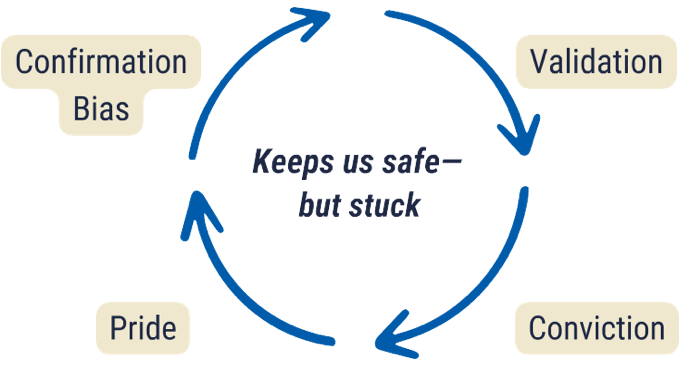
The Comfort Mindset
When we define our value by the knowledge we already have, we develop deep convictions around what we think we “know”, then we filter out data that doesn’t align, and filter in what we already believe so we feel validated in our beliefs.
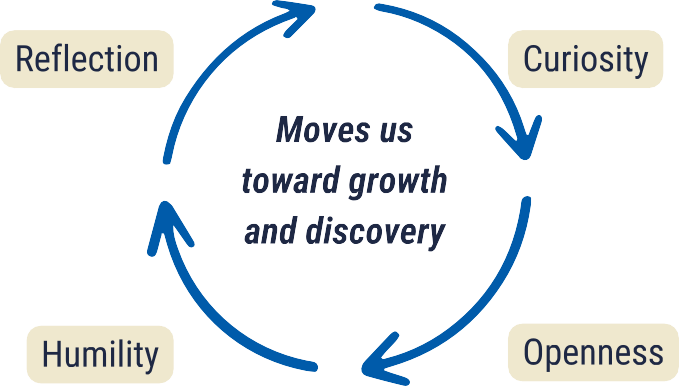
The Learning Mindset
In a rapidly changing world, …we need to spend as much time rethinking as we do thinking. When we move forward with curiosity, it can lead to new discoveries (and growth).
Characteristics of a Great Mentee
The following attributes and characteristics are shared with the students, and they are asked to self-assess to ensure they create strong mentor relationships.
Focus / Intention
Great mentees create a strong framework and focus for their mentor conversations. They define an overall career goal and share these with their mentors. They share reflections and apply insights gained through mentor conversations.
Flexible and Open to Feedback
The best mentees ask for and are open to feedback. They use input from assessments and from mentors and key individuals to enhance their awareness and gain critical insights necessary for career goals.
Diverse Relationships
Great mentees intentionally invest in relationships and build robust networks that help them broaden perspectives. They recognize the importance of a learning / growth mindset and relationship building.
Investment and Accountability
Successful mentees are committed to fully engage in the mentoring process. They ‘own’ their mentoring relationships, and commit the time and energy to development activities.
(Information based on research by Rosina Racioppi, Ed.D. and CEO of WUI: “Women’s Mentoring Wisdom: Understanding the factors mediating the formation of effective mentoring relationships for mid-career women”.)
Characteristics of a Great Mentor
An effective mentor relationship supports a student’s goals as they transition from their academic life to a career.
Focus / Intention
Great mentors create a safe space for students to explore their career options. They create a trusting environment and act as a sounding board for student’s ideas and concerns.
They share reflections and apply insights gained through mentor conversations.
Curious Listeners Who Provide Feedback
The best mentors ask questions that help students gain clarity about their career and next steps. They will hold student accountable for follow through on areas discussed. Great mentors will provide feedback on resumes as well as ideas for consideration.
Diverse Relationships
Great mentors intentionally invest in relationships and build them. Mentors may share their networks with students to help them learn more about potential career focus or opportunities.
Investment and Accountability
Successful mentors are committed to fully engage in the mentoring process. Mentors commit to making the time and space available for mentees to learn and grow.
(Information based on research by Rosina Racioppi, Ed.D. and CEO of WUI: “Women’s Mentoring Wisdom: Understanding the factors mediating the formation of effective mentoring relationships for mid-career women”.)
Creating the Foundation for Your Mentoring Relationships
Your mentee’s career goals determine the foundation of your conversations for the Executive Mentoring Program. Equally important, you also need to determine “how” you want to work with each of your mentees.
Where to Begin: Pro Tips
- Mentees “drive” the relationship. It is their opportunity to step into leadership behaviors as they initiate and schedule meetings, set the meeting agenda, and provide follow up. However, they are students, and you are a seasoned professional. Do not expect that all students will be able to do this at the beginning of the relationship. There are many things that you can do as the mentor to encourage your mentee to take the lead. Be proactive about scheduling and follow up at least until your mentee has developed the confidence and discipline to do so.
- Keep it informal and comfortable. Your mentee needs to view you as a trusted insider rather than another job interviewer. If they trust you, they will expose their weaknesses so that you can better help them address these areas to grow and develop. Have them call you by your first name. When you meet, keep it friendly and casual, and get to know them as a person first. Keep in mind that you might be somewhat intimidating to your mentee at first.
- You signed up for this. Make it clear to your mentee that you are doing this because you want to. Your only incentive is to give back, and all you ask in return is that they someday pay it forward when they become successful in the careers they choose.
- Help your mentee look ahead. After each meeting or conversation with your mentee, make sure that something is scheduled for the next meeting. Don’t end the first meeting without scheduling the next one; make sure there is always something on the horizon.
- Keep goals tangible. You will need to assist your mentee in not only developing goals and objectives, but in finding tangible ways to measure and achieve what they seek to accomplish. Keep in mind that people this age have very little experience translating the conceptual into tangible steps and outcomes. You will need to coach your mentee in how to break down the conceptual goals into actionable steps. This is critical!