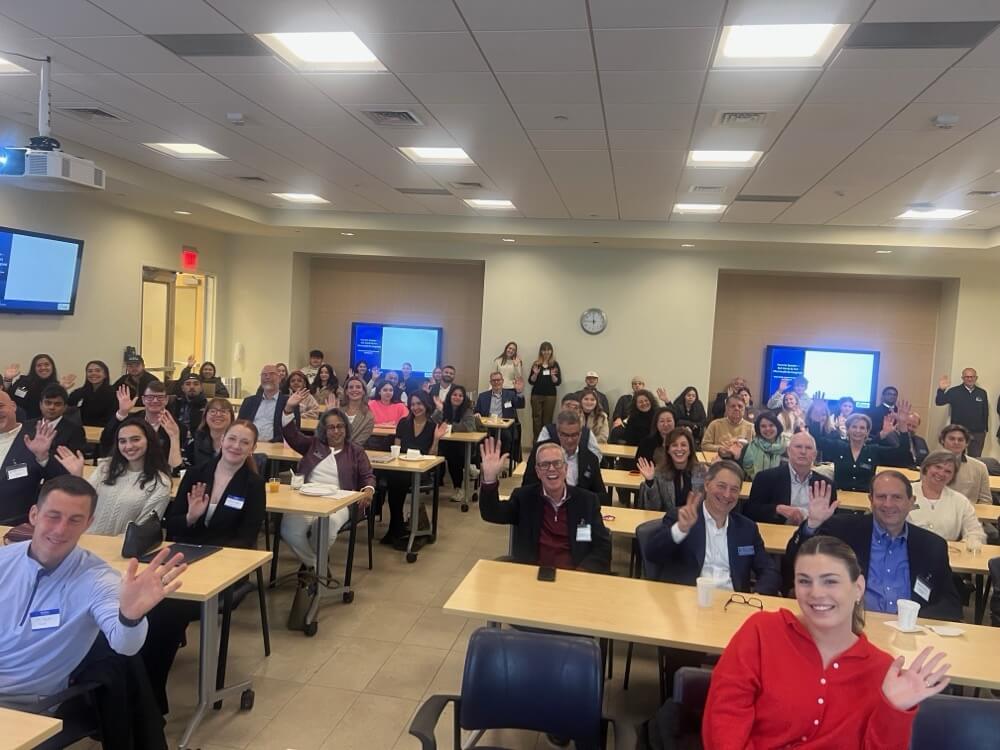
As we kick off a new calendar year and begin the spring semester, I wanted to highlight some of the accomplishments of the first semester and inform you about what we have planned for the remainder of the academic year. In late September we completed the mentor parings for over 25 students participating in the Executive Mentoring Program. We held a breakfast meeting to make the initial introductions and we will be sponsoring another meeting between Business Council Members and the students on Feb 28th during the final home game of the men’s basketball season. Also, since September, we inducted 4 new members to the Business Council bringing our active membership to 43, higher than at any time in recent history. In addition, we made tremendous progress on the Business Academic Societal Impact Collaboration (BASIC) program, completing the pilot of the program with two faculty/student teams delivering project results to their customers. A full report of the pilot results has been delivered to Monmouth University leadership and was well received.
Looking ahead to this semester, we have a packed schedule engaging with both students and faculty. Applications for student awards have been sent, and soon the Student Engagement Committee will begin judging the applicants and making award decisions for presentation in mid-April. In the next few weeks, the application forms for faculty Summer Research Grants will be sent and in April the Faculty Support Committee with spend the morning evaluating and allocating the budgets for faculty research proposals. Also, several members of the Business Council are part of the Dean’s task force to reimagine the graduate business program which held its kickoff meeting in late January. Lastly, we have funded several student club events which are due to occur this semester and we look forward to hearing the details of those endeavors.
Strategic Investment in Research Databases Strengthens LHBS Academic Excellence
The Leon Hess Business School is making a substantial investment in acquiring critical research databases that will transform our educational and research landscape. This strategic initiative represents our commitment to academic excellence and positions us to compete at the highest levels of business education.
Comprehensive Database Portfolio
The investment includes five specialized databases providing unprecedented access to financial and business data.
WRDS serves as a comprehensive web-based platform that organizes databases from multiple data providers, offering integrated access to financial, economic, and business data alongside sophisticated analytical tools.
Compustat provides extensive financial, statistical, and market information for publicly traded companies globally, with U.S. data extending back to 1950.
The CRSP US Stock and US Indexes database delivers historically rigorous daily and monthly market data for U.S. securities, covering major exchanges from 1925 onwards.
LSEG I/B/E/S Estimates aggregates financial analyst forecasts for over 22,000 public companies across more than 90 countries, providing consensus data on earnings, revenue, and investment recommendations dating back to 1976.
Audit Analytics Audit + Compliance tracks audit fees, auditor changes, restatements, and SOX compliance assessments from 2000 onwards.
Advancing Faculty Excellence and Student Experience
These comprehensive databases will serve as powerful tools in our ongoing efforts to attract and retain top-tier faculty members. Leading researchers seek institutions that provide robust research infrastructure, and these resources demonstrate our dedication to supporting scholarly work at the highest level.
The impact extends directly into our classrooms, significantly improving instructional quality. Students will gain hands-on experience with the same professional-grade resources used by industry leaders and top academic institutions worldwide. This exposure to real-world data and analytical tools will better prepare our graduates for success in an increasingly data-driven business environment.
These resources will create new opportunities for meaningful student-faculty research collaborations, providing students with invaluable experience that distinguishes our graduates in the job market.
Strengthening University-Wide Research
This investment will play a crucial role in bolstering Monmouth University’s designation as a research institution. The enhanced research capabilities will enable faculty across the business school to pursue more ambitious research projects and contribute to scholarly publications that elevate the university’s academic reputation.
While sponsored by the Leon Hess Business School, these databases will provide university-wide access for all faculty and students. This inclusive approach reflects our commitment to collaborative scholarship and ensures that the entire Monmouth University community benefits from this significant investment in academic resources. As we look ahead to the spring semester and beyond, these new research capabilities will open doors to exciting opportunities for our faculty, students, and the broader university community. This investment demonstrates our unwavering commitment to providing the resources necessary for success in today’s competitive educational landscape.
The Business Analytics Solutions and Industry Connections (BASIC) initiative pairs business students with real companies facing genuine operational challenges, creating experiential learning opportunities that bridge classroom theory with practical application through live project work with actual data and stakeholder feedback.
The pilot program results have surpassed all projections, with both student teams successfully delivering projects above expectation within allocated time and budget parameters. According to program leadership, the five participating students performed at the level expected from first or second-year analysts at major consulting firms, demonstrating that rigorous classroom preparation translates effectively into commercially authentic environments.
Client testimonials consistently highlight the exceptional quality of deliverables, validating the program’s core premise that properly supported students can contribute meaningful value to real business challenges. This performance level confirms that academic foundations create genuine readiness for professional-grade analytical work.
The pilot’s success demonstrates the feasibility of achieving all benefits originally outlined in the March 2025 program proposal.
Student Experiential Learning & Actual Experience: Students gained substantial experiential learning through actual project work, creating differentiated resume content that will distinguish them in competitive job markets.
Student Income: Each participant earned $20 per hour for their analytical contributions while gaining invaluable commercial experience working alongside Business Council members and collaborating directly with clients in authentic business environments.
Faculty Exposure to the Commercial Sector: Faculty members benefited from direct exposure to commercial sector challenges, fostering valued collaboration between academic and business communities.
Opportunity for Publication & Additional Research: This engagement expanded faculty understanding of current industry practices while providing companies access to academic research capabilities and fresh analytical perspectives.
Funding for Business Council Charitable Budget: The initiative generated approximately $1,500 in net proceeds for the Business Council’s charitable budget, supporting summer research grants, student awards, and other educational initiatives. This funding demonstrates the program’s potential for sustainable self-support while contributing to broader institutional goals.
University Impact: Most significantly, the pilot positions Monmouth University as an innovative leader in experiential business education. The program creates differentiated opportunities that enhance recruitment and marketing efforts while establishing the university’s reputation for commercially relevant, forward-thinking educational approaches.
Beyond immediate project outcomes, the pilot established crucial infrastructure for program expansion. Key components now in place include legal document templates, financial account setups, HR and employee onboarding processes, and invoicing systems. The team also developed foundational project methodology templates for managing future engagements, creating scalable frameworks for continued growth.
The overwhelming success validates the BASIC model’s potential for expansion and long-term impact. By proving that students can perform at professional consulting standards when given appropriate support and authentic challenges, the program demonstrates that experiential learning initiatives can simultaneously serve educational goals, industry needs, and institutional advancement while creating sustainable operational frameworks for continued success.
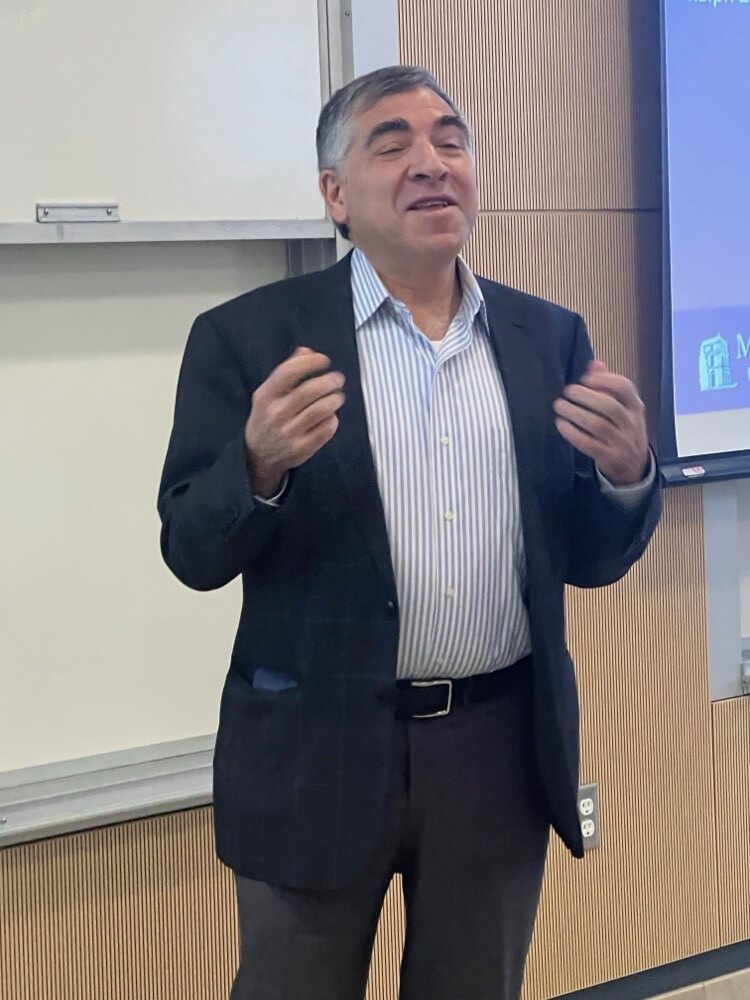
When Ralph Zucker acquired the former AT&T Bell Labs property in Holmdel, he wasn’t just buying real estate—he was investing in a vision that would challenge conventional thinking about work and community spaces. Speaking to students at the Leon Hess Business School, Zucker emphasized how effective communication became the cornerstone of transforming his ambitious concept into the thriving Bell Works campus we know today.
Zucker’s journey began with a moment of uncertainty just days before closing on the iconic property. Seeking inspiration during a site visit, he encountered a police officer and spontaneously began sharing his vision of creating a “metropolis in the suburbs”—a revolutionary mixed-use environment that would blend work, dining, retail, and community spaces. The officer’s positive reaction that “this is something the town needs” provided crucial validation, but more importantly, it highlighted the power of articulating a clear vision to others.
Understanding that successful real estate development requires community buy-in, Zucker made listening a priority when engaging with the local town council. He recognized that his communication strategy needed to be precise and responsive to community concerns, demonstrating that effective leadership involves not just speaking but truly hearing what stakeholders value.
The naming of Bell Works itself illustrates the importance of thoughtful branding and messaging. Originally planned as “Bell Place,” a last-minute pivot by the marketing team introduced “Bell Works”—a name that cleverly referenced the original Bell Labs “workspaces” while evoking the idea of getting “the works,” or everything you need in one place. This linguistic connection helped communicate the comprehensive nature of the development’s offerings.
Zucker addressed the evolving workplace landscape, noting how companies increasingly seek interactive, mixed-use environments that support both productivity and work-life balance. He found particular irony in the fact that the dystopian workplace series “Severance” was filmed at Bell Works, given that his development represents the complete opposite philosophy—creating spaces where work and life can coexist harmoniously rather than being artificially separated.
Perhaps most importantly for the aspiring business leaders in attendance, Zucker offered this practical wisdom: “People are going to tell you that you’re crazy, that it’s never going to work, and it may not—but if you don’t try, you’ll never know. Don’t let the naysayers make your decisions.”
Zucker’s experience demonstrates that transformative projects require more than financial resources and market analysis—they demand the ability to communicate a compelling vision that resonates with diverse audiences, from skeptical police officers to cautious town councils to potential tenants seeking something different from traditional office space.
Business Council Awards Recognize Student Excellence with $1,000 Scholarships
The Leon Hess Business School is pleased to announce that applications are now open for the prestigious Business Council Awards, offering four $1,000 scholarships to recognize outstanding student achievement across diverse categories. All applications are due by March 13, 2026. Faculty are encouraged to share this information with their students to take advantage of these opportunities.
Four Award Categories Celebrate Different Forms of Excellence
The Business Council has established four distinct awards that honor various aspects of student success and character development throughout their academic journey.
The Business Council Award for “Resilience & Resourcefulness” recognizes students who have demonstrated exceptional perseverance through challenging circumstances. This award celebrates those who have shown remarkable strength of character while maintaining their academic commitment, acknowledging that true success often requires overcoming significant obstacles both in school and in life.
The Business Council Award for “Innovation & Entrepreneurship” honors students who have exhibited outstanding interest and accomplishments in innovation and entrepreneurial activities during their time at Monmouth University. Whether through business plan competitions, startup ventures, creative class projects, or innovative thinking, this award recognizes entrepreneurial spirit and forward-thinking approaches to business challenges.
The Business Council Award for “Student Leadership” acknowledges students who exemplify excellence through their commitment to leadership both on campus and in the broader community. Recipients demonstrate their role as positive forces within student organizations, campus initiatives, and community programs, leaving lasting impressions as dedicated leaders who serve the greater good.
The Business Council Award for “The Karl Gordinier Community Impact” celebrates students who have made meaningful contributions through service and nonprofit work. This award recognizes those who demonstrate commitment to creating positive societal change while pursuing their academic and professional goals.
Inclusive Application Process
Students in good academic standing at any grade level are eligible to apply for these awards. The selection process centers on completed applications and written narratives that allow candidates to showcase their qualifications and achievements in their chosen category. The Business Council Student Engagement Committee will review all submissions and select recipients based on the strength of their applications and narratives.
Recognition Beyond Financial Support
While each award provides $1,000 in financial assistance, these scholarships offer value that extends far beyond monetary support. Recipients gain validation of their hard work, character, and potential, along with prestigious recognition that enhances their professional portfolios as they prepare for post-graduation careers.
Encouraging Strong Applications
The diversity of award categories ensures that students with different strengths, experiences, and contributions can find recognition for their unique achievements. From those who have overcome personal challenges to student entrepreneurs, campus leaders, and community service champions, the Business Council Awards celebrate the full spectrum of excellence within the Leon Hess Business School community.
Students interested in applying should prepare thoughtful written narratives that effectively communicate their achievements and demonstrate how they embody the values represented by their chosen award category. With the March 13 deadline approaching, eligible students are encouraged to begin their applications soon to ensure adequate time for reflection and preparation.
These awards represent the Business Council’s ongoing commitment to supporting Leon Hess Business School students and recognizing the exceptional individuals who contribute to the vibrancy of the academic community.
Sheldon Horowitz and Tom Cardinale Share Their Council Journeys
In this special edition of our member spotlight, we celebrate two exceptional leaders who recently received the prestigious Gloria Nilson Mark of Distinction Award. Sheldon Horowitz and Tom Cardinale’s stories exemplify the diverse paths to engagement and the meaningful connections that define the Leon Hess Business Council experience.
Two Paths, One Shared Commitment
Sheldon Horowitz: A Parent’s Journey to Leadership
What began as a parent’s desire to stay connected to his son’s university experience has evolved into over a decade of dedicated service. “My eldest son started at MU and I wanted to become more engaged,” Sheldon shares, reflecting on his initial motivation to join the council back in 2012.
This personal connection has since blossomed into meaningful leadership roles across multiple committees, including membership, steering, and curriculum committees. Most notably, Sheldon assisted in last year’s crucial recertification visit and has served as an Executive in Residence—a role he’s particularly passionate about.
Tom Cardinale: An Alumnus Returns Home
Tom’s path to the council began through professional mentorship. “I was introduced to the LHBC by Wayne Tessler, my former boss and partner-in-charge of EisnerAmper’s Wall branch. Wayne also admirably served as Treasurer of the Council for 20+ years,” Tom explains. As a 1997 MU graduate, “this was a perfect opportunity to get connected again with my roots and to give back to the school that helped put me on my prosperous and rewarding career path.”
Tom has been a proud council member for nearly 15 years and stepped into Wayne’s shoes as Council Treasurer from 2016-2023, stewarding the organization’s finances through the challenging pandemic years.
The Power of Learning and Growth
Sheldon’s perspective on council involvement reveals the community’s greatest strength: “This is all personal growth. My interaction with our members makes me a better person, since each member has so much to share. It’s a way for me to raise my own personal ‘bar/level’ since I view our members’ ‘bar/level’ as something I aspire to.”
An Honor Beyond Words
Both recipients express profound gratitude for receiving the Gloria Nilson Mark of Distinction Award, each bringing their unique perspective to the honor.
Sheldon reflects: “Gloria is a special, incredible person. Anything attached to her name is an honor in itself. Now add the past recipients who are beyond next level. To be in that club leaves me speechless.”
Tom shares: “Receiving this award was a tremendous honor, especially to have Gloria Nilson’s name on it – one who has contributed so much to MU over the years that are simply beyond words. I feel my recognition was also a powerful testament on the Council’s special family feeling that no one gets forgotten, including the member crunching numbers behind the curtains to keep the finances in good standing.”
Tom’s surprise at receiving the award makes it even more meaningful: “From that perspective, I was not expecting to be named as a recipient of this award, and so it made me feel that much more special.”
The Importance of Mentorship
Both award recipients acknowledge the crucial role mentorship has played in their success. Sheldon credits Richard Riccardi: “A large part of what I do I am most grateful to Richard Riccardi. He has always mentored me and engaged me at the BC. I owe my success (and I am sure other members feel the same) to him.”
Tom’s journey was shaped by Wayne Tessler’s guidance, demonstrating how council leadership transitions create lasting legacies through mentorship.
Looking Ahead: Wisdom for Future Members
Sheldon’s advice: “Engage at the BC. Find mentors and join sub committees. Don’t wait to be asked!” He emphasizes the importance of supporting Monmouth University’s mission and serving as ambassadors for the institution.
Tom offers forward-thinking guidance: “Always stay out of a comfort zone with your current skillsets and be proactive to learn new areas that companies are adopting at a rapid pace. Like it or not, the business world is going through a generational transformation to where AI and automation will be the future in nearly all professional service industries. It would be prudent to invest in yourself and expand your knowledge in these new areas.”
Commitment to Continuous Growth
Despite achieving recognition for exceptional service, both leaders remain focused on doing more. Sheldon continues striving to “raise my own bar,” while Tom’s experience navigating the council through unprecedented challenges demonstrates his dedication to organizational stability and growth.
Their recommendation to “always spotlight new members” reflects their shared commitment to fostering an inclusive, welcoming community that celebrates contributions at all levels.
The Leon Hess Business Council continues to thrive because of members like Sheldon Horowitz and Tom Cardinale—individuals who bring passion, humility, and a commitment to personal growth that elevates our entire community. Their journeys—from concerned parent to engaged leader, and from grateful alumnus to dedicated steward—exemplify the transformative power of engagement and mentorship that defines our council.
Interested in learning more about council involvement or nominating a fellow member for recognition? Contact us at emoran@monmouth.edu.
As we settle into the crisp embrace of Fall semester, there’s no better time to reflect on the transformative power of the SEEMA Executive Mentoring Program and the remarkable achievements of our Leon Hess Business School community. This season of change brings with it inspiring stories of growth, connection, and professional triumph that exemplify the very best of what our Business Council partnerships can accomplish.
In this edition, we’re proud to spotlight a shining example of how strategic mentorship, academic excellence, and proactive career development converge to create extraordinary outcomes.
Kyle Bleweis (LHBS, 2025): A Business Council Point of Pride and SEEMA Program Success
By Jonathan Leifer, Chair, Faculty Grant Committee
The SEEMA Executive Mentoring Program is a cornerstone of our LHBS efforts to provide an exceptional academic and career preparatory experience for Business School students. Through this initiative, students are paired with Business Council Members employed in their chosen fields of interest, offering them invaluable, real-world career insights that reach far beyond classroom learnings. Recently, Kyle Bleweis, a longstanding Council student liaison, graduated from LHBS with honors and the distinction of being a model for what SEEMA seeks to facilitate for our next generation of business leaders.
Kyle was a dual Finance and Real Estate Major, and his mentorship with Mr. Jonathan Leifer provided a deep dive into the world of real estate investment and development. As a mentee, Kyle sought to bridge the gap between classroom learnings from the Kislak Real Estate Program and practical application, gaining firsthand exposure to the complexity of deal capitalization for large, multi-year projects and digging deeper to understand the analysis of financial risks and returns in property investments. But his mentorship wasn’t just about numbers; it also involved discussions on design trends, visits to real properties that illustrated why investors carefully plan and position real estate projects for before ever breaking ground,and the importance of creating sustainable and functional spaces for host communities. This exchange of ideas highlighted how every curated detail — from aesthetics, to floor plans and amenities, to energy footprint — helps to realize long-term value and market-fit when community building.
Ever career-minded, Kyle also gained insight into real estate’s employer ecosystem. He learned the roles played by various stakeholders, from architects to lenders, attorneys, brokers, contractors, and investment managers. This holistic perspective made him conversant on career paths as a rising professional. He also proactively sought employer referrals from his Mentor and other Council members to empower his job search. This professional orientation, as well as Kyle’s diligence in his studies and prior internships, opened up several job opportunities for him upon graduation, even in a crowded job applicant market. Ultimately, Kyle chose to work for Kennedy Lewis where he is a Financial Analyst focused on financing Homebuilder’s Land Lot Inventory nationwide.
Kyle represents a true paradigm of success for LHBS students navigating the college-to-workforce transition. For those seeking to follow in Kyle’s footsteps and leverage the power of SEEMA to widen their career prospects, the key is to demonstrate proactivity as Kyle so strongly did. This means actively seeking internships, building a strong network through SEEMA participation, and empowering a full transition from academia to a thriving career.
A groundbreaking collaboration that transforms classroom theory into real-world impact
Innovation thrives at the intersection of academic excellence and business acumen—and the Leon Hess Business School is proud to pioneer exactly that convergence with the launch of BASIC (Building collaborative teams consisting of Faculty, Students, and Business Council Members). This fall, we’re embarking on an ambitious new venture that promises to redefine experiential learning while delivering tangible value to the business community.
Imagine student teams tackling real commercial challenges under faculty guidance, with Business Council members serving as mentors and project sponsors. Picture our brightest minds conducting market research, streamlining processes, and solving strategic puzzles—all while earning compensation and building professional portfolios that set them apart in today’s competitive landscape.
What is BASIC?
Building collaborative teams consisting of Faculty, Students, and Business Council Members to perform small projects for hire in a live commercial setting. Typical projects would be short in duration (8 – 12 weeks), non-mission critical (yet important), and appropriate for student/faculty teams to successfully perform to add high value. Every company has dozens of these projects such as: Research & rationalization/summarization of key strategy questions; Survey of customer preferences, product satisfaction; Desktop automation of manual process; to name a few.
We would typically charge $5k – $10k depending on the size and scope and projects would pay out 70% – 80% of fees to students and faculty in compensation leaving 20% – 30% of fees would be retained in Business Council budget to be allocated by the steering committee as charitable contribution.
Benefit to Monmouth University:
Experiential Learning & Actual Experience:
Students will participate on actual projects and deal with actual deliverables. They will be involved in the inception of the project, the breaking down of the work and the delivery of a tangible work product. Few students have the opportunity to work on the full life cycle of this type of project. The result will be a solid, differentiated work experience on the student’s resume.
Faculty Exposure to the Commercial Sector:
Faculty members will have opportunities to engage directly with professionals in the commercial sector; both the Business Council sponsor and the end customer. This represents an excellent means of collaboration between the commercial and academic communities and a networking opportunity for faculty who have limited exposure to the professional private sector.
Creation of Economic Value:
Students and Faculty will be paid to do work. In addition, net proceeds will go directly to funding Business Council Charitable activities such as student scholarships and awards and faculty research grants. The amount of funding would be limited only by the scale of participation in the program and the capacity to do more projects.
University Impact:
Monmouth University will be recognized for this forward-thinking, commercial-minded program. It will serve as the cornerstone of experiential learning and create a differentiated opportunity for students which can be promoted in marketing materials and presentations.
A Pilot was Proposed in Early March with These Objectives:
Achieve preliminary buy-in on the pilot and identify inter-university approvals required to proceed – Approved by Richard Veit & Enthusiastically Supported by Patrick Leahy
Determine flow of financials to support the pilot – Basic money flows have been determined and in process of setting up additional account in Business Council structure
Achieve buy-in from business council and faculty members to participate – 2 Faculty Members on board with pilot participation, many other faculty members have express support/interest
Secure commitment from pilot customers and set out detailed timelines to begin – First pilot customer is ready and second is pending internal signoff
We Need YOUR Help!
The Business Council members are critical to SCALE this program. Once we prove the concept this fall semester, there will be a great need for Business Council Member participation. Near the end of this semester, we will distribute more materials describing the program, how it works, and how companies can engage a BASIC Team – be the ambassadors and get the word out. We will be looking for additional opportunity, next semester and we need YOU to be on the lookout for appropriate projects to refer to the BASIC Team. As we scale, we will need more participation from the Business Council Members to support the faculty/student project teams. This is an ambitious undertaking that is truly differentiated. Business Council and Faculty support are critical to the success of this program.
The Leon Hess Business School continues to advance our mission of academic excellence and student success while navigating a period of leadership transition. I am pleased to share that we received official confirmation of continued AACSB accreditation for both our BSBA and MBA programs, extending through 2030. This recognition reflects the dedication of our faculty, the talent of our students, and the ongoing support of our community.
Our faculty distinguished themselves through publications and presentations at national and international conferences, while our students excelled through initiatives such as Hawk Capital, which again outperformed the S&P 500, as well as entrepreneurial activities that highlight their creativity and determination.
The Center for Entrepreneurship and the Kislak Real Estate Institute delivered impactful programming and expanded community partnerships. Our Summer High School Entrepreneurship Program also experienced significant growth.
As we celebrate these milestones, I want to extend my appreciation to the Business Council and our many partners who contribute to the strength of the Leon Hess Business School. Your continued guidance and engagement are vital as we prepare our students to lead with purpose in an evolving business landscape.
At the September 12th Leon Hess Business Council meeting, Monmouth University President Patrick Leahy expressed deep appreciation for the longstanding partnership with the Council and the invaluable student engagement opportunities it provides. Entering his 14th year with renewed energy, President Leahy painted a picture of a university reaching unprecedented levels of achievement and recognition.
Leahy pointed out that Monmouth has earned the prestigious Carnegie Research classification, joining an elite group of only 500 universities nationwide. This recognition coincides with a clean review from the Middle States Commission, which awarded the University 12 commendations across academic, financial, and co-curricular areas. The University’s exceptional financial health is reflected in its 6.8 Independent Colleges Financial Index score—well above the 3.0 baseline—and zero debt position.
President Leahy also looks forward to a spotlight on the University to help build its brand and attract top students and faculty. The ambitious $175 million “Excellence, Access, Ambition” campaign continues to build momentum since launching in December and is focused on accessibility initiatives and other strategic investments to enrich the University’s learning environment. Major investments are transforming the campus landscape, highlighted by the $50 million Bruce Springsteen Archives and Center for American Music, opening spring 2026 and fully grant-funded. Leahy also pointed to the University’s membership in the Coastal Athletic Association for the past 2 years, which has enhanced both competitive opportunities and recruiting capabilities up and down the east coast.
Record enrollment figures underscore Monmouth’s growing appeal, with 888 first-year students maintaining the highest-ever 3.67 average GPA, and 56% representing first-generation or low-income backgrounds. President Leahy emphasized how this commitment to accessibility aligns with the University’s mission while maintaining academic excellence.
Leahy admitted he is the envy of his peers as the President of Monmouth University – a growing and thriving center for higher-education that offers unprecedented value for its students.