
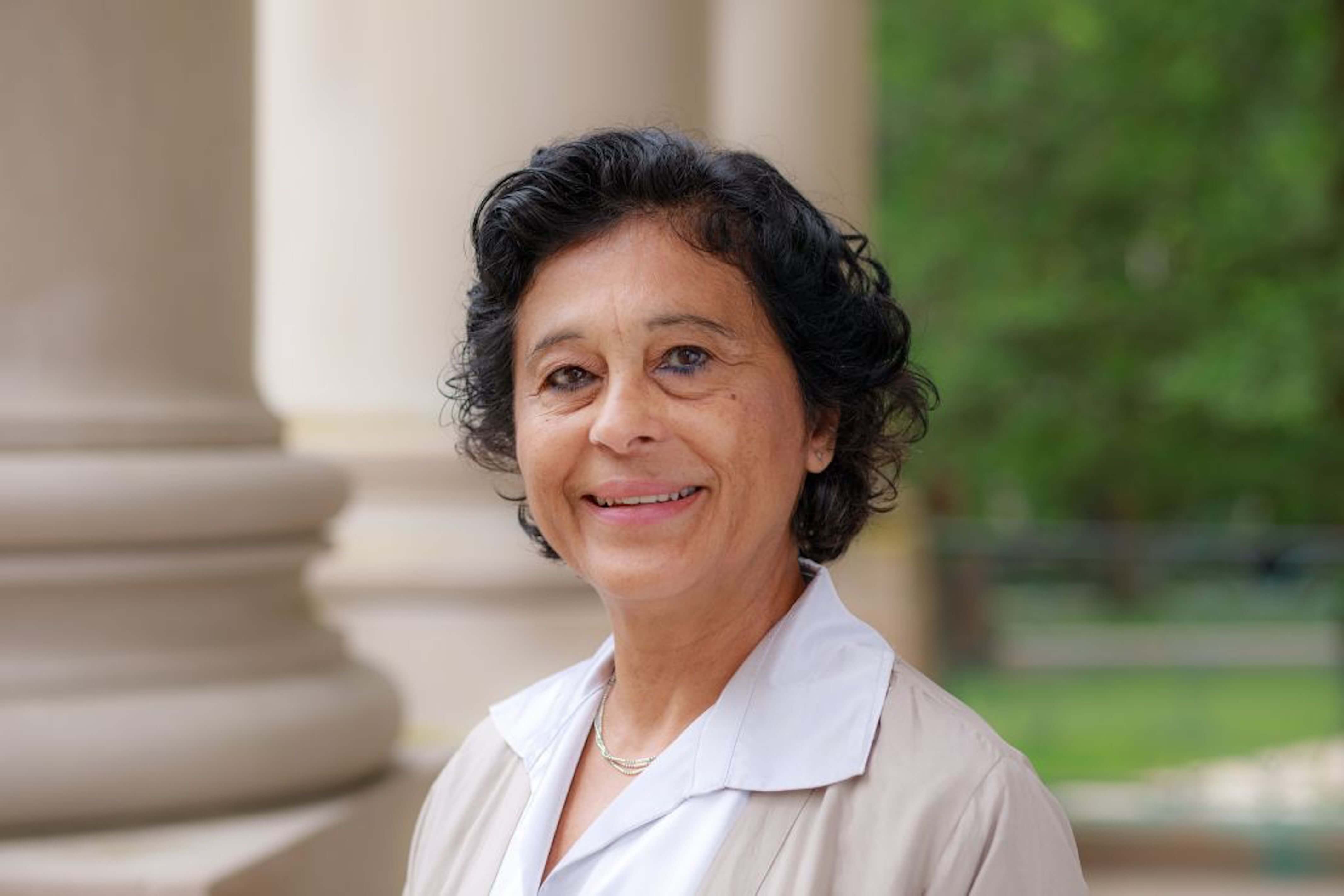
Priscilla Gac-Artigas, Ph.D., professor emerita in the Department of World Languages and Cultures, recently published an essay, “‘Putinoika’ de Giannina Braschi: colectficción y poética de la descomposición” (“‘Putinoika’ by Giannina Braschi: Collectfiction and the Poetics of Decomposition”) in the literary magazine “Carátula,” no 127, August 2025.
In this critical essay, Gac-Artigas examines “Putinoika” (2024), the latest and most daring work by Puerto Rican writer Giannina Braschi, through the lens of collectfiction—a literary concept Gac-Artigas herself coined to describe texts that transcend personal testimony to embody a collective voice. In “Putinoika,” the author contends, Braschi shifts from an individual “I” to a plural “we,” constructing a poetics of resistance in which the reader is no longer a passive observer but an active participant in the reimagining of history, memory, and political agency.
Gac-Artigas highlights how “Putinoika” disintegrates the boundaries of identity and genre: the poetic voice in the book morphs fluidly into dictators, victims, gods, beasts, and madmen, reflecting the chaos of contemporary global politics. Gac-Artigas argues that central figures like Vladimir Putin and Donald Trump are not simply caricatured but exposed as grotesque performances of authoritarianism and populism. Through irony, satire, and poetic excess, Braschi denounces the erosion of language and truth in an age of spectacle, disinformation, and militarized power.
The essay emphasizes performative language, fragmented structure, and polyphonic narrative of “Putinoika”as key elements of collectfiction. Braschi invites the reader into an unsettling, immersive experience—one that rejects neutrality and demands ethical engagement. Her writing, Gac-Artigas argues, is a kind of “theater of decomposition” in which language, bodies, and ideologies collapse onstage, forcing the reader to confront the violence of the world not as an onlooker, but as a witness and co-creator.
Finally, the article positions “Putinoika” as a paradigmatic example of poetic collectfiction, comparable in scope and ambition to “Y todos éramos actores, un siglo de luz y sombra” [“And All of Us Were Actors, A Century of Light and Shadow”] (2016) by Chilean author Gustavo Gac-Artigas. Like that earlier work, “Putinoika” breaks with traditional narrative and testimony, creating a collective voice from fragments, contradictions, and ruptures. In doing so, Braschi offers not a solution, but a radical invitation: to inhabit the void, to engage imagination where meaning collapses, and to reclaim the power to rewrite the outcomes of history.