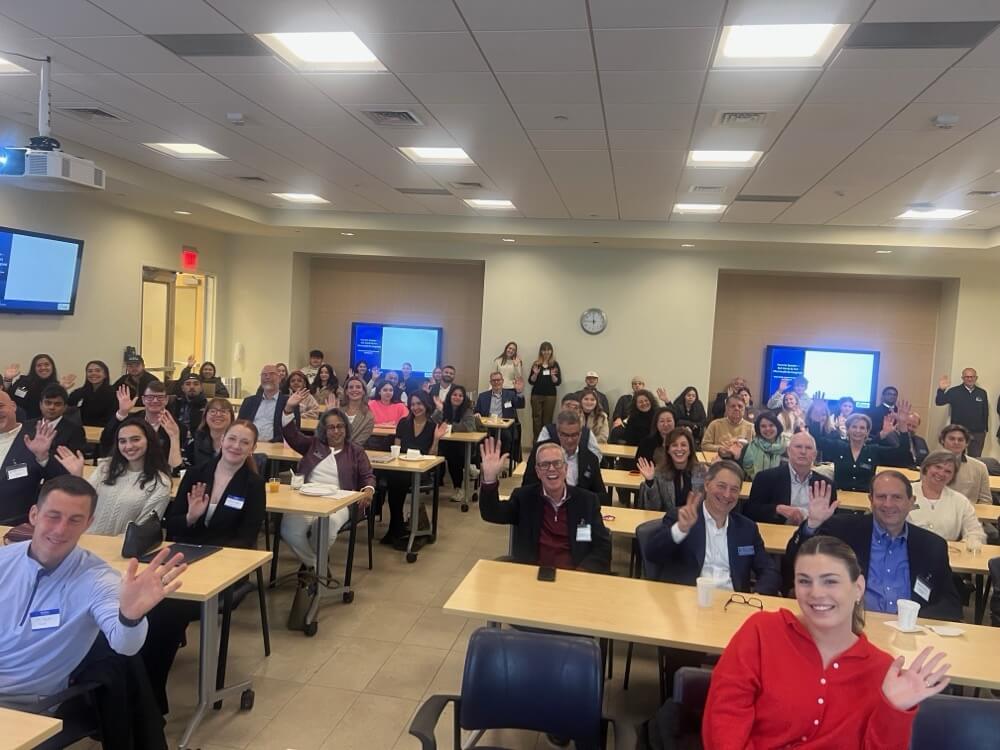
When Ralph Zucker acquired the former AT&T Bell Labs property in Holmdel, he wasn’t just buying real estate—he was investing in a vision that would challenge conventional thinking about work and community spaces. Speaking to students at the Leon Hess Business School, Zucker emphasized how effective communication became the cornerstone of transforming his ambitious concept into the thriving Bell Works campus we know today.
Zucker’s journey began with a moment of uncertainty just days before closing on the iconic property. Seeking inspiration during a site visit, he encountered a police officer and spontaneously began sharing his vision of creating a “metropolis in the suburbs”—a revolutionary mixed-use environment that would blend work, dining, retail, and community spaces. The officer’s positive reaction that “this is something the town needs” provided crucial validation, but more importantly, it highlighted the power of articulating a clear vision to others.
Understanding that successful real estate development requires community buy-in, Zucker made listening a priority when engaging with the local town council. He recognized that his communication strategy needed to be precise and responsive to community concerns, demonstrating that effective leadership involves not just speaking but truly hearing what stakeholders value.
The naming of Bell Works itself illustrates the importance of thoughtful branding and messaging. Originally planned as “Bell Place,” a last-minute pivot by the marketing team introduced “Bell Works”—a name that cleverly referenced the original Bell Labs “workspaces” while evoking the idea of getting “the works,” or everything you need in one place. This linguistic connection helped communicate the comprehensive nature of the development’s offerings.
Zucker addressed the evolving workplace landscape, noting how companies increasingly seek interactive, mixed-use environments that support both productivity and work-life balance. He found particular irony in the fact that the dystopian workplace series “Severance” was filmed at Bell Works, given that his development represents the complete opposite philosophy—creating spaces where work and life can coexist harmoniously rather than being artificially separated.
Perhaps most importantly for the aspiring business leaders in attendance, Zucker offered this practical wisdom: “People are going to tell you that you’re crazy, that it’s never going to work, and it may not—but if you don’t try, you’ll never know. Don’t let the naysayers make your decisions.”
Zucker’s experience demonstrates that transformative projects require more than financial resources and market analysis—they demand the ability to communicate a compelling vision that resonates with diverse audiences, from skeptical police officers to cautious town councils to potential tenants seeking something different from traditional office space.