Engineered for Endurance
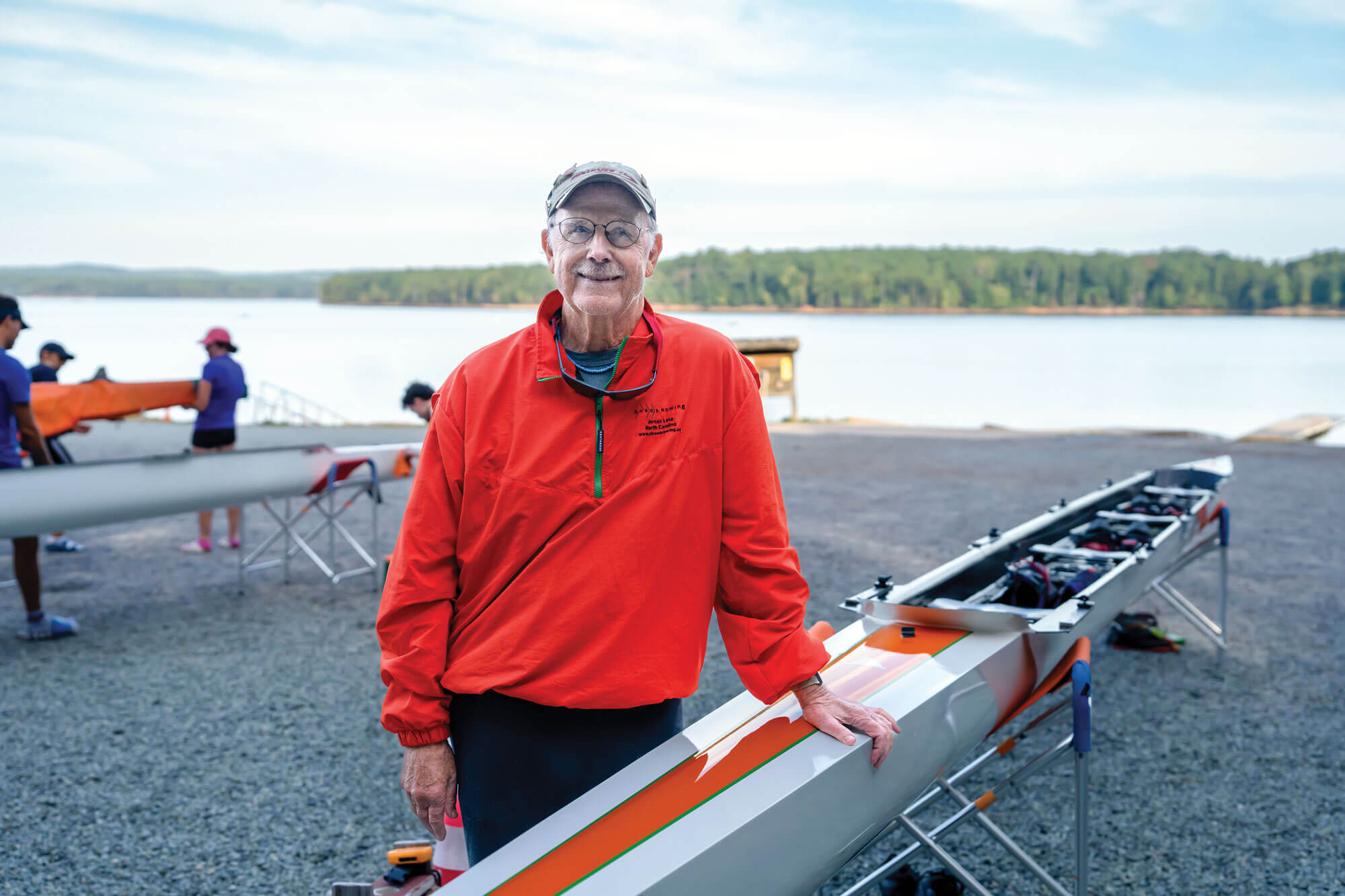
At 84, Ken Boyle still rows alongside teammates decades younger than he is. A longtime member of a masters rowing club in North Carolina, he’s logged more than 25 million meters on the ergometer and raced in regattas around the world. He’s medaled at indoor and outdoor events, including the British Indoor Rowing Championship, the U.S. Rowing Masters Nationals, and the Head of the Charles. “They like old people who can still row,” he jokes. “It raises the average age.”
Motion has been a constant in Boyle’s life. Before Monmouth, he served in the Navy flying Cold War reconnaissance missions as part of a combat air crew, at one point tracking Russian submarines and cargo ships during the Cuban Missile Crisis. After his discharge, he hoped to build on his electronics training and design the systems he’d once operated. By then married with three young children, he realized that wouldn’t be possible in North Carolina. His mother invited the family to live with her in New Jersey so Boyle could study electrical engineering at Monmouth.
The arrangement didn’t last, and when his marriage ended, Boyle received custody of his two youngest children. Now a single father, he continued taking a full course load by day and working nights to support his family. When money ran out, one of his professors—Derek Barnes, Ph.D., then head of the physics department—secured him a scholarship and a campus job grading physics assignments so he could continue his studies.
After graduating, Boyle took an engineering job at Raytheon. (“They hired me for $855 a month—more money than I had ever seen in my life!”) It was the start of a 35-year career with the firm, during which he worked on radar and detection systems from the Kwajalein Atoll to London. Along the way, he earned a master’s in electrical engineering from Northeastern University and rose to the role of principal engineer and deputy program manager.
One project he’s particularly proud of is the Terminal Doppler Weather Radar, designed to detect dangerous microbursts near airports. Developed in response to a fatal crash in Texas, the system has since been deployed across the U.S. and, Boyle notes, has helped prevent similar tragedies.
Still, he remembers feeling some imposter syndrome early on. “The engineering world is full of MIT, Caltech, Carnegie Mellon graduates,” he says. “And I’m thinking, ‘Here I am from lowly old Monmouth.’ But I realized quickly I was well prepared. I owe it all to that degree and my professors.”
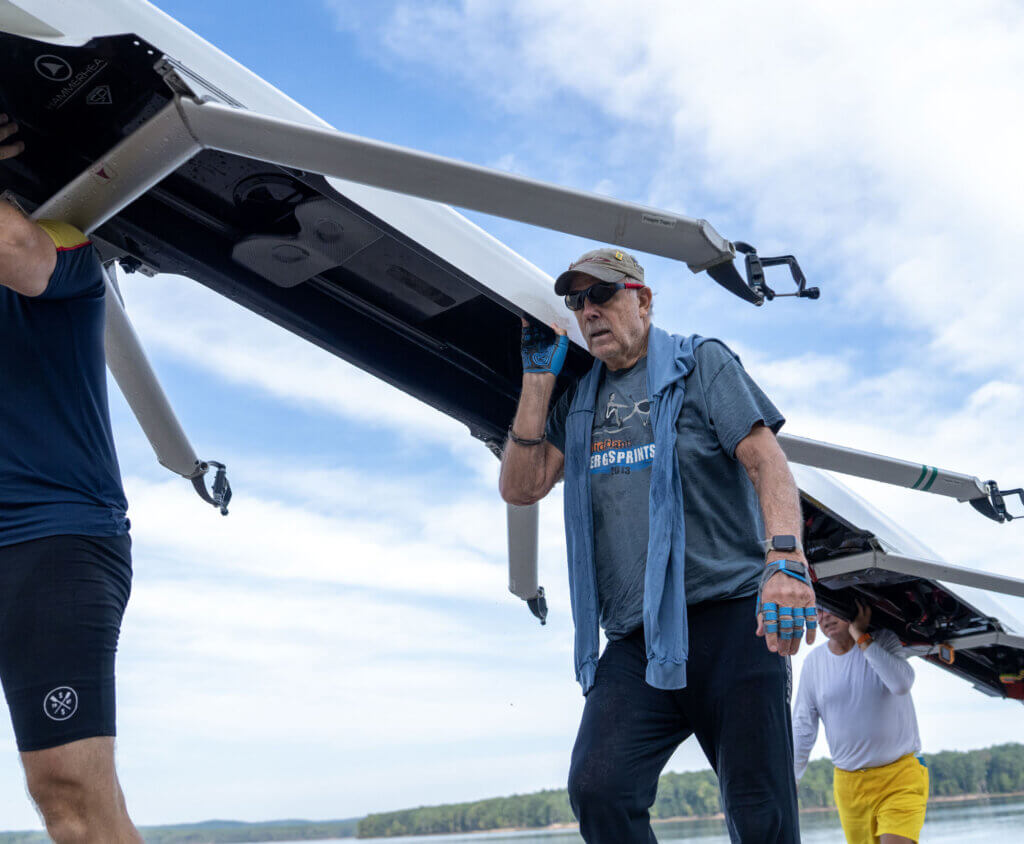
Retirement at age 60 didn’t slow him down. A former distance runner (he’s completed five Boston Marathons) Boyle took up rowing in his 50s after a foot injury sidelined his running. What began as a recreational pursuit has become a full-time passion, and he’s competed in events across the U.S. as well as in Switzerland, London, and Canada.
Rowing also keeps him connected to Monmouth. Boyle supports the women’s crew program and is a member of the University’s Legacy Society, which honors those who support Monmouth through their estate plans. “Whatever I’ve achieved,” he says, “it all started with the degree I received from Monmouth in 1968. It provided me with the basis to proceed and succeed.”
Asked what keeps him going, Boyle doesn’t miss a beat: “To live as long as possible. My children, who are in their 60s now. Health, pride, friendships. To keep my brain active.” He’s witnessed more than a half-century of change—wars, upheaval, innovation, reinvention—and says he has no plans to stop anytime soon.