Decoding Aggression—One Fly Fight at a Time
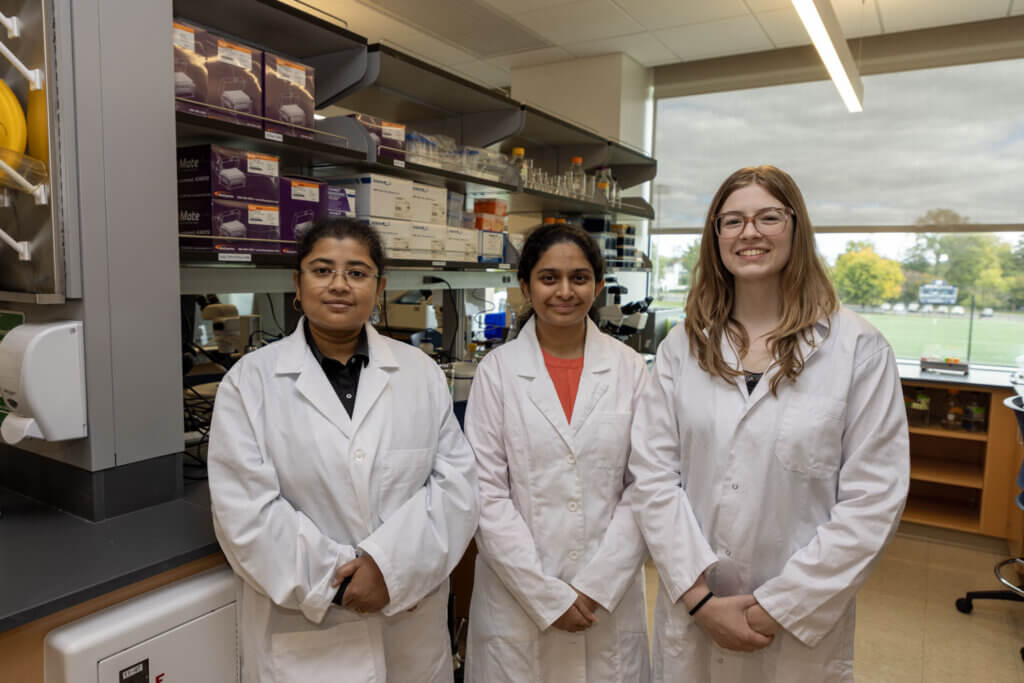
Student Researchers: Sarah Henry and Aiswarya Raghavaraju
Faculty Mentor: Saheli Sengupta, Ph.D., Assistant Professor of Biology
Aggression is a fundamental behavior, as universal as sleeping, movement, and eating. Yet scientists still don’t fully understand how it takes shape in the brain. That’s a problem, since abnormal aggression plays a role in many neurological and psychiatric disorders for which there are no targeted treatments.
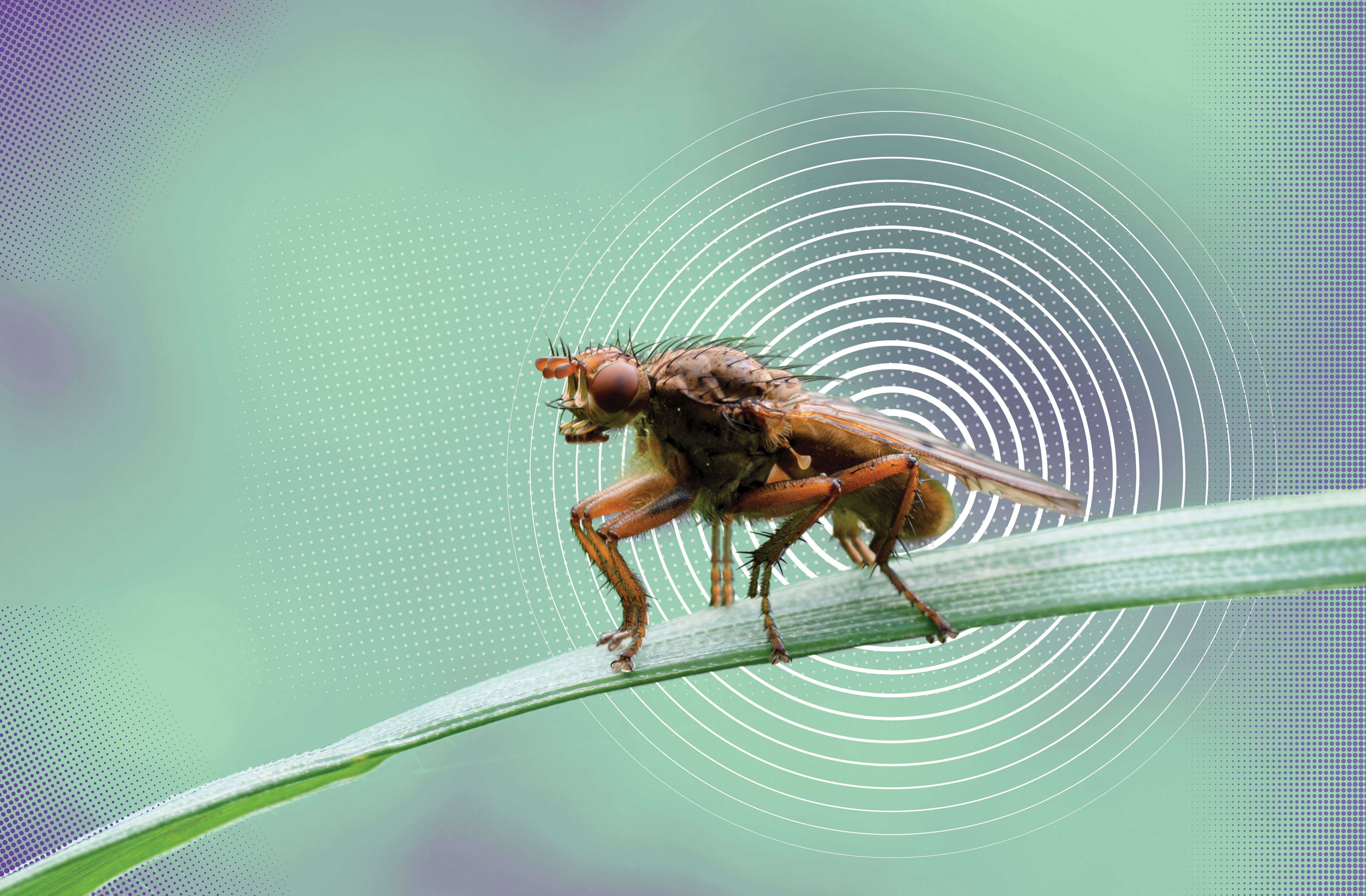
Because researchers can’t probe human neurons directly, they use models. One of the most useful is the fruit fly, which shares many genetic and neural similarities with humans. Fruit flies also fight, and males do so in predictable ways, the most predominant being lunging—when one rears up and strikes at another with its forelegs. In turn, those hardwired behaviors make it possible for researchers to measure and study aggression.
Tracing Dopamine’s Role
As a postdoctoral researcher at Harvard Medical School, Sengupta began studying how dopamine, a brain chemical tied to movement, motivation, and mood, affects aggression. She has continued that work since joining Monmouth’s faculty last spring. This summer, her team analyzed recordings of fly fights and found a clear spike in lunging when dopamine-sensitive neurons were switched on, pointing to those neurons as key drivers of aggression.
Coding the Clashes
To do their analysis, Sengupta’s students first learned to recognize and score distinct aggression patterns, discerning subtle moves so they could label them consistently. They then used R, a programming language for data analysis, to organize results, run statistics, and generate graphs. They also worked with Fiji, an imaging software, to process microscope images.
What’s Next
Sengupta and her team also mapped where these dopamine-sensitive neurons appear in the fly brain, finding clusters in several regions, including one called the fan-shaped body. This hub for motor control, sleep, and sensory processing hasn’t been tied to aggression before, making it a prime target for further study.The team used a brain map to chart possible connections among these neurons. The plan now is to further test those connections in the lab. The hope is that eventually, insights from these fruit fly fights could point to human genes worth exploring as therapeutic targets for calming abnormal aggression.