A New Home for American Music
The Bruce Springsteen Center for American Music brings the sounds, stories, and influences that shaped the country into one place.
Before the Bruce Springsteen Center for American Music’s new home opened this spring, a select group got the first look inside. But it wasn’t famous musicians or even industry insiders who walked through the doors first. It was K–12 teachers.
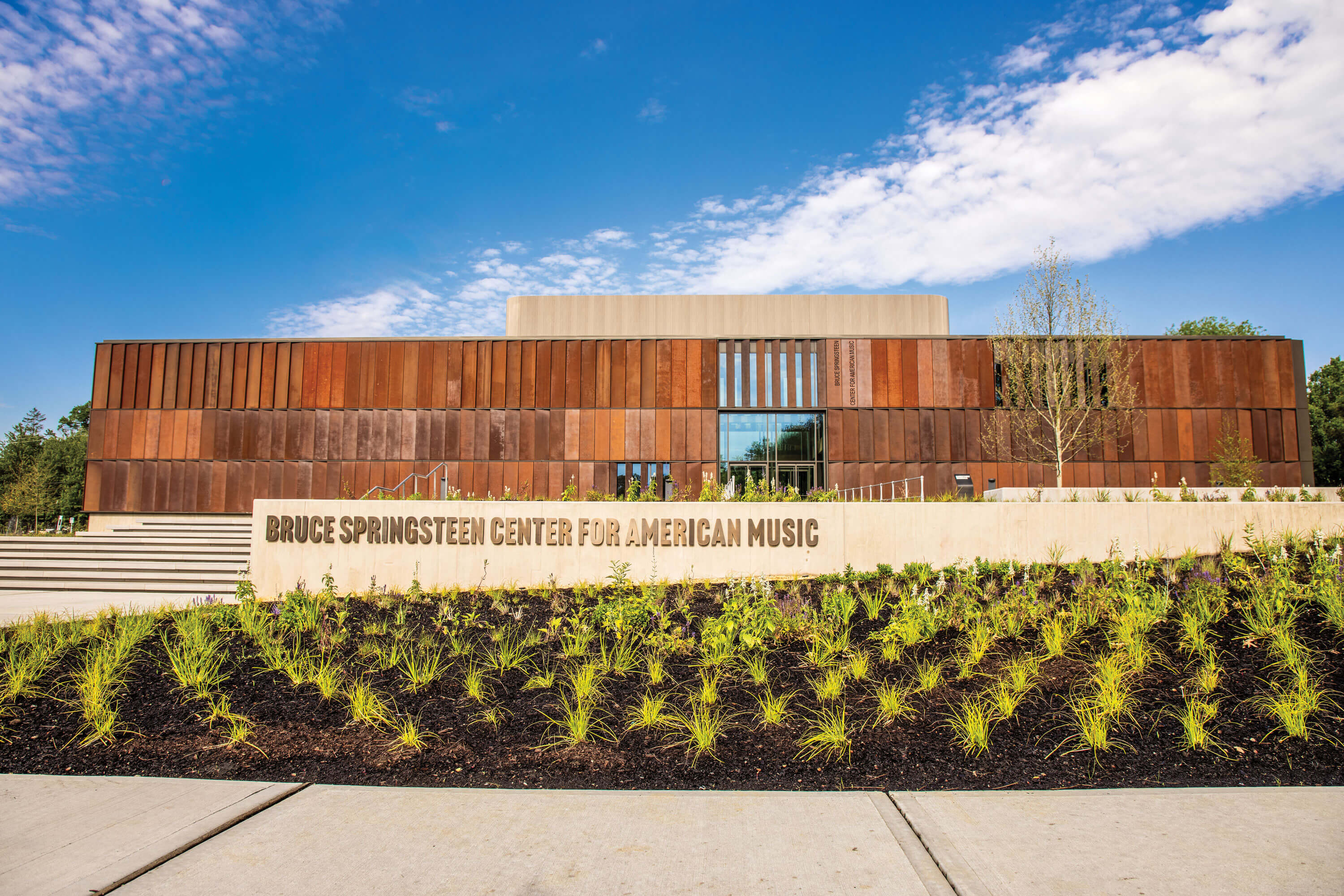
That was deliberate, says Bob Santelli ’73, ’14HN, the Center’s executive director, because it reflects what the new building was always meant to be. Although Springsteen’s name is on the façade, the 30,000-square-foot facility that opened on campus in June was never meant to serve as a shrine to a single artist but as something bigger and more ambitious. It was envisioned as a place where exhibitions, archives, scholarship, and public programming come together under one roof, connecting the study of American music with a broader public audience.
“This marks a new chapter for Monmouth University,” says President Patrick F. Leahy. “It positions us at the center of the study and celebration of American music and expands the opportunities we can offer to students, scholars, and the broader public.”
For Santelli, the focus is on what the Center represents.
“American music is our most precious cultural commodity,” he says. “It’s our most precious cultural export, and it’s the best art form that reflects what America is.”
This idea has guided the Center’s work for years. What’s changed is the scale. With the new facility, the Center can present exhibitions, expand programming, and provide greater access to its collections while also hosting performances, screenings, and classes that weren’t previously possible. In turn, it can better serve the campus community while welcoming visitors from around the world to explore American music and the story it tells about the country.
Springsteen’s presence is unmistakable, and there is plenty here his fans will love, but his story is presented as one thread in a much larger narrative.
As Santelli puts it: “This is not a Bruce Springsteen museum. It is a Center for American Music with Bruce serving as the narrator of the story.”
Telling the Story of American Music
The story of American music is anything but linear. It spans regions, generations, and genres, from Colonial-era ballads and marches to the gospel and blues of the early 20th century to the popular music heard today. Each era builds on what came before it, shaped by the people and moments that defined it.
For visitors, that interconnectedness is introduced through a short film narrated by Springsteen and created by Emmy- and GRAMMY-winning filmmaker Thom Zimny. Shown to guests before they enter the galleries, the film sets the tone for what follows. In it, Springsteen describes himself as “a student and a practitioner of American music” and invites visitors to join him as “another musical messenger, another link in the chain, carrying on its rich traditions.”
From there, the story unfolds across 10,000 square feet of immersive exhibits that trace the roots and reach of American music.
The first floor features a permanent exhibition that uses music as an entry point to explore 250 years of American history, touching on such themes as race, class, and gender. Artifacts range from instruments and costumes to archival materials tied to some of the most influential artists across eras.
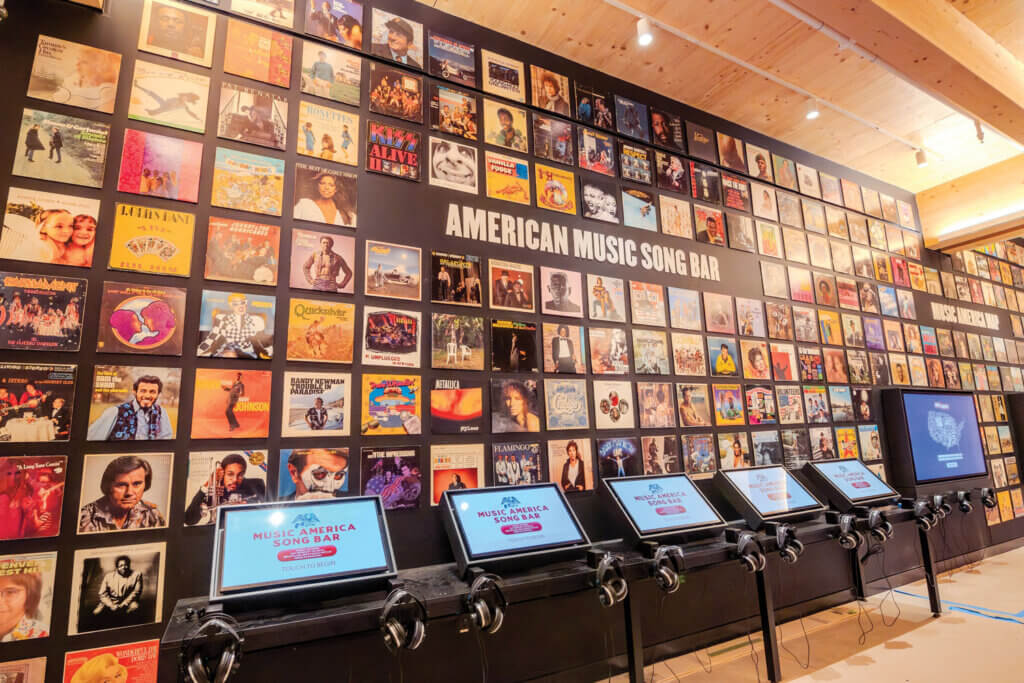
Interactive elements show how music is shaped by both place and time. A large, touch-enabled map of the United States lets visitors tap through regions and hear how different sounds took hold across the country and how geography shaped their development. A “Song Bar”—part jukebox and part learning tool—lets visitors jump between musical genres, hearing how styles shift and build on one another.
Other displays focus on specific elements of American music. One traces the evolution of the electric guitar, from the one-stringed diddley bow to innovations by Leo Fender and Les Paul, revealing how its sound came to define much of American music. Another explores Springsteen’s decades-long connection to Monmouth University.
The first floor also houses a rotating gallery that will allow the story to evolve with the music. The inaugural exhibition, “Chimes of Freedom,” examines how artists across the political spectrum have used music to advocate for causes they believe in, highlighting how music has served as both a form of protest and patriotism through the years, says Director of Curatorial Affairs Melissa Kozlowski ’04, ’07M.
Springsteen in Context
The second floor brings Springsteen’s story into sharper view.
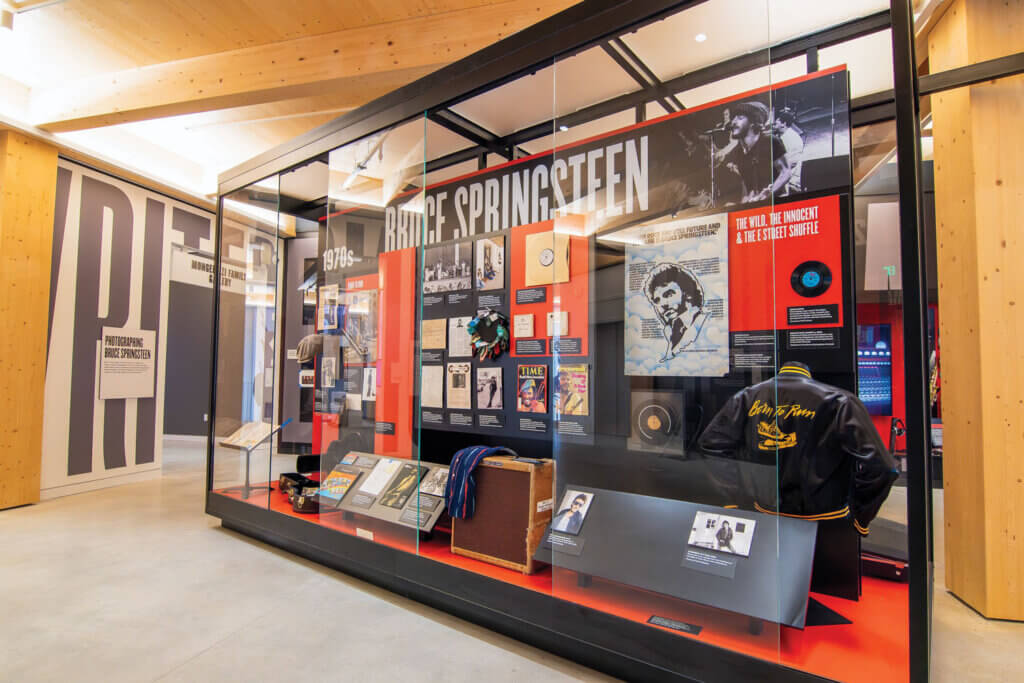
The songwriter gallery traces his career through handwritten lyrics, notebooks, and recordings, offering insight into his creative process. Nearby displays highlight the members of the E Street Band and feature instruments, outfits, and artifacts the musicians themselves contributed.
There are also exhibits that allow visitors to experience Springsteen’s music more directly. In one, a studio-like environment allows visitors to stand among instruments while hearing from band members how songs take shape, how they are recorded, and how they evolve. In another, visitors get a simulated experience of Springsteen live. The room is wallpapered in crowd scenes and includes bleacher-style seating, with footage of the artist’s live shows playing throughout, capturing the energy that has long defined him and the E Street Band on stage.
There are quieter moments too. A photography gallery features a rotating selection of images of Springsteen, offering an intimate look at the artist through the years. “The Education of Bruce Springsteen” exhibit highlights how books, ideas, and current events shape his work.
The floor also includes dedicated research and archival spaces that make the Center’s growing collections accessible to both visitors and researchers.
A Building Shaped by Its Influences
Situated across from the Beaux-Arts–style Guggenheim Memorial Library, the building, which was designed by COOKFOX Architects and constructed by Torcon Inc., strikes a modern presence opposite one of the campus’s most historic landmarks.
Rising out of a meadow of native grasses, the facility’s exterior is clad in weathering steel, a material chosen in part for its connection to the working-class communities that Springsteen often writes about, says Zach Craun, associate partner at COOKFOX.
Inside, portions of the mass timber structural system are left exposed, allowing visitors to see how the building is put together and how different elements rest on and build upon one another. It’s a design approach that subtly parallels how American music itself develops, with each generation building on what came before, says Craun.
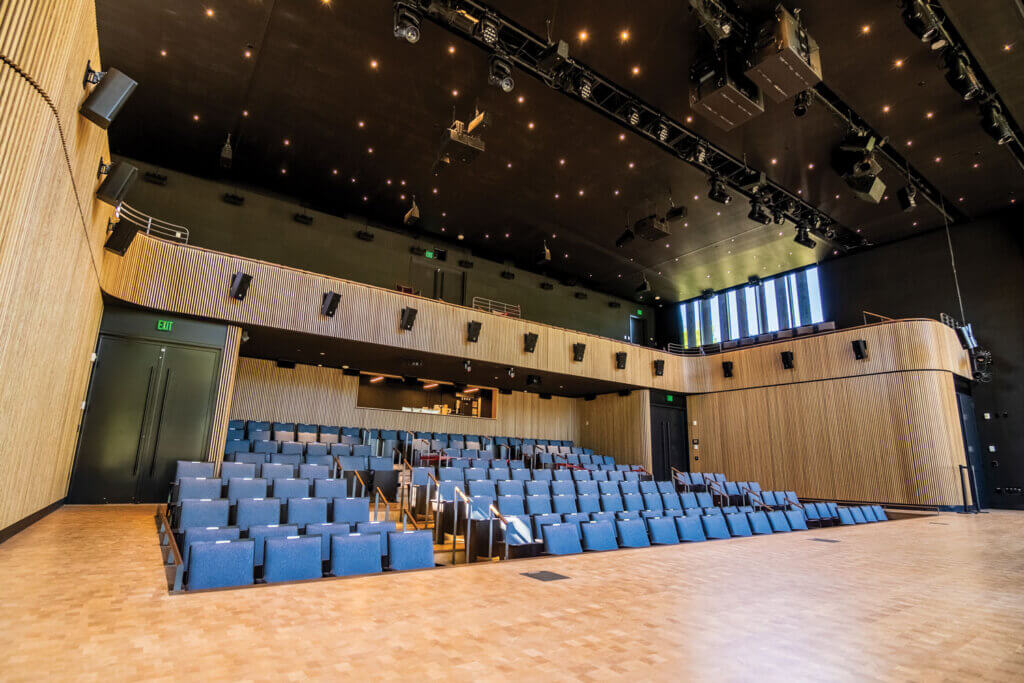
The materials and colors used throughout the interior were inspired by Springsteen’s iconic Fender Telecaster. The mass timber frame evokes the guitar’s wood body; black millwork elements reference the pick guard; and steel details, such as staircases and guardrails, echo the instrument’s strings.
Other nods to Springsteen can be found in the building’s design elements. A series of mosaic tile installations in the gender-inclusive bathrooms spells out “Greetings from Asbury Park, N.J.” when put together. The boardwalk-inspired entryway ties to the singer’s Jersey Shore roots. The seats in the Dolby Atmos–certified soundstage aren’t just blue, they’re “blue jeans blue,” says Craun.
Both the wood interior and steel exterior of the building are left unpainted, which will allow them to weather and develop a patina. Craun says that was intentional, creating what he describes as an “authentic expression of material,” so that over time, the building will be shaped by the elements and the people who move through it. He sees that approach as connected to the qualities that have long defined American music.
Craun emphasized that sustainability and accessibility were paramount to the design process. The building is fully electric, tied into the University’s photovoltaic system, and is LEED Gold certified, with a heating and cooling system that reduces energy use while allowing for flexible gallery spaces.
Outside, the native plantings that surround the entryway help with stormwater management. Inside, the layout prioritizes the principles of inclusive design, clear wayfinding, and ease of movement, ensuring visitors of all abilities can navigate the building comfortably.
A Bigger Stage for the Work Ahead
The new facility expands what the Center for American Music can do, both on campus and for the audiences it can now reach.
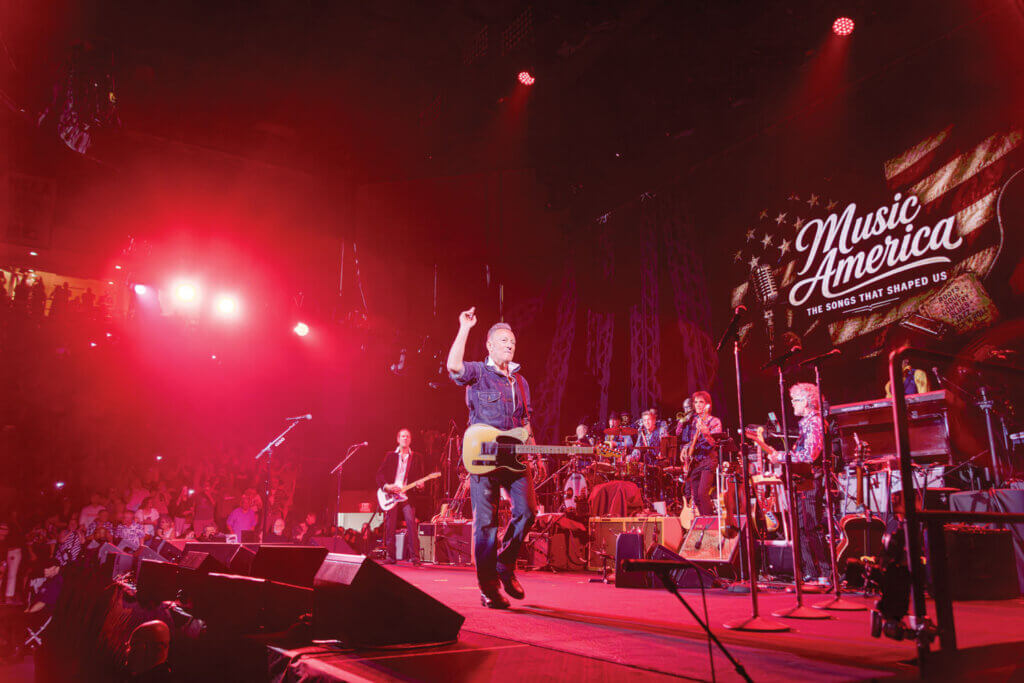
For years, the Center operated out of a tiny house on the edge of campus, limiting how much of its work could be shared with students and the public. Santelli says those constraints inevitably shaped the scope of its exhibitions and programming.
The new building changes that, creating room for more ambitious exhibitions, expanded programming, and deeper integration into academic life, including coursework and research tied directly to the Center’s collections.
It also brings something new to the region. Funded entirely through external philanthropic support, the building establishes a cultural resource on a scale not previously found at the Jersey Shore, one that connects local history, including Springsteen’s roots, to the broader story of American music. Kozlowski estimates the Center will draw tens of thousands of new visitors to campus each year.
That dual role, as both an academic space and a major tourist destination, was the vision from the beginning. And it was reflected in who walked through the doors first.Before the building’s grand opening and weeklong series of concerts and celebrations that preceded it, the Center welcomed K–12 teachers to experience what this new facility makes possible. It was a fitting debut for a facility built not just to display American music, but to deepen the understanding of it.