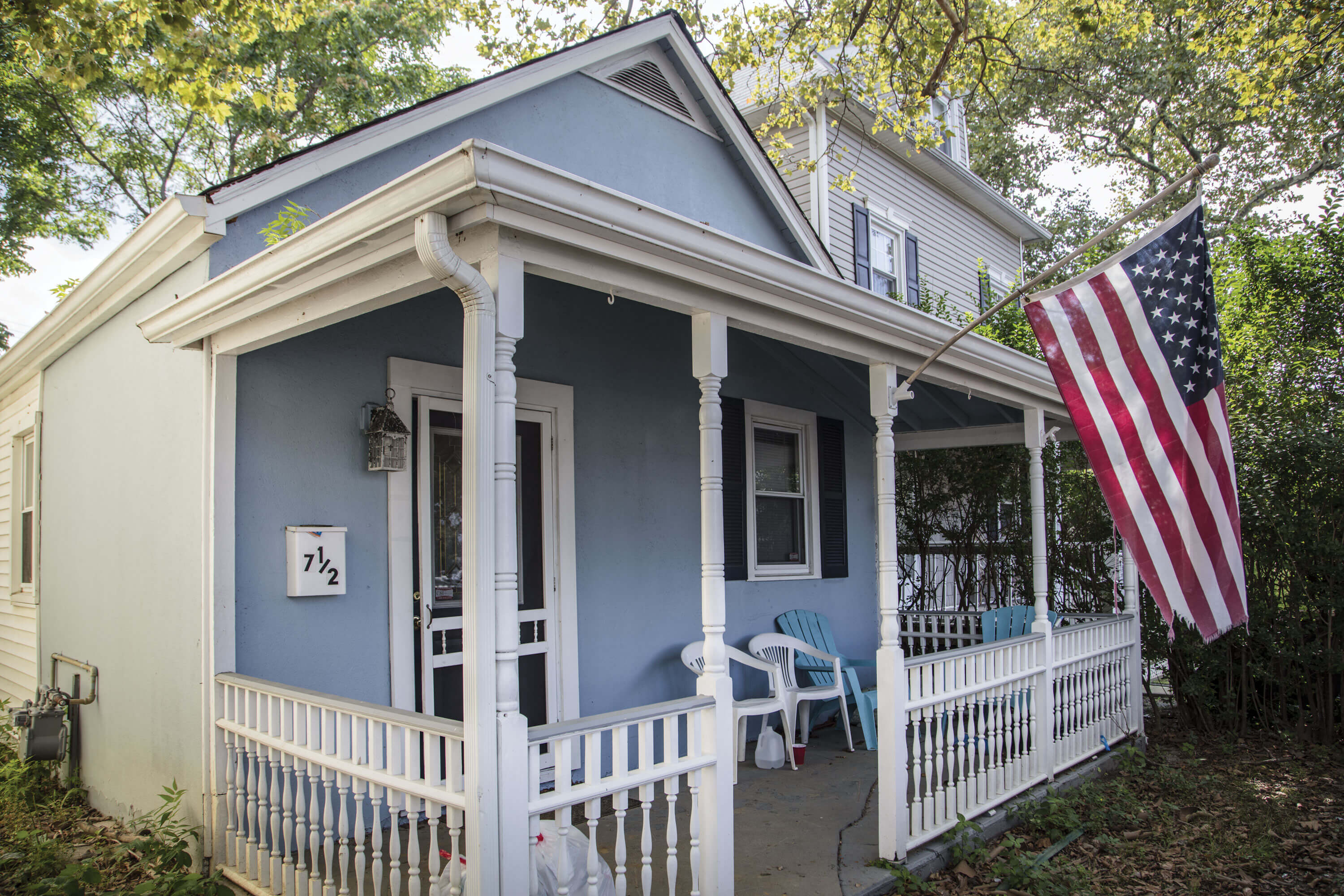
7 ½ West End Court
Marilyn Rocky ’65 bought it as an investment; her first tenant turned it into music history.
For years, people passed by 7 ½ West End Court in Long Branch without realizing what had happened inside.
In 1974, Marilyn Rocky ’65 was working in real estate when she and her mother bought the small house as an investment property for $20,800. Just days later, a young Bruce Springsteen walked into her office looking for a place to rent. He wanted Asbury Park, Rocky recalls, but she steered him instead to West End, a “pretty funky, psychedelic” neighborhood back then. The rent: $200 a month.
He moved in that April and stayed about a year and a half, writing much of “Born to Run” in the house.
Springsteen, then in his early 20s, was “very shy, very reticent, really, really nice,” says Rocky. He paid rent in cash and left handwritten notes when he’d be late or away on tour. (One, addressed to Rocky as “Dear Landlordess,” is now on display in the Bruce Springsteen Center for American Music.) Otherwise, he kept to himself.
When Springsteen moved out in 1975, the house was in good shape, aside from a scattering of cereal boxes and fast-food wrappers.
He also left behind a piano.
For years, Rocky says, it remained in the house as little more than a piece of furniture, used by later tenants as a plant stand or makeshift bookshelf. It wasn’t until she ran into Clarence Clemons decades later that she learned the full story: after finishing “Born to Run,” Clemons told her, the band had lifted the lid and signed it.
By then, though, the piano had been thrown away.
Only later did the small house gain widespread recognition as a site of music history. For Rocky, it remains something simpler: a place that, for a brief moment, held the early work of a young musician who had not yet become an international star.